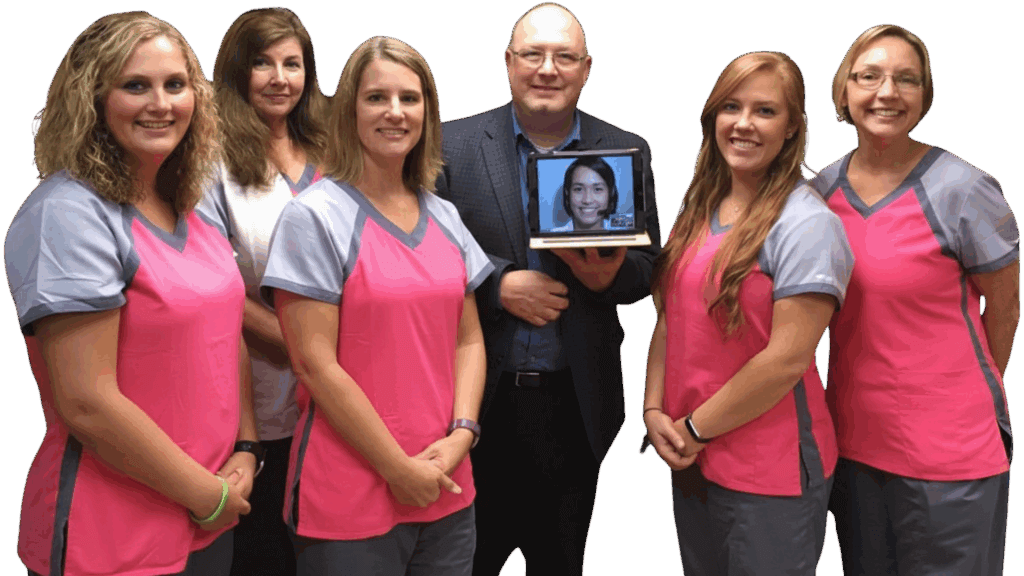

As a healthcare professional, you may have heard about hiring virtual assistants to handle the overflow of administrative tasks.
Virtual assistant tasks and admin tasks now cover a wide variety of routine and specialized activities, including managing email, scheduling appointments, organizing files, and more. By delegating these admin tasks to a virtual assistant, healthcare practices can benefit from remote administrative support, saving on overhead costs and improving operational efficiency, as outlined in this comprehensive guide to virtual assistants for healthcare.
But what do virtual assistants do in a healthcare setting? Are they qualified to help doctors, dentists, vets, and other healthcare professionals?
Virtual assistants today are more than your run-of-the-mill remote worker. They’re specifically trained in the healthcare industry and have the skills to handle complex and specialized tasks that go beyond basic administrative work, further improving your practice, especially when they’ve been through a rigorous healthcare virtual assistant vetting and training process.
For business owners, hiring virtual assistants for healthcare practices provides a strategic advantage by reducing costs, eliminating the need for office space or full-time salaries, and allowing them to focus on growth and strategic initiatives instead of low-value tasks.
Not sure what a Healthcare Virtual Assistant can do for you? Keep reading to discover the top 10 tasks for virtual assistants you can outsource as a healthcare professional. Outsourcing tasks to virtual assistants can help you achieve nonstop progress and maximize earnings by freeing up your time for high-value activities.
What are virtual assistants?
Virtual assistants are administrative workers who can help you around the office. Their role is similar to that of an administrative assistant. However, virtual assistants, including virtual administrative assistants and administrative virtual assistants, offer a remote and cost-effective solution for managing routine office tasks such as calendar management, email handling, and customer communication. Virtual administrative assistants manage tasks like email coordination, online meeting scheduling, and digital file management without needing a physical office space. Both virtual assistants and administrative assistants provide essential support, but virtual assistants often handle a broader range of tasks beyond standard administrative duties.
When you hire a virtual assistant, you’re not limited to local talent. You can hire anyone who has a stable Internet connection and a reliable computer. Thanks to modern communication technology, it’s easy to speak and collaborate with a virtual assistant for a wide range of purposes. To attract the right candidate, it’s important to create a clear and comprehensive job description that outlines the specific responsibilities and expectations for the role.
While companies in nearly all industries hire virtual assistants, these remote workers are particularly useful in healthcare clinics. Whether you’re a doctor, vet, dentist, or other type of healthcare professional, hiring a remote assistant can help you remove the burden of office tasks and serve your patients at a higher level.
Virtual assistant services can be life-changing for healthcare professionals. But they can also be difficult to find – especially if you’re looking for someone with experience in the healthcare industry, which is why it helps to understand Hello Rache’s impact on your practice before you get started.
Get in touch with our team to find out how we can help you get your own Healthcare Virtual Assistant in just a few days.
10 administrative tasks virtual assistants can do for your healthcare practice
Healthcare Virtual Assistants can handle a variety of routine and essential tasks for your practice, including key responsibilities such as locating contact information and supporting business leaders so they can focus on strategic priorities, provided they possess the right top virtual assistant skills for healthcare. Some virtual assistants bring specialized skills, which are especially valuable for complex healthcare tasks and can provide specialized support tailored to specific industries, enhancing operational efficiency. Virtual assistants often manage multiple clients and projects at once, making strong organizational skills and strong interpersonal skills essential for maintaining efficiency and building effective relationships. Excellent communication skills are also crucial for virtual assistants to interact effectively with clients and team members. Here are just 10 examples of time-consuming business tasks you can outsource to a remote assistant.
1. Medical data entry tasks
Medical data entry is a time-consuming process for healthcare professionals. However, it plays an important role in patient care. You can’t skip this task without severe repercussions.
But focusing too much of your time on medical data entry can hold you back from revenue-generating activities, such as networking or seeing more patients.
And when you let medical data entry tasks pile up, that can put a strain on the services you provide – especially when you need to take time away to catch up.
Luckily, medical data entry is one of the easiest tasks to outsource. As long as your virtual assistant understands how your electronic systems work, they can easily input any data you give them so you won’t have to handle it. Virtual assistants can also assist with data entry by maintaining accurate customer records and customer information, ensuring data accuracy when handling these records as part of your CRM or patient management systems.
Letting a virtual assistant manage your data entry tasks won’t just save you time – it can also help you improve your services for your patients since you’ll have one less responsibility on your plate. Instead of splitting your attention between patients and data entry, you can focus it all on your patients. As a result, your patients will typically be happier and come back to your practice time after time.
2. Healthcare marketing tasks
Get more patients for your practice by outsourcing your healthcare marketing tasks to a virtual assistant. While marketing tasks like content writing are a priority for any private practice, they take up a ton of time to execute.
But when you train a virtual assistant correctly, they can execute marketing strategies just as well as you can. This can help you get a constant flow of new patients without taking too much time away from your existing ones.
For example, you can teach your virtual assistant to send direct mail campaigns to potential patients. Additionally, personal assistants can phone past patients to follow up and inquire about their needs.
If you have social media accounts for your practice, your virtual assistant can write, design, and post content or blog posts regularly to attract a larger audience. Virtual assistants can manage social media posts, including writing captions, scheduling content, and distributing posts across multiple platforms to maximize your reach. They can also handle repetitive tasks involved in content creation, such as scheduling posts and writing captions, freeing up your time for higher-level work. If you don’t yet have social media accounts, you can task your remote assistant with setting some up for you.
Virtual assistants can also analyze customer reviews to inform your marketing strategies and help identify areas for improvement. Additionally, they can conduct market research by analyzing market trends and compiling industry statistics to support your practice’s growth.
Finally, a virtual assistant can reach out to news outlets for publications so that you can get featured and generate more awareness of your practice.
3. EMR implementation
If your healthcare office doesn’t currently use an electronic medical records (EMR) system, you can get a virtual assistant to help you with EMR implementation.
Transferring physical documents into an EMR system for the first time is time-consuming and tedious. Virtual assistants can assist with document preparation, ensuring all files are properly formatted and ready for upload. They also maintain digital filing systems by creating organized folder structures, maintaining version control, and ensuring important documents are easily accessible and compliant with record-keeping standards. You can create your EMR implementation plan and let your virtual assistant execute that list of tasks for you.
Making the switch to digital doesn’t have to be intimidating. While your virtual assistant transcribes existing documentation, you can continue your business as usual.
4. Billing
When you’re busy taking care of billing tasks, you’re not available for your patients. And when you leave those tasks for the end of the day, you can’t go home until you’ve handled them all.
Virtual assistants can bill patients using a virtual medical biller. They can also manage billing transactions, prepare expense reports, track business costs by categorizing expenses and uploading receipts, and handle bookkeeping tasks such as creating invoices and tracking business expenses. Additionally, virtual assistants can assist with invoicing, manage late payments to ensure steady cash flow, and help maintain accurate financial documentation.
Imagine reaching the end of the month without having a pile of accounting and billing tasks to catch up on. That can be your reality if you have a virtual assistant to take on those responsibilities.
Having a dedicated virtual assistant to handle virtual medical billing can even help reduce clerical mistakes, which can improve quality of service and lead to better patient satisfaction.
5. Preauthorizations and insurance verification
Billing your patients isn’t the only thing you need to worry about. One of the most painstaking realities of the healthcare industry is dealing with insurance verifications and the preauthorization process.
Patients can rest easier when they know they can receive the treatment they need while also getting covered for it. But for this to happen, you need to complete a prior authorization – a rather complicated process that drains resources from you and your healthcare team.
Thanks to virtual assistants, you can simplify the prior authorization process in your practice and reduce the burden of administration on your in-house team. Virtual assistants can coordinate with relevant departments, such as billing and insurance, to ensure effective insurance verification and authorization, while also acting as customer service virtual assistants in healthcare to improve overall patient experience.
Having a virtual assistant handle the preauthorization process isn’t just beneficial for your team – it can also help reduce delays for your patients, who’ll more than likely appreciate getting access to care more quickly.
6. Transcription
A Healthcare Virtual Assistant who’s trained in HIPAA compliance can transcribe handwritten notes into your EMR system. Instead of handling this common task yourself or delegating it to your in-house staff, you can outsource it to a remote assistant.
Virtual assistants can also compile data from transcribed notes and other sources to prepare comprehensive reports for healthcare providers, presenting information in digestible formats such as charts and graphs.
If you have more than one practitioner working in your clinic, having a virtual assistant to transcribe documentation can also help to standardize all notes. Every professional has a different note-taking style, but a virtual assistant can transcribe everyone’s notes in the same format.
Thanks to standardization, you can help reduce medical errors and ensure better patient outcomes.
Keep in mind that not all virtual assistants are qualified to perform medical transcription duties. The person responsible for transcribing should be extremely comfortable with medical terminology so that the transcriptions remain accurate.
7. Medical documentation
Keeping track of all your patients and their progress using proper medical documentation is easier said than done. When you’re overworked or close to burning out, you can accidentally skip a step in the process. This can lead to incomplete or outdated patient medical records.
Instead, you can delegate medical documentation to a virtual assistant – giving them the responsibility of making sure all patient files are accurate, up-to-date, and complete. Virtual assistants can utilize project management systems to track documentation tasks, manage project timelines, and ensure that all records are completed on schedule. They can also handle meeting logistics related to documentation projects, such as preparing agendas, sending pre-meeting materials, and taking meeting minutes.
Virtual assistants can even communicate with patients to obtain missing information.
8. Answering phones
Never let the phone go to voicemail again. While automated answering services can be useful when your front office staff is overwhelmed, they can also be difficult for patients to navigate.
Automated and pre-recorded systems are also impersonal and unable to be adapted to every patient’s needs.
On the other hand, a virtual assistant can take on the responsibility of answering phone calls for your practice, even outside of your operating hours. You can hire one or several assistants around the clock to get a 24/7 answering service.
Providing a live operator service will ensure that your patients can always get in touch with your practice – even during emergencies. A live operator can provide personal support for each patient inquiry, and can verify contact details to ensure accurate communication, which an automated system can’t do.
In addition to answering phone calls, virtual assistants can handle email management by filtering, sorting, and responding to routine emails using templates provided by the business owner, as well as calendar management outside of office hours.
9. Setting appointments and handling reminders and cancellations
Stop squeezing your appointment-setting process between two patients or into your evenings. Those are moments you should use to rest and reset.
Instead, consider outsourcing your appointment scheduling tasks to a virtual assistant. Your remote assistant can act as a virtual receptionist by receiving phone calls for appointments, or you can use specialized virtual receptionist services for healthcare practices to cover all front desk duties. And they can also contact patients to reschedule or cancel appointments when needed.
Not only will using a virtual assistant win you back your time, but it’ll also ensure that patients are reminded of their appointments every single time.
10. Live charting
Live charting is one of the tasks that a Healthcare Virtual Assistant actually performs more efficiently than an in-person assistant.
When you conduct patient appointments on your own, you need to listen to your patients, take notes, and ask follow-up questions.. That’s why it can be useful to have a scribe in the room performing live charting, using a streamlined healthcare virtual assistant workflow for live charting.
But having another person in the room can feel intimidating to some patients. A virtual assistant, however, can listen to the exchange from a tablet or another electronic device.
After the patient’s visit, you can go over the charting details and review any details your virtual assistant needs to add. Virtual assistants can also perform data analysis on the charted information, providing actionable insights to support healthcare providers in making informed decisions. In addition to live charting, virtual assistants are capable of conducting online research and data analysis to further support business decisions and strategic planning. Once that’s done, you won’t need to worry about the data entry for those notes – instead, you can simply move on to your next appointment.
Managing your healthcare practice website
Managing a healthcare practice website is more than just keeping your homepage up to date—it’s about ensuring your online presence is secure, compliant, and engaging for both current and prospective patients, and staying informed through resources like the Hello Rache healthcare workflow blog. A skilled virtual administrative assistant can take on a wide range of administrative tasks related to your website, allowing you to focus on delivering high-quality patient care while your digital operations run smoothly in the background.
A virtual administrative assistant can handle essential data entry tasks, such as updating patient records, managing online appointment scheduling, and processing digital forms and surveys. With expertise in social media management, your assistant can create and schedule posts across multiple social media platforms, respond to patient inquiries, and monitor online reviews to maintain your practice’s reputation.
Market research is another area where a skilled virtual assistant can provide value. By analyzing customer reviews, tracking industry trends, and compiling actionable insights, your assistant can help you improve patient engagement and retention. Administrative support extends to managing email and phone communications, handling customer inquiries, and providing technical support for your website and related systems.
Maintaining digital filing systems is crucial for data security and HIPAA compliance. A virtual assistant can ensure your digital records are accurate, up to date, and securely stored, providing authorized team members with easy access to important information. Project management is also simplified, as your assistant can coordinate website updates, manage multiple projects, and ensure tasks are completed in a timely manner.
Financial data management is another key responsibility. Your virtual assistant can assist with expense tracking, compile financial reports, and help maintain accurate financial records, supporting your practice’s business growth and operational efficiency.
By delegating these website management and administrative tasks to a professional virtual assistant, you can streamline operations, reduce the burden of time-consuming tasks, and focus on what matters most—your patients. In addition to website management, a skilled virtual assistant can support your practice with:
- Inbox management: Keeping your email communications organized, responding to patient inquiries, and ensuring important messages are addressed promptly.
- Scheduling appointments: Coordinating patient schedules, managing multiple calendars, and maintaining accurate records.
- Customer service: Providing timely and professional support to patients, resolving issues, and ensuring a positive experience.
- Event planning: Organizing networking events, managing logistics for multiple projects, and ensuring successful execution.
- Recruitment process: Assisting with the hiring process, managing job descriptions, and coordinating interviews for multiple positions.
Outsourcing these administrative tasks to a skilled virtual assistant not only helps you maintain a strong online presence but also frees up valuable time for patient care, business development, and strategic planning. With the right support, your healthcare practice can achieve greater efficiency, compliance, and growth—without the need for additional office space or physical presence.
What do virtual assistants charge?
A virtual assistant’s rate of pay will depend on several factors.
First, you’ll need to account for their location. Some countries have a higher cost of living than others, and virtual assistants who live in those countries will typically charge more per hour.
For example, let’s look at US-based virtual assistants. On average, a virtual assistant who works in the US will charge $21 per hour. This rate can go up or down depending on:
- Their level of experience
- Their specialties
- The industries they’ve worked in
If you are hiring for multiple positions, such as an executive assistant for high-level strategic support or an admin VA to handle routine admin tasks like data entry and database management, rates will vary based on the specialization and complexity of the role.
A virtual assistant can also charge more if they take on more responsibilities. For example, some remote assistants will take on the role of an office manager instead of only handling remote tasks. These assistants usually charge a premium for this service.
Hourly rates will also depend on the type of contract you have with your virtual assistant. If you hire an employee, you’ll typically pay them a lower hourly rate in exchange for stability. However, this will require extra overhead on your part compared to an independent contractor.
You can look for freelancers and independent contractors, although these virtual assistants need to charge more to account for their own business expenses. Another option is to hire a virtual assistant company on a contractual basis.
Even though the company acts as a contractor, its virtual assistants are typically its employees. As a result, their hourly rates are lower than what you’d pay a freelancer.
Outsource your most bothersome tasks to trustworthy Healthcare Virtual Assistants
Hiring a virtual assistant can help you keep your profit margins healthy for your practice. By delegating routine tasks—such as scheduling, documentation, and social media management—you free up valuable time for both your professional and personal life. This allows you to focus on strategic thinking and business growth, rather than getting bogged down by repetitive work.
That’s what you’ll get when you work with Hello Rache Healthcare Virtual Assistant solutions to staff your healthcare practice. Our virtual assistants possess strong time management skills, ensuring tasks are prioritized and completed efficiently to meet deadlines and optimize your workflow. Whether you’re a medical doctor, vet, psychiatrist, dentist, or any other healthcare professional, virtual assistants from Hello Rache are trained to understand your industry.
Book a call with our team today, and you’ll see why leading healthcare professionals choose us to help with their office tasks.