

Running an optometry practice in 2026 comes with real pressure. Patient volumes are rising, expectations are higher, and admin work keeps expanding. Many eye care professionals find their teams stretched thin. Scheduling gaps, slow claims submission, and inefficient workflows can quietly hold a clinic back.
This is where optometry practice management becomes critical. It connects your systems, staff, and daily operations. When done well, it improves patient communication, generates more revenue, and keeps your clinic running smoothly.
Strong practice management is what allows clinics to grow without chaos. It helps you handle more patients, protect patient satisfaction, and scale in a way that actually feels manageable.
Highlights
- Technology, including practice management software and electronic health records, helps simplify daily operations and improve accuracy
- Small operational gaps, like poor patient scheduling or slow claims submission, can quietly reduce revenue and patient satisfaction
- Optometry practice management directly affects growth, efficiency, and patient outcomes in modern optometric practices
- With the right support, including trained assistants, clinics can scale without overwhelming their in-house team
- Strong patient engagement and clear communication lead to better retention and higher satisfaction rates
Understanding Optometry Practice Management
Optometry practice management is how your clinic operates day-to-day. It includes:
- Billing, insurance verification, and claim submission tied to revenue cycle management
- Tools that support patient communication, engagement, and patient experience
- Patient scheduling and appointment reminders that keep the day moving
- Optometry EHR software to manage health records accurately
- Staff coordination and daily practice flow
In a busy clinic, small gaps can cause big issues. Missed follow-ups or slow workflows can affect both care and revenue. That’s why practice management software and clear processes are important.
This hasn’t always been the case. Years ago, many optometric clinics relied on paper charts and manual systems. Tasks took longer, and errors were harder to catch.
Today, things look very different. Clinics use automated reminders, online scheduling, and digital systems to stay organized. This has made optometry business management faster, more accurate, and easier to scale.
Your Step-by-Step Guide to Optometry Practice Management
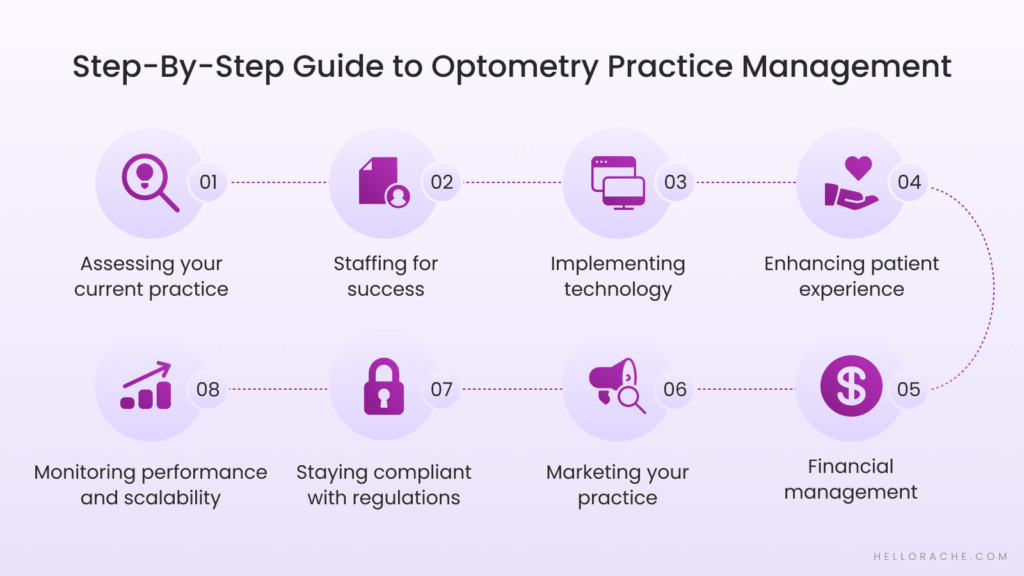
To better manage your optometry practice, you need to identify what’s working and what you need to improve. Small fixes can change how your entire clinic runs.
This step-by-step approach guide breaks the process into practical steps. Each one helps you strengthen your practice management, improve daily operations, and build a clinic that can grow without constant pressure.
Step 1: Assessing Your Current Practice
First, you need to review how your optometry clinic actually works. Many teams are busy but don’t pause to evaluate what’s slowing them down.
Start with a simple audit. Look at patient scheduling, wait times, and your team’s handling of patient communication. Review billing workflows, especially insurance verification and claim submission. These are often where delays build up.
Use your data to guide you. Reports from your practice management software or performance analytics tools can show missed appointments, claim denials, and gaps in practice flow.
This matters even more as demand grows. According to the Review of Optometric Business, by 2030, 53,000 full-time-equivalent optometrists will each manage around 2,400 patient encounters per year. This is equivalent to 127 million optometry visits.
Once you identify weak spots, set clear goals. Focus on changes that improve efficiency, support your team, and create a better experience for the patient.
Step 2: Staffing for Success
Your team plays a big role in how smoothly your practice runs. When employees don’t have a clear understanding of what their roles entail, small delays start to stack up. Phones ring longer, patients wait, and tasks get missed. That’s where structure makes a difference.
Start by hiring with purpose and training for consistency. A few simple practices help:
- Define roles clearly so each team member knows what they own
- Train on systems early, including EHRs and insurance verification
- Standardize workflows for tasks like patient scheduling and follow-ups
- Cross-train staff so coverage stays strong during busy hours
These ensure that your team spends less time fixing mistakes and more time focusing on patient care.
Still, many clinics run into staffing gaps. And this is where Hello Rache’s optometry virtual assistants can help. They handle admin work like scheduling and documentation to reduce pressure on your in-house team and keep daily operations running smoothly.
Step 3: Implementing Technology
Technology can either slow your optometry practice down or keep it moving. When systems are outdated or disconnected, staff end up doing extra work. That’s when mistakes and delays start to show.
Start with the core tools most clinics rely on today:
- Practice management software for patient scheduling, billing, and reporting
- Electronic health records to manage health records and clinical notes
- Patient portal tools that give patients easier access to information
- Online scheduling and automated reminders to reduce no-shows
Once these systems are in place, the impact becomes clear:
- Faster access to patient data, which supports better decisions
- Less admin work for staff, which improves daily practice flow
- Fewer manual errors in documentation and billing
- Smoother claim submission
Step 4: Enhancing Patient Experience
In a busy optometry clinic, patient flow can break down faster than expected. A few morning delays can carry over into the rest of the day. Long waits and unclear next steps often lead to frustration.
To keep things moving, focus on a few key changes:
- Streamline check-in so patients aren’t waiting at the front desk
- Use online scheduling to balance appointment load
- Send automated reminders to reduce missed visits
- Standardize workflows for exams and follow-ups
Make sure to prioritize clear communication as well. A 2025 study on outpatient encounters found that stronger doctor–patient communication leads to higher satisfaction. When patients understand what’s happening, they feel more confident and engaged.
Personalized care also plays a role. Small things, like remembering patients’ preferences or explaining next steps clearly, can affect how patients perceive your clinic.
Virtual medical assistants from Hello Rache help maintain that experience. They support coordination across scheduling, follow-ups, and records, so fewer details fall through and the day runs without constant interruptions.
Step 5: Financial Management
Financial systems often stay behind the scenes, but they directly affect how stable your optometry practice is. When billing slows down or claims get delayed, revenue starts to slip. It may not be obvious at first, but the impact adds up.
Start by tightening your billing and claims process:
- Track denials and rejections to spot patterns in insurance claims processing
- Use accurate CPT codes to reduce errors and rework
- Submit claims quickly to keep cash flow steady
- Verify insurance early to avoid delays later
But this can be a lot to manage, especially when your team is already busy with patients. That’s where outsourcing medical billing can help. When you work with medical billing companies, you reduce the workload on your staff and keep claims moving without constant follow-up.
Additionally, you have to plan ahead. Always.
Without a clear view of your numbers, it’s harder to make confident decisions.
- Set a monthly budget based on real expenses and revenue trends
- Forecast revenue based on patient volume and seasonal changes
- Review financial reports regularly using performance analytics
- Adjust spending early if you see gaps forming
Step 6: Marketing Your Practice
Marketing plays a bigger role in how your optometry practice grows than most clinics expect. Patients don’t just rely on referrals anymore. They search, compare, and often decide before they ever call.
If you want steady growth, focus on a few key strategies to grow your practice:
- Use search engine optimization to attract patients looking for vision care
- Improve your online presence so you show up in Google search results
- Encourage patient reviews to build your online reputation
- Offer online scheduling to make booking simple and fast
These steps help bring in new patients and keep your calendar consistent.
Social media also plays a role. It’s not just about posting. It’s about staying visible. Sharing updates, patient tips, or behind-the-scenes moments helps people feel familiar with your clinic before they visit.
If this starts to feel like too much, you may need a virtual marketing assistant. They can help manage content, respond to messages, and keep your presence active across platforms.
Step 7: Staying Compliant with Regulations
Compliance can feel like a moving target in an optometry practice. Rules change, and missing a detail can lead to bigger issues later. It’s not just about avoiding penalties. It’s about protecting patient data and keeping your clinic running safely.
Here are some key areas to stay on top of:
- Secure systems with HIPAA-compliant encryption to reduce risk from a cyber attack or breach
- HIPAA compliance to protect patient information and prevent healthcare data breaches
- Proper use of electronic health records to store and manage data correctly
- Clear documentation practices, including updated privacy notices
Many clinics also seek additional support here. Hello Rache provides HIPAA-trained virtual optometrist assistants who understand compliance requirements and can work within your existing systems.
Staying compliant takes consistency. A few habits can make it easier:
- Stay informed through industry updates and compliance resources
- Review policies regularly so nothing falls out of date
- Train staff on privacy rules and daily procedures
- Monitor systems to catch issues early
Step 8: Monitoring Performance and Scalability
Growth can feel like progress, but it doesn’t always mean things are working well. In optometry, problems often build quietly. You might stay busy, yet still lose time or revenue without noticing right away.
That’s why tracking the right numbers matters. Focus on a few key metrics:
- Patient volume to see if your schedule is balanced or overloaded
- Patient satisfaction to spot issues in care or communication
- Claim approval and denial rates linked to claim submission
- Revenue per patient to understand financial performance
- No-show rates to catch gaps in patient scheduling
Then, it’s time to adjust. If no-shows rise, implement appointment reminders. If there’s a revenue problem, review pricing or billing workflows. Not every problem needs a big fix. Often, small changes make the biggest difference.
Scaling works best when you stay in control. As demand grows, use your data to guide hiring, scheduling, and systems. That’s what keeps your practice management stable while your clinic expands.
Building a Scalable Optometry Practice That Runs Smoothly
Mastering optometry practice management doesn’t come down to one system or a quick fix. It’s the result of steady improvements across your clinic. From staffing and technology to billing, marketing, and compliance, each piece plays a role in how well your practice runs.
The steps you’ve seen here all connect. When your workflows are clear, your team is supported, and your daily operations feel more manageable. You’re not reacting all the time. But you’re in control of everything.
As your clinic grows, that control matters. It helps you handle more patients without overloading your staff or compromising the consistency of care.
If you’re looking to strengthen your practice management, the right support can make a difference. Hello Rache provides trained assistants who understand optometry workflows and can help you stay organized as you scale.
See how they can support your clinic.
FAQs About Optometry Practice Management
How Can I Improve My Practice’s Profitability?
Profitability in an optometry practice often comes down to fixing small leaks. Start with your billing process. Delays in claim submission or coding errors can slow revenue without you noticing right away. Review insurance verification, denials, and track where money is getting stuck.
It also helps to look at your numbers regularly. Check revenue per patient, daily collections, and missed appointments. When your practice management is consistent, your income becomes more predictable.
How Can I Ensure Patient Retention?
Patient retention isn’t just about good care. It’s about how the entire visit feels. Long wait times, unclear instructions, or missed follow-ups can push patients away, even if the exam itself was fine.
Focus on clear patient communication and simple processes. Use appointment reminders, explain next steps, and make visits easy to navigate. When patients feel informed and comfortable, they’re more likely to return. Strong patient engagement builds trust over time.
What Should I Prioritize When Starting a New Practice?
When starting an optometry practice, it’s easy to focus on everything at once. But a few basics matter more early on. Set up reliable systems for patient scheduling, billing, and electronic health records to keep your day running smoothly.
Define roles clearly, even with a small team. That prevents confusion later. It also helps to think about your patient journey from the start. Good practice management early on makes growth easier and avoids problems that are harder to fix later.