Healthcare background screening must be a priority. It’s a legal and ethical baseline. The same standard applies to front desk staff, nurses, or virtual team members. Strong background checks protect patients, your license, and reputation.
Risk doesn’t stop at criminal history.
According to a 2026 study published in the International Journal of Nursing Studies, healthcare workers with substance use issues are about twice as likely to provide poor patient care. Without proper drug and health screening, those risks can stay hidden until something goes wrong.
This guide offers a clear roadmap to healthcare background check requirements and key elements in 2026 hiring.
Highlights
- Remote staff require the same screening standards: Virtual healthcare workers still access systems and patient data, so they must meet the same compliance and screening requirements as in-office teams.
- A complete screening process goes beyond criminal checks: It includes identity verification, professional license checks, OIG exclusion screening, and drug testing to uncover risks across all roles.
- Healthcare background screening is essential: It’s not just a hiring step. It protects patient safety, reduces liability, and helps practices stay compliant with strict healthcare regulations.
- Healthcare hiring is tightly regulated: Employers must comply with FCRA rules, check federal exclusion lists, adhere to state laws, and handle data in accordance with HIPAA standards.
- One-time background checks aren’t enough: Ongoing monitoring, periodic rescreening, and real-time alerts are needed to detect new risks that emerge after hiring.
What Is Healthcare Background Screening?
Healthcare background screening is the process of verifying whether a candidate is safe, qualified, and legally allowed to work in a healthcare setting.
It includes reviewing criminal history, confirming licenses, checking education, and assessing overall fitness for both patient-facing and administrative roles.
Most healthcare background checks also involve:
- Criminal background checks (including international criminal checks)
- Identity verification checks
- Credential verifications
This process differs from standard employment screening. Patients are often vulnerable. Staff may handle controlled substances, access private records, or make decisions that affect care. There are also financial risks.
Practices that bill Medicare and Medicaid must comply with strict regulatory requirements. State licensing boards also set rules on what must be checked and how far back records go.
Healthcare background screening applies to a wide range of roles. That includes physicians, nurses, medical assistants, and administrative staff. It also covers remote workers. Virtual teams, like virtual admin assistants, still access systems, data, and patients. So the same healthcare background-check requirements apply no matter where someone works.
Why Healthcare Background Screening Is Non-Negotiable
Hiring in healthcare is different. One wrong decision can affect a patient, not just a workflow. That’s why healthcare background screening sits at the center of safe and compliant hiring. It protects your patients, your license, and your practice’s future.
Patient Safety Comes First
Healthcare professionals care for people who are often at their most vulnerable. Children, older adults, and patients with disabilities rely on staff they can trust. Without proper criminal background checks and criminal and sex offender searches, the risk of fraud, neglect, or abuse increases. Screening helps catch red flags before they reach a patient’s room.
Organizational Liability Adds Up Fast
The financial risk is real. Data from the National Practitioner Data Bank shows that U.S. medical malpractice payments exceeded $4 billion in 2025. One unvetted hire can lead to serious claims, higher professional liability coverage costs, and long-term damage.
Regulatory Consequences Can Shut You Down
Healthcare practices must follow strict regulatory requirements. Failing to check the Office of Inspector General (OIG)’s Exclusions Database can put your participation in Medicare and Medicaid at risk. Sometimes, it can lead to penalties or full disqualification.
Reputation Is Hard to Rebuild
Trust takes years to earn. It can disappear overnight. A single incident tied to poor background screening requirements can harm your reputation with patients, partners, and your community.
The Essential Components of a Healthcare Background Check
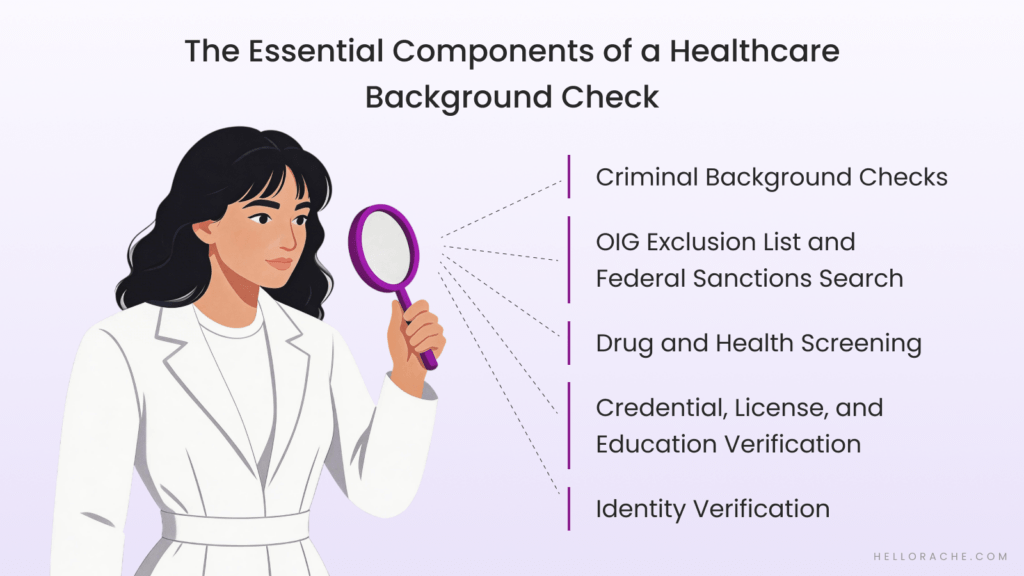
A strong healthcare background screening process is built on a few core checks. Each one looks at a different risk. Skip one, and gaps start to show.
Criminal Background Checks
Criminal background checks review national and county-level records to uncover past offenses. Most include a national criminal search along with local court data.
A national sex offender search is also essential. This is because healthcare workers often interact with vulnerable patients.
The scope varies by state. Some laws limit how far back you can search or how arrests are considered compared to convictions.
OIG Exclusion List and Federal Sanctions Search
The OIG exclusion list, maintained by the U.S. Department of Health and Human Services, identifies individuals barred from receiving federal healthcare funds. This makes it a critical federal exclusion search.
Practices working with Medicare and Medicaid must check this list before hiring and during employment.
Providers that knowingly employ an excluded individual can face civil monetary penalties and serious compliance issues.
Drug and Health Screening
Drug Screening is standard in healthcare because staff may access controlled substances. It helps reduce safety risks early.
A 2025 study on substance use among healthcare professionals estimates that 6% to 8% of physicians in the U.S. struggle with substance use. That risk can directly affect patient care.
Most practices use urine tests during pre-employment screening. Some also run random checks after hiring.
Credential, License, and Education Verification
This step confirms degrees, certifications, and active licenses. It’s critical for all licensed clinical roles.
It also includes employment history checks. These can reveal prior terminations for cause.
State licensing boards and the National Practitioner Data Bank are key sources for accurate credential verifications.
Identity Verification
An identity verification check confirms that the applicant is who they claim to be. It’s the foundation for every other check.
It helps prevent misrepresentation and errors. It also ensures all results are tied to the correct individual in the background check process.
Legal and Regulatory Framework for Healthcare Background Screening
Hiring in healthcare isn’t just an HR task. It sits inside a web of laws and regulatory requirements that impact how you run your background screening process. Missing one step can lead to fines or delays. So it helps to understand what rules apply and when.
FCRA (Fair Credit Reporting Act)
The Fair Credit Reporting Act sets the federal baseline for background checks. If you use a third-party provider, you must get clear, written consent before starting any pre-employment screening.
It also controls how you use the data. There are strict rules around adverse action, including notifying candidates and giving them time to respond. You can’t use screening results however you want.
OIG Exclusion List
The OIG exclusion list is a mandatory screening requirement for any Medicare- and Medicaid-participating practice.
Pre-employment verifications are key. You must check before hiring and continue checking during employment. Missing it can lead to penalties or loss of program eligibility.
Joint Commission Requirements
Accredited facilities must document all criminal background checks in accordance with their internal policies. This applies to employees, volunteers, and students.
State law often defines how far those checks go. That means your background screening requirements may shift depending on where your practice operates.
State Ban The Box And Fair Chance Laws
Many states and cities limit when you can ask about criminal history. These laws focus on giving candidates a fair chance before screening begins.
For employers, this means timing matters. You need to know your local rules and apply them consistently across your background check process.
HIPAA And Data Handling
Screening often involves PHI-adjacent data, like personal identifiers and sensitive records.
That’s why your background screening solutions must follow HIPAA standards. Using secure, compliant vendors is key to successful HIPAA compliance and helps protect both your candidates and your practice.
Ongoing Screening — Why One-Time Checks Aren’t Enough
It’s easy to think hiring is the finish line. You run your background screening, check the boxes, and move on. But risk doesn’t stop once someone is on payroll. In healthcare, things can change quietly, and sometimes fast.
- Due process timelines: It can take up to two years for a convicted healthcare worker to appear on an exclusion list. A one-time background check process at hire won’t catch issues that happen later.
- Most states require periodic rescreening: Many states expect regular follow-up checks. Some require enrollment in Rap Back systems, which send real-time alerts when new criminal records appear.
- Circumstances change: Employees can be convicted, face federal and state sanctions, or lose their licenses after they’re hired. Without ongoing checks, those risks stay hidden.
What works in practice is a structured approach. Set a clear rescreening policy. Run checks annually or when someone moves into a higher-risk role. And pair that with automated monitoring of the exclusion list so nothing slips through.
Also, automation is becoming standard for a reason. Real-time alert systems send updates as soon as something changes. That reduces manual work and helps your team stay on top of compliance without slowing down hiring.
Screening Virtual and Remote Healthcare Staff
Remote work doesn’t lower risk. It just changes where it shows up. Virtual medical assistants and remote healthcare staff still handle PHI, access EHR software, and interact directly with patients. As a result, the same healthcare background screening standards apply regardless of where someone works.
There’s a common belief that in-house staff is safer. It feels easier to trust what you can see. But that’s not always how risk works. Many remote teams operate in secure, controlled environments with strict protocols and oversight.
When hiring through staffing platforms, don’t assume checks are already done. Confirm the details. You should see criminal background checks, credential verifications, drug screening, and HIPAA training as part of the vetting process. If those pieces are missing, the responsibility falls back on your practice.
Pre-vetted partners can reduce that burden. Instead of managing every step of the background check process, you rely on a system that’s already in place.
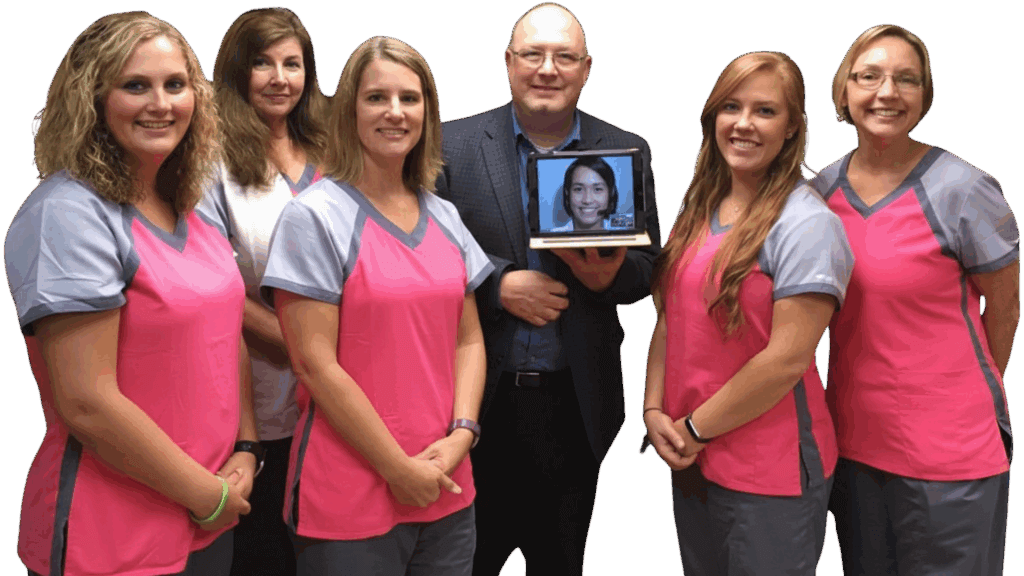
Hello Rache’s Healthcare Virtual Assistants® are registered nurses and allied health professionals who undergo rigorous screening. That includes:
- Background vetting
- Credential checks
- HIPAA training
Practices can reduce their workload by working with a partner that treats compliance as a baseline, not an add-on.
Building a Healthcare Background Screening Policy
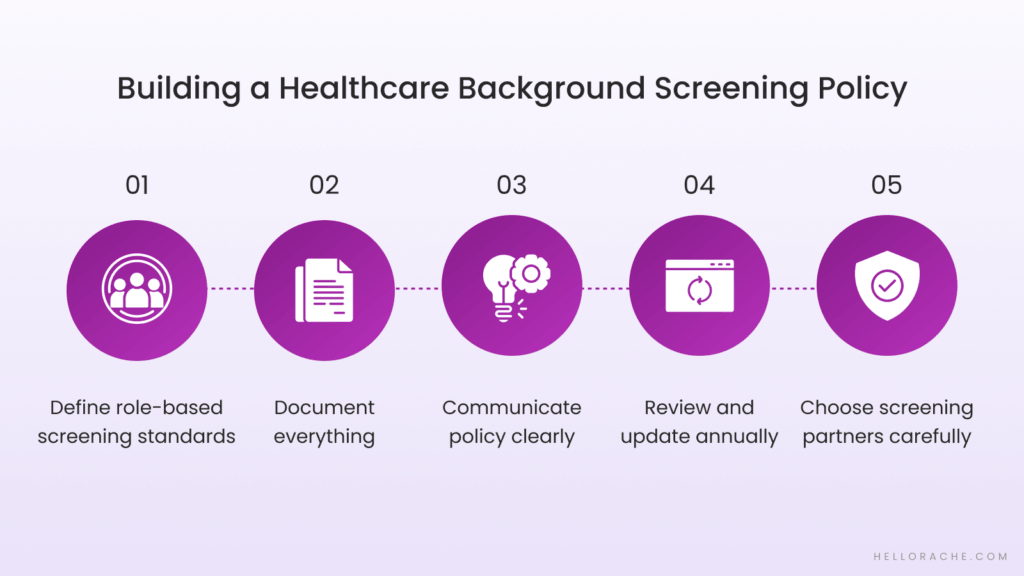
A clear healthcare background screening policy keeps your hiring consistent. It helps your team follow the same standard every time. Without it, even strong background checks can lead to gaps.
- Define role-based screening standards: Not every role needs the same level of review. Clinical, administrative, and remote staff carry different risks. Your background screening policy should reflect that.
- Document everything: Keep written records of all screening decisions, consent forms, and adverse action procedures. If questions come up later, your process should be easy to show and explain.
- Communicate policy clearly: Train all HR staff on screening procedures. Everyone involved in hiring should follow the same steps to ensure consistent, legally sound decisions.
- Review and update annually: Laws change, especially at the state level. Build a review cycle into your compliance calendar to keep your background screening requirements up to date.
- Choose screening partners carefully: Work with FCRA-compliant, healthcare-focused providers. Look for accuracy and fast turnaround, but don’t trade compliance for speed.
Protect Your Practice With Smarter Healthcare Background Screening
For healthcare professionals, background screening is both a legal requirement and a core part of patient safety. It covers:
- Credential verification
- Identity verification
- Exclusion checks
- Criminal history
- Drug Screening
Each step helps reduce risk before it reaches your patients or your practice.
Remember that one-time pre-employment screening will not catch issues that appear later. Ongoing monitoring and periodic rescreening are essential in 2026. Without them, compliance gaps can go unnoticed.
The same standard applies to every role. Virtual and remote healthcare staff must meet the same healthcare background check requirements as in-office teams. Risk doesn’t disappear just because someone works off-site.
If your practice is growing, it helps to work with a partner who already has this process in place. Hello Rache’s Healthcare Virtual Assistants® arrive pre-vetted and compliance-ready.
SCHEDULE A FREE CONSULTATION to see how we can simplify your hiring process.
Frequently Asked Questions
What Does Healthcare Background Screening Include?
Healthcare background screening isn’t just one check. It’s a comprehensive process that assesses risk from different angles. Most practices start with criminal background checks, including national and county searches. A national sex offender search is also standard because of direct patient contact.
It doesn’t stop there. You also need credential verifications to confirm licenses, education, and certifications. This helps catch expired licenses or even credential fraud, which happens very often.
Then there’s compliance. A federal exclusion search using the OIG Exclusion List checks if someone is barred from working in federally funded care. On top of that, many practices include drug screening and an identity verification check to ensure results are accurate and linked to the right person.
Is Healthcare Background Screening Legally Required?
In most cases, yes. But the rules come from different places. At the federal level, if you bill through Medicare and Medicaid, you must check the OIG Exclusion List. Missing that step can lead to penalties or loss of eligibility.
The Fair Credit Reporting Act also applies when using third-party providers. It requires consent before pre-employment screening and sets rules for how you handle results, especially if you take adverse action.
State laws add another layer. Some states require specific background screening requirements, while others limit how criminal history can be used. So it’s not one law. It’s a mix that you need to follow together.
How Often Should Healthcare Employees Be Rescreened?
There isn’t one fixed timeline. But relying on a one-time check is risky. Issues don’t always show up right away. It can take time for convictions or sanctions to appear in databases.
Many practices rescreen once a year. Others do it when someone moves into a higher-risk role, like handling controlled substances or accessing more patient data.
Some states now require ongoing monitoring through systems that send real-time alerts. These systems flag changes as they happen. That means you’re not waiting months or years to catch a problem.
Do Background Screening Requirements Apply To Virtual Medical Assistants?
Yes, and this is where many practices get it wrong. Virtual staff still access EHRs, handle PHI, and interact with patients. The risk is different in form, but not lower.
That means the same healthcare background check requirements apply. You still need criminal background checks, credential verifications, drug screening, and HIPAA training.
If you hire through a staffing provider, don’t assume everything is covered. Ask what’s included. Pre-vetted partners can reduce your workload, but your practice is still responsible for ensuring the screening is done correctly.