The demand for medical assistants is growing fast. According to the U.S. Bureau of Labor Statistics, employment in this field is estimated to grow 12% between 2024 and 2034. This is well above the average for most occupations. In 2024 alone, there were roughly 811,000 medical assistant jobs in the U.S.
That growth means more hiring. And more competition.
So what actually gets a candidate hired? Medical assistant skills span two worlds:
- Administrative tasks like managing patient records and scheduling
- Clinical tasks like drawing blood and taking vitals
The best candidates handle both.
The 15 medical assistant skills we discuss in this post aren’t a generic list. They reflect what healthcare providers actually prioritize when they’re reviewing applicants across physician offices, hospitals, outpatient clinics, and specialty practices.
Highlights
- Medical assisting requires both clinical and administrative competencies, and employers across all healthcare facilities expect candidates to handle both sides of the role
- Hands-on clinical skills like phlebotomy, blood pressure measurement, and medication administration are non-negotiable in most job postings
- Administrative skills, including proficiency in electronic health records and medical coding, are just as critical as clinical ones
- Soft skills such as patient communication, empathy, and attention to detail often separate a good candidate from a great hire
- Earning a certified medical assistant credential gives candidates a measurable edge
Clinical vs. Administrative Medical Assistant Skills
Most people picture a medical assistant taking vitals or prepping an exam room. That’s part of it. But it’s only half the job.
Medical assisting covers two distinct skill sets. The first is clinical. It’s the hands-on patient care inside the exam room. The second is administrative. This is the behind-the-scenes work that keeps the practice running. It includes scheduling, documentation, billing, and more.
Healthcare providers need people who can do both. A candidate who’s great at clinical procedures but can’t navigate electronic medical records creates gaps.
The same goes the other way around.
Physician offices, hospitals, outpatient clinics, and specialty practices all say the same thing: Versatility matters. The strongest candidates show up ready for the exam room and the front desk.
Clinical Medical Assistant Skills
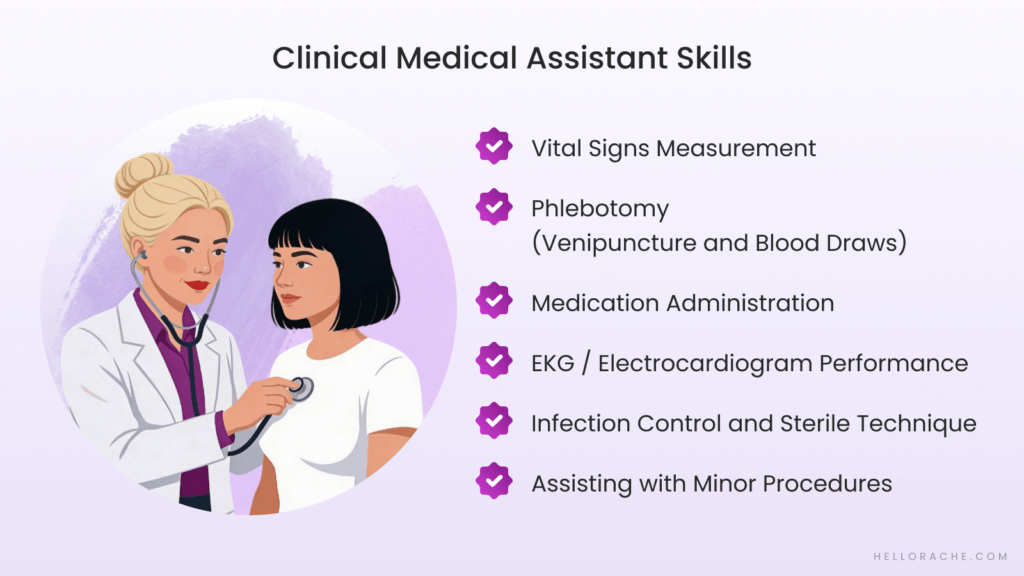
Clinical medical assistant skills are the hands-on patient-care competencies that form the backbone of the role. These are the tasks performed chairside, in the exam room, and in the lab. They require formal training to execute safely. And employers know the difference between someone who’s been properly trained and someone who hasn’t.
1. Vital Signs Measurement
This is the starting point of almost every patient encounter. A medical assistant is typically the one collecting all of it before the physician walks in. That includes:
- Oxygen saturation
- Respiratory rate
- Blood pressure
- Temperature
- Pulse
Accuracy here is key. If the numbers are off, the physician’s decisions could be off too. Employers treat this as a baseline skill. If you can’t do it well, everything else gets harder to trust.
2. Phlebotomy (Venipuncture and Blood Draws)
Blood drawing is among the most in-demand clinical skills in job postings. Many practices hire specifically for phlebotomy proficiency.
According to ACI Medical & Dental School, nearly all employers (96%) require or strongly prefer certification when hiring phlebotomy technicians.
Proper specimen collection matters as much as the draw itself. Labeling, handling, and storage affect results. It’s also worth knowing that state regulations vary. Some states require a separate phlebotomy certification on top of your medical assistant credential.
3. Medication Administration
This one carries real responsibility.
Medical assistants administer injections. These can be intramuscular or subcutaneous. They also administer oral medications and topical treatments. All this is performed under a physician’s orders.
Employers expect strict adherence to the rights of medication administration. The right patient, the right drug, the right dose, the right route, and the right time. Every time.
Scope-of-practice laws also vary by state. So understanding what’s permitted where you work is also important.
4. EKG / Electrocardiogram Performance
Performing a 12-lead EKG shows up on medical assistant job postings more than most people expect. It’s not a rare specialty skill. It’s a standard requirement in many healthcare facilities.
Proper lead placement and patient preparation both affect the quality of the reading. Respiratory testing, specifically spirometry, is a related competency that often appears alongside EKG performance in job descriptions.
5. Infection Control and Sterile Technique
Clean technique is critical to patient safety. This includes:
- Properly handling biohazardous materials
- Maintaining exam rooms between visits
- Sterilizing medical instruments
Being knowledgeable about OSHA (Occupational Safety and Health Administration) compliance is usually expected.
Medical assistants who understand infection control protocols protect patients and the entire healthcare team. Practices take this seriously. And hiring managers notice when candidates don’t.
6. Assisting with Minor Procedures
Medical assistants are active participants in clinical procedures. This skill set includes:
- Actively assisting physicians during medical examinations
- Patient preparation before procedures
- Wound care and dressing changes
Being useful in the exam room means being prepared before the physician arrives. Knowing what medical supplies are needed, how the room should be set up, and what comes next. That kind of readiness makes a real difference in how smoothly a practice runs.
Administrative Medical Assistant Skills
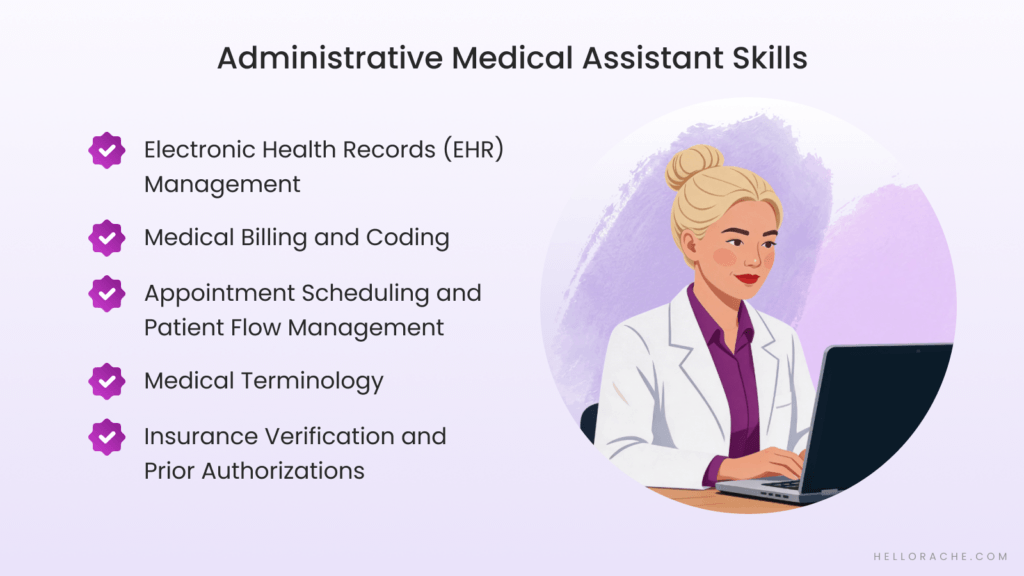
Medical assistants aren’t only in the exam room. They’re often the operational hub of a medical practice. Strong administrative skills keep the office running smoothly and ensure patients receive timely, accurate care. In many practices, the same person who draws blood in the morning is handling medical office procedures by the afternoon.
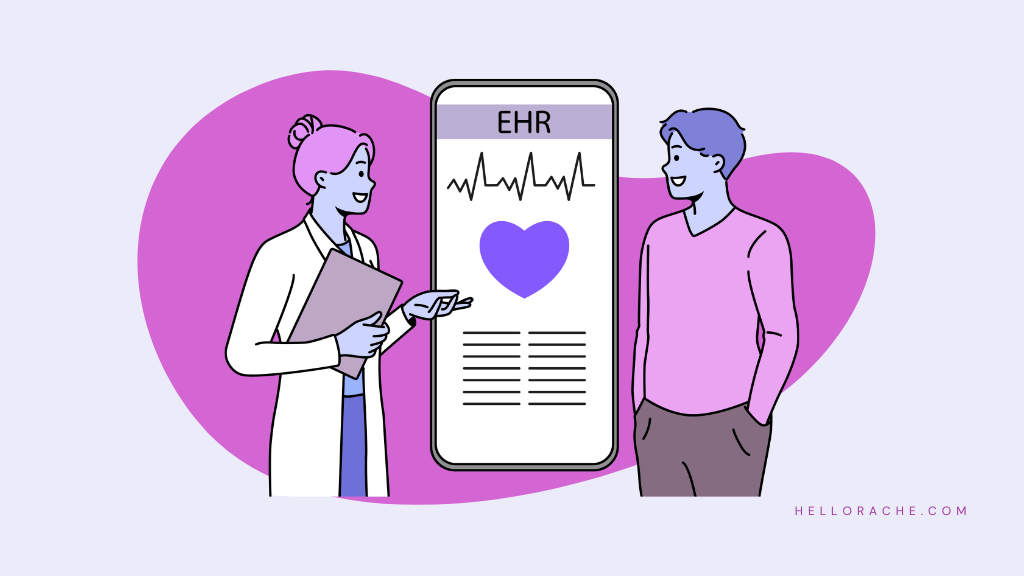
7. Electronic Health Records (EHR) Management
Proficiency in electronic health record systems (EHRs) is listed as a hard requirement in most job postings. Platforms like Epic, Athenahealth, and eClinicalWorks come up constantly. If you haven’t worked in one, employers notice.
Medical documentation goes beyond just typing notes. It means:
- Flagging missing information
- Updating patient records
- Accurate charting
Handling everything in a HIPAA-compliant way is also part of this skill set.
Errors in electronic medical records can follow a patient for years.
8. Medical Billing and Coding
Medical billing and coding is where clinical tasks and business operations meet.
Medical assistants with a working knowledge of ICD-10 and CPT codes, and of insurance claims processing, are genuinely valuable. Not every medical assistant delves into medical billing. But knowing the basics makes you far more useful to the team.
Catching a coding error before a claim goes out can save a practice real money. Coordinating with billing departments and insurance companies is part of the job in many settings.
9. Appointment Scheduling and Patient Flow Management
A backed-up schedule affects everything. Patient satisfaction drops. Physicians get frustrated. And the whole day feels off.
Medical assistants who can manage provider calendars, schedule follow-ups, and keep things moving can be hard to find.
In multi-provider practices, this gets more complex fast. Coordinating across departments takes focus and good communication.
Practices facing staffing shortages can use services like Hello Rache’s virtual medical assistants for remote, cost-effective admin support at $9.50 per hour. This keeps patient flow smooth without the headaches of hiring.
10. Medical Terminology
You can’t chart accurately if you don’t know the language. Proficient use of medical terms in documentation, correspondence, and patient communication is expected across almost every healthcare setting.
It also affects teamwork. When a medical assistant uses appropriate clinical language, communication with nursing and physician staff is faster. This leads to fewer misunderstandings.
The impact of better documentation is also tested. The CMA and RMA certification exams both include medical terminology sections, so it pays to know it well.
11. Insurance Verification and Prior Authorizations
Nobody wants to deal with a billing surprise after a visit. Insurance verification before appointments prevents exactly that. Medical assistants check patients’ coverage, confirm benefits, and flag any issues before the physician even walks into the room.
Prior authorizations are their own challenge. Submitting requests, following up, and tracking approvals requires attention to detail and real familiarity with insurance portals. It’s tedious work. But getting it wrong creates problems for the patient and the practice.
Soft Skills Healthcare Providers Look for in Medical Assistants
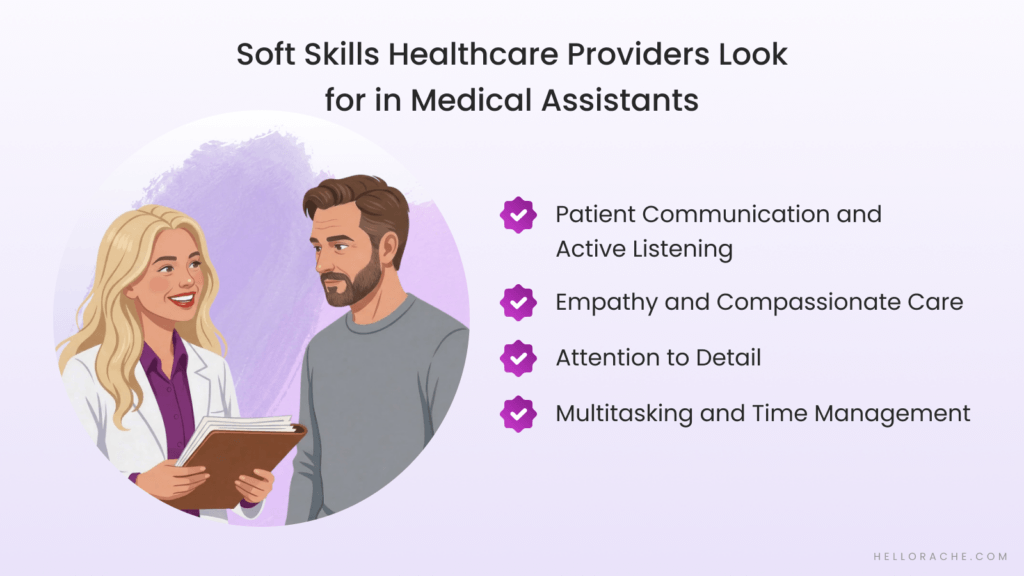
Technical training can be taught. The soft skills that make medical assistants truly stand out, like empathy, composure under pressure, and clear patient communication, are what healthcare providers say they’re really screening for.
Two candidates can have identical credentials. What separates them is almost always this.
12. Patient Communication and Active Listening
Medical assistants are often the first person a patient talks to and the last one they see before leaving. That matters. This is because tone, clarity, and patience all shape how a patient feels about their visit.
In a 2025 Corporate Recruiters Survey, communication ranked among the top five most demanded abilities in healthcare hiring. It’s not hard to see why. Explaining physician orders, post-procedure instructions, and medication guidance in plain language takes real skill.
So does listening carefully enough to capture an accurate patient history.
13. Empathy and Compassionate Care
Patients walk in anxious, in pain, or just plain scared. A calm, empathetic presence is clinically useful. It builds trust fast and makes the rest of the encounter go more smoothly.
This also means being sensitive to cultural differences and patient privacy. Not every patient communicates the same way. The best medical assistants pick up on that quickly and adjust. It ties directly to patient satisfaction scores. And whether people come back.
14. Attention to Detail
Small errors in medical documentation can have serious consequences for patient care. These can include:
- A wrong entry in the electronic health records
- A missed allergy in the chart
- A mislabeled specimen
Hiring managers cite this constantly as a top screening criterion. They’re looking for people who catch their own mistakes before anyone else does. Accuracy in labeling, recording vitals, and updating patient records is non-negotiable.
15. Multitasking and Time Management
Balancing clinical duties with administrative responsibilities is a soft skill that medical assistants need in a clinic setting.
Strong time management keeps patient wait times down and physicians running on schedule. Knowing which tasks are urgent and which can wait, and acting on that quickly, is a skill that takes practice. It’s also one of the first things a hiring manager picks up on during an interview.
A Few More Worth Mentioning
Some other soft skills also show up in hiring decisions:
- Adaptability: This is the ability to adjust across different specialties and patient populations without missing a beat.
- Professionalism: This is about following HIPAA standards and holding to ethical practices every day.
- Problem-solving and clinical judgment: This is knowing when something’s off and speaking up.
- Teamwork and collaboration: This involves working smoothly with nursing and physician staff.
How to Develop and Showcase Medical Assistant Skills
Knowing what skills employers want is one thing. Building them and proving you have them are two different things. Here’s where to start.
Getting Formal Training
Most clinical medical assistant skills are acquired through an accredited medical assistant training program. These can be certificates or associate degrees.
These programs cover both clinical skills and administrative duties. They typically include an internship or an externship that provides real-world experience.
This is often what gets a first-time candidate in the door.
The same goes for remote/virtual roles. Healthcare Virtual Assistants® working in healthcare environments still need proper preparation.
At Hello Rache, we offer free healthcare virtual assistant training to get remote assistants up to speed on the tools, workflows, and communication standards that healthcare offices actually use.
Earning Certification
The two credentials that healthcare providers ask for are:
- The CMA through the American Association of Medical Assistants
- The RMA through AMT
Both require graduating from an accredited program and passing a certification exam.
Certified medical assistants often have higher starting salaries. More importantly, certification signals to employers that you’ve been tested and can be trusted.
Highlighting Skills on Your Resume
Match your resume language to the job posting. If the listing mentions EHR proficiency or medical billing experience, use those exact terms. A dedicated skills section helps. So does weaving competencies into bullet points under your job experience.
Quantify where you can. “Performed 30+ blood draws per shift” sounds better than “experienced in phlebotomy.” Numbers give hiring managers something concrete to hold onto. And, they make your medical assisting skills easier to remember.
Strong Medical Assistant Skills Start With Knowing What Employers Actually Want
Great medical assistants are hard to find because the role demands a lot. You need clinical skills sharp enough to earn a physician’s trust.
Administrative skills solid enough to keep the practice from falling behind. And the kind of soft skills, like patience, empathy, and composure, that job descriptions can’t fully capture.
Not everyone comes in strong across all of it.
The good news is that gaps can be closed. A strong medical assistant training program builds the clinical and administrative foundation.
So look at this list honestly. Where are you strong? Where do you need work? Start there.
If you’re running a practice and need reliable administrative support, Hello Rache’s virtual medical assistants work remotely to handle the back-office workload. This means your team can focus more on patient care.
FAQs
What Are the Most Important Skills for a Medical Assistant?
The most important medical assistant skills cover both sides of the role. On the clinical side, this includes:
- Assisting with clinical procedures
- Taking vital signs
- Blood drawing
On the administrative side, it includes:
- EHR documentation
- medical coding
- Scheduling
Soft skills like patient communication, empathy, and attention to detail are equally important. Employers look for all three skills.
What Do Employers Look for When Hiring a Medical Assistant?
Healthcare providers typically look for candidates with formal training from an accredited program, proficiency in both clinical and administrative tasks, and strong interpersonal skills. Certification (CMA or RMA) is increasingly preferred and can set applicants apart.
Do Medical Assistants Need Computer Skills?
Yes. Proficiency with electronic health record systems, medical scheduling software, and billing platforms is expected in most medical assistant roles today. Computer proficiency is listed as a requirement in the majority of job postings.
At Hello Rache, we train our dental virtual assistants specifically for Curve Dental practice management software. This ensures seamless remote support for your practice.