The demand for medical coding companies is growing fast. MarketsandMarkets estimates that the global medical coding market will grow from $8.91 billion to $14.01 billion by 2030.
Claims are more complex now. And healthcare providers are experiencing:
- Constant pressure to protect cash flow
- Rising claim denials
- Tighter payer rules
At the same time, finding skilled medical coders is increasingly difficult. This talent gap is prompting more medical practices and health systems to seek external support.
Choosing the right partner matters. The right medical coding company helps:
- Support your revenue cycle management
- Keep your medical records clean
- Improve coding accuracy
The wrong one can slow everything down.
This guide will take you through a comparison of the top medical coding companies for 2026, helping you identify one that best fits your workflow and organization. First, let’s take a look at what matters most when choosing a medical coding partner.
Highlights
- The best medical coding companies help reduce claim rejections, improve accurate coding, and protect revenue across your revenue cycle
- Virtual support and AI-driven coding solutions are changing how healthcare providers manage medical billing and documentation
- The best fit depends on your size, specialty, and the level of outsourcing you desire.
- Certified teams and strong coding audits play a big role in lowering insurance claim denials and improving compliance
- Some vendors handle full RCM, while others focus on documentation, clinical data, or automation.
Criteria for Evaluating Medical Coding Companies
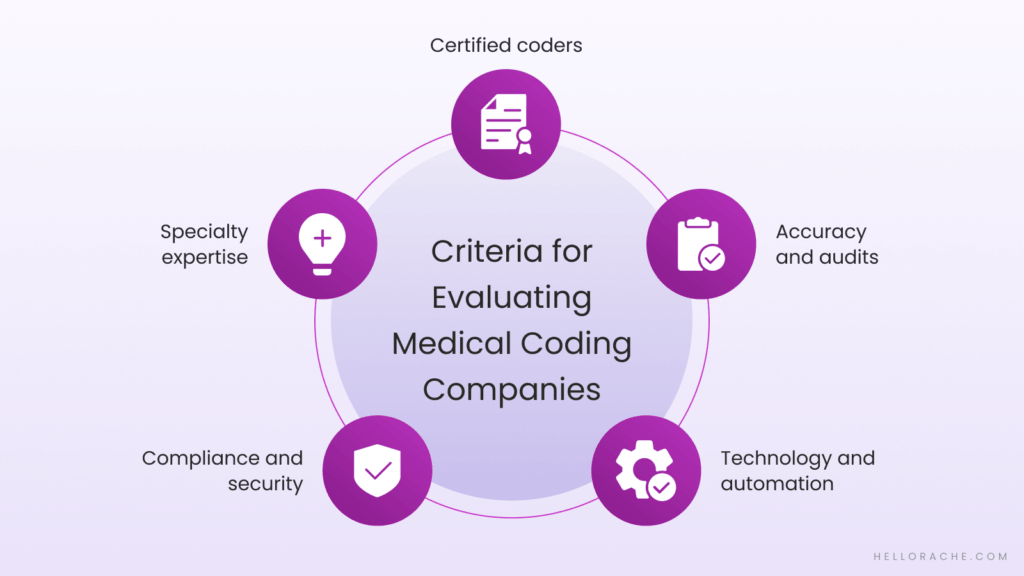
Medical coding companies vary in their operations. While some prioritize volume, others emphasize accuracy. These differences quickly impact your claim submissions and overall cash flow.
Before you decide, look at a few key areas:
- Certified coders: The coding team should include AAPC or AHIMA-certified professionals who understand coding standards, CPT codes, and specialty workflows.
- Accuracy and audits: Strong vendors run regular coding audits and medical coding audit checks to catch errors early and reduce insurance claim denials.
- Technology and automation: Look for AI-driven coding solutions or automation-enabled RCM that support faster, cleaner claim creation.
- Specialty expertise: Different medical specialties follow different rules, especially for facility coding and professional fee coding.
- Compliance and security: The company should adhere to strict regulatory standards and remain aligned with evolving payer rules.
Virtual support is also changing how practices work. Remote teams and electronic medical billing tools help you scale without hiring in-house staff. They also speed up turnaround times and give healthcare providers access to skilled medical coders, regardless of location.
Top 10 Medical Coding Companies in 2026
There’s no single best option for every practice. Some medical coding companies offer comprehensive revenue cycle management (RCM) services, overseeing both billing and coding, while others prioritize documentation, automation, or specialized coding for particular medical fields.
Evaluate each provider by how they focus their services — whether on broad RCM, niche specialty support, or advanced technology — so you can match their approach to your practice’s size, workflow, and outsourcing needs.
Here’s a quick side-by-side look at the top options for 2026:
| Company | Core Focus | Pricing Model | Best For |
|---|---|---|---|
| Hello Rache | Virtual assistants, documentation support | $9.50 per hour | Small to mid-size practices needing admin and documentation support |
| Transcure | Full revenue cycle management | Percentage of collections | Practices outsourcing billing and coding end-to-end |
| Optum | AI-driven CAC + CDI platform | Custom enterprise pricing | Large hospitals and health systems |
| Infinx | Outsourced coding + AI support | Quote-based | Hospitals and multi-specialty groups with high coding volume |
| NextGen | EHR with built-in coding support | Quote-based | Ambulatory practices using integrated systems |
| AGS Health | Scalable outsourced coding + AI | Quote-based | Mid-to-large providers needing coding capacity |
| CodaMetrix | Autonomous medical coding | Enterprise licensing | Large systems standardizing coding at scale |
| Fathom | Fully automated coding (AI/LLM-driven) | Quote-based | High-volume specialties and large organizations |
| CorroHealth | AI + outsourced coding and documentation | Quote-based | Systems needing automation with expert support |
| Dolbey | Computer-assisted coding (CAC) software | Quote-based | Hospitals supporting coders with CAC tools |
Company #1: Hello Rache
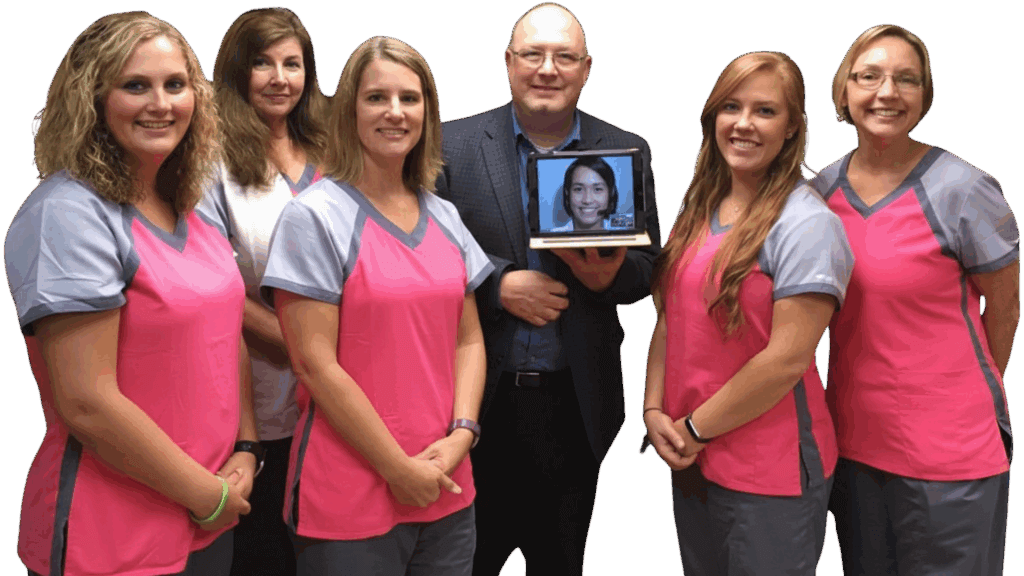
Hello Rache provides trained Healthcare Virtual Assistant® support to busy medical practices that need help with documentation and administrative work. The team works inside your existing systems. They handle tasks that support cleaner medical coding and smoother revenue cycle management without adding in-house staff.
- Features: Virtual assistants handle medical documentation, real-time medical scribing, insurance verification, and patient communication directly in your systems.
- Pricing: The service charges a flat rate of $9.50 per hour. There are no long-term contracts or setup fees.
- Pros: The model is affordable and flexible, and can improve coding accuracy and reduce claim denials. Remote medical assistants are HIPAA-trained.
- Cons: It’s not a full-service coding or billing provider. Practices still manage formal medical billing and compliance.
- Best for: Small to mid-size practices that want virtual support for documentation and billing-adjacent tasks.
Company #2: Transcure
Transcure offers full revenue cycle management support, covering everything from patient intake to claim submission and follow-up. It’s built for practices that want one partner to handle both medical billing and coding without managing multiple vendors.
- Features: Transcure provides end-to-end RCM vendor services. This includes medical coding, eligibility checks, and denial management. Workflows are supported by automation and major EHR systems.
- Pricing: Pricing is based on a percentage of collections. There are no upfront setup costs. And contract options are flexible.
- Pros: The company has 1,100+ certified billers and coders, strong clean-claim performance, and fast turnaround times for claim rejections and resubmissions.
- Cons: The full-service model may feel too heavy for smaller practices. Pricing isn’t fully transparent upfront.
- Best for: Practices and physician groups that want to outsource most of their revenue cycle operations.
Company #3: Optum
Optum focuses on large-scale medical coding for hospitals and health systems. Its platform uses advanced natural language processing (NLP) to review clinical data and suggest codes in real time. It’s less about outsourcing people and more about improving how coding happens inside complex organizations.
- Features: Optum offers AI-powered computer-assisted coding with real-time chart review and integrated clinical documentation improvement. It also has tools that support accurate ICD and CPT code capture across inpatient and outpatient settings.
- Pricing: It’s customized. Pricing plans aren’t available on the website.
- Pros: The platform is built for high-volume environments. It focuses on revenue integrity and on preventing pre-bill denials.
- Cons: It may be too complex for smaller practices. Implementation can take time and internal resources.
- Best for: Large hospitals and health systems that want to modernize coding with advanced technology.
Company #4: Infinx
Infinx provides outsourced medical coding backed by both certified coders and AI tools. It’s built for organizations handling large volumes of clinical data that need consistent accuracy without slowing down the revenue cycle.
- Features: Infinx offers specialty-specific expertise and full coding audits. This includes prospective, concurrent, and retrospective reviews to improve coding accuracy.
- Pricing: It’s shared during consultations.
- Pros: The company supports complex and specialty coding. It also offers robust audit and analytics tools for performance tracking.
- Cons: It’s mainly designed for organizations ready to outsource coding. Pricing isn’t available publicly.
- Best for: Hospitals and multi-specialty groups that need scalable coding support across complex service lines.
Company #5: NextGen Healthcare
NextGen Healthcare is known for its electronic health record (EHR) platform. But it also supports medical coding through built-in tools. It helps practices capture more detailed clinical information during visits, resulting in more complete coding and fewer revenue cycle gaps.
- Features: NextGen uses AI features, such as Ambient Assist, to turn conversations into SOAP notes and suggest CPT codes.
- Pricing: The team provides pricing quotes during consultations.
- Pros: It’s a strong option for practices already on NextGen EHR looking to reduce after-hours charting. It offers coding suggestions embedded in documentation workflows.
- Cons: It’s not a standalone coding service. Training may be heavier for companies migrating from other systems.
- Best for: Ambulatory medical practices that want an all-in-one system with built-in coding support.
Company #6: AGS Health
AGS Health provides outsourced medical coding with a large team of certified professionals and AI support. It’s suitable for organizations that need scale. Especially those handling a lot of medical records and complex clinical data.
- Features: AGS Health offers end-to-end coding services, including facility, professional fee, and risk adjustment coding. This is supported by AI tools that assist with ICD capture and CPT codes.
- Pricing: The team provides a quote during consultations. This is based on volume and scope.
- Pros: The company has a large pool of certified coders, supports faster turnaround times, and helps reduce claim denials with strong quality checks.
- Cons: It’s more suited to larger organizations. Smaller practices may not need the full scope of services.
- Best for: Mid- to large health systems and providers that need scalable coding support with AI assistance.
Company #7: CodaMetrix
CodaMetrix focuses on autonomous medical coding for large health systems. Its platform reads clinical data and assigns codes without heavy manual input. The goal is simple. Reduce workload and accelerate the revenue cycle without compromising accuracy.
- Features: CodaMetrix uses AI to generate complete codes from documentation. It supports multiple medical specialties and includes analytics to track performance and coding accuracy.
- Pricing: Pricing is enterprise-based. Companies can get custom quotes depending on scale and deployment.
- Pros: The platform reduces manual coding work by 70% and aims for a 5x faster turnaround time.
- Cons: It might not be ideal for small clinics. Setup can take time when data requirements are strong.
- Best for: Large health systems that want to move toward autonomous medical coding at scale.
Company #8: Fathom
Fathom focuses on fully automated medical coding using deep learning. It’s a good choice for high-volume environments where speed matters. The platform reads medical records and converts them into billable codes with minimal manual input.
- Features: Fathom supports autonomous coding for diagnoses and procedures and handles both facility and professional coding. It also routes complex charts to human coders when needed.
- Pricing: Pricing isn’t public. It’s dependent on volume, scope, and integration needs.
- Pros: The platform delivers high automation rates, fast turnaround times, and high coding accuracy, which help reduce claim denials.
- Cons: It works best with large datasets and requires strong integration with existing revenue cycle systems.
- Best for: Large physician groups, health systems, and RCM vendors handling high coding volumes.
Company #9: CorroHealth
CorroHealth focuses on improving medical coding and documentation at scale. It combines automation with human expertise, helping organizations manage complex clinical data while keeping the revenue cycle on track.
- Features: CorroHealth comes with a PULSE AI coding engine that automates coding. It offers reporting tools that support better claim submission and tracking.
- Pricing: The team shares pricing quotes during consultations. These are based on scope.
- Pros: The platform supports automation while still offering expert services. This improves coding accuracy and helps reduce insurance claim denials.
- Cons: It may be too complex for smaller practices. Results depend on strong documentation and system integration.
- Best for: Hospitals, health systems, and payers that need both automation and expert coding support.
Company #10: Dolbey
Dolbey offers a long-standing computer-assisted medical coding platform used by hospitals and health systems. It focuses on helping coders work faster and more accurately, rather than replacing them completely.
- Features: Dolbey uses AI and NLP to review medical records, suggest ICD and CPT code capture, and support clinical documentation improvement through built-in auditing and denial-tracking tools.
- Pricing: The team provides custom quotes based on system size and needs.
- Pros: It has a decade-plus track record with strong KLAS recognition. It supports consistent coding accuracy and helps reduce claim denials across the revenue cycle.
- Cons: It’s mainly designed for larger organizations. And, implementation requires integration with existing encoders and EHRs.
- Best for: Hospitals and health systems that want to support their coding teams with advanced CAC tools.
Current and Future Trends in Medical Coding
More healthcare providers are turning to automation to keep up with growing demand and tighter payer rules. Tasks that once took hours now move much faster, with fewer delays in the revenue cycle.
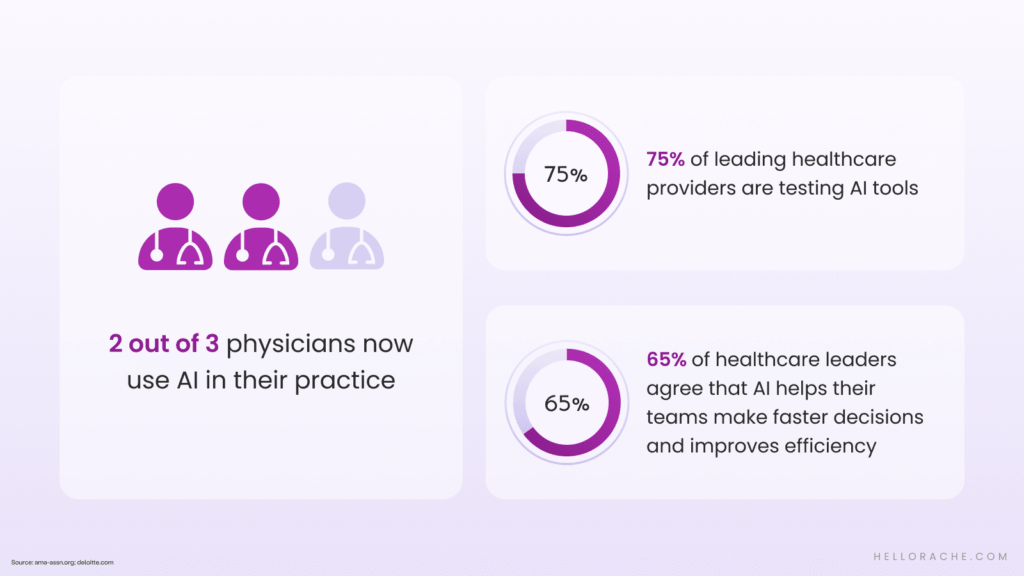
AI is driving that shift. An AMA survey found that two out of three physicians now use some form of AI in healthcare. This is a 78% rise from 2023.
At the same time, Deloitte reports that 75% of leading healthcare providers are testing AI tools. Many are also implementing governance to manage risk. Also, most leaders expect AI to improve efficiency, and 65% say it helps teams make faster decisions.
Specialty coding is also getting more attention. Areas such as diagnostic radiology, inpatient coding, and risk adjustment require deeper expertise. Strong clinical documentation improvement and accurate RAF scores are key.
Compliance still matters just as much. As rules change, medical coding companies need to stay aligned with regulatory standards and evolving requirements tied to value-based care providers.
Comparisons and Final Thoughts
Each of these medical coding companies offers something different. Some handle the full revenue cycle, including medical billing, coding, and denial management. Others focus on AI-driven automation, documentation support, or specialty coding for complex clinical data.
The right choice depends on your needs. Large health systems may prefer automation platforms that handle scale and complexity. Smaller medical practices often need flexible support to improve documentation and reduce claim denials without incurring high costs.
This is why outsourcing healthcare services can be beneficial. You can:
- Scale without hiring in-house staff
- Improve cash flow
- Reduce errors
But before deciding, make sure to research the providers you’re interested in. Compare vendors based on accuracy, cost, and specialty fit. Also, see how well they align with your workflow.
Choosing the Right Medical Coding Partner for Long-Term Success
Choosing the right medical coding company affects more than just billing. It affects your revenue cycle, cash flow, and your team’s ability to focus on patient care.
Every practice runs differently. You might need full medical billing and coding support. Or you might need help with documentation or scaling your coding team.
What matters is finding a partner that fits your workflow and keeps your processes steady as you grow.
If you’re looking for reliable support, consider working with Hello Rache. See how our virtual medical assistants can support your practice.
FAQs About Medical Coding in 2026
Will AI Replace Medical Coders in the Future?
AI is changing medical coding. But it won’t fully replace human coders. It handles repetitive tasks and speeds up clinical data review, but human expertise is still needed for complex cases and coding accuracy.
Most organizations use a mix of automation and certified coders. This approach:
- Helps manage changing payer rules
- Supports compliance
- Reduces errors
This ensures that the healthcare practice doesn’t rely solely on technology.
Which Medical Coding Is Most in Demand?
Some types of medical coding are more in demand than others. Inpatient coding, risk-adjustment coding, and specialty areas like diagnostic radiology continue to grow.
These require strong knowledge of ICD capture, CPT codes, and detailed medical documentation. As healthcare shifts toward value-based models, accurate coding tied to RAF scores and outcomes is becoming even more important.
How Many Cases Does a Medical Coder Code in a Day?
The number of cases a medical coder handles depends on the setting and the complexity of the cases. In outpatient environments, coders may review dozens of charts per day. In inpatient coding, volumes are lower. But cases take more time due to detailed clinical data.
Productivity also depends on tools used, such as AI-driven coding solutions, and the coder’s experience level.