

Running a veterinary practice often feels like managing several jobs at once. You’re focused on delivering high-quality animal care. But you’re also handling staffing, schedules, finances, and client communication. That constant pull between care and operations is where many practices start to feel strained.
Veterinary practice management is what brings stability to that tension. It covers the systems that keep the business running, from finances to team support and communication. In this guide, you’ll learn the core pillars of a successful practice. You’ll also see how technology and services like Hello Rache improve efficiency, and how to grow without burning out your people.
Highlights
- Veterinary practice management helps practices deliver better care while staying profitable and organized.
- Clear systems, smart technology, and automation reduce daily admin work and team burnout.
- Reliable communication, including 24/7 call handling, improves client trust and long-term retention.
- Strong staffing strategies and ongoing training support sustainable growth without overwhelming your team.
What Is Veterinary Practice Management?
Veterinary practice management is the business foundation that supports clinical care. It covers the non-clinical work that keeps a veterinary practice running smoothly. Even on the busiest days.
It allows veterinarians to focus on patients rather than paperwork, delays, or constant interruptions.
Core Components
A strong veterinary practice management framework uses a few essential systems that support daily work across the clinic:
- Clinical operations and patient care coordination: Day-to-day patient flow, accurate medical records, and reliable follow-up. These ensure that the care your provide is safe without unnecessary delays.
- Technology integration and digital workflow: Management software automates routine tasks. These include appointment reminders and the integration of imaging equipment data.
- Client communication and relationship management: Timely communication leads to a positive client experience. It also improves retention and builds local trust.
- Staff leadership and human resources: Effective leadership supports hiring, onboarding, and ongoing development. This helps veterinary teams work confidently together.
- Business administration and financial management: Managing finances, pricing, and tracking industry revenue helps keep the practice stable.
Why Effective Practice Management Matters
Strong management directly affects the quality of care. Clear workflows reduce errors in medical records and make treatment plans easier to follow. This leads to safer visits and better patient outcomes. A well-managed practice is also more profitable. This creates room to invest in staff, equipment, and future growth.
Clients feel the difference when you run an organized clinic:
- Communication is consistent
- Visits feel less rushed
- Calls are answered
This builds trust and long-term loyalty. Just as important, stable systems protect veterinary professionals. With fewer daily emergencies and clearer expectations, teams can maintain a real work-life balance. This also allows them to stay engaged in their work.
Essential Elements of Veterinary Practice Management
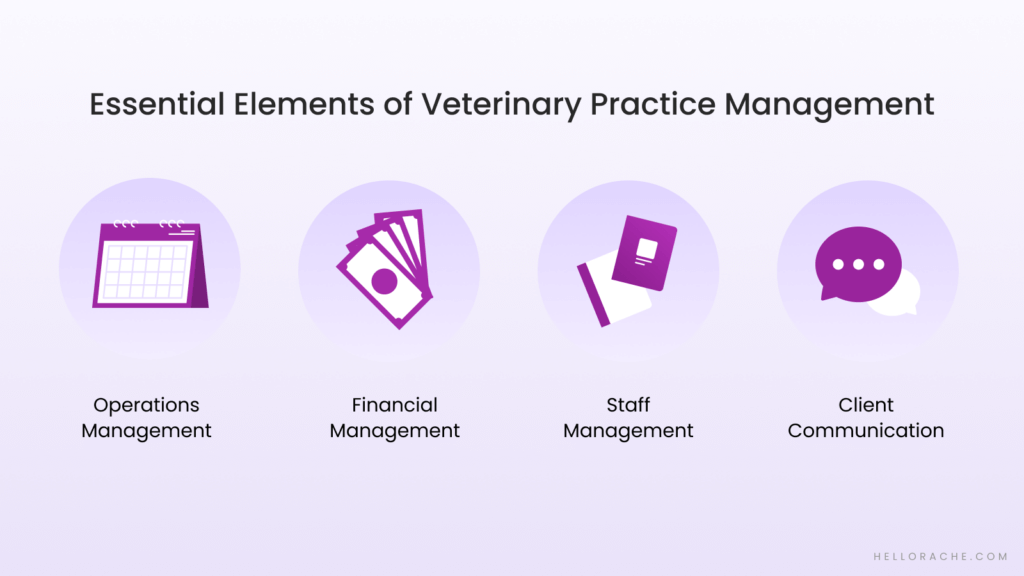
To build a strong foundation, focus on four key areas. These elements work together to create a seamless experience for your staff and your clients.
1. Operations Management
Daily operations shape the clinic’s experience from the moment the doors open. Smart appointment scheduling keeps the day moving without overwhelming the team. Workflow optimization reduces bottlenecks. And tools such as telemedicine software allow for quick follow-ups without tying up exam rooms.
Inventory management is just as important. Medications and supplies need close tracking to avoid waste or shortages. Clear standard operating procedures (SOPs) guide the team through routine tasks. Emergency protocols and after-hours coordination ensure patients get the right care even when the clinic is closed.
2. Financial Management
This starts with understanding your numbers. Revenue cycle management and pricing strategies help ensure the practice is paid fairly for its work.
Expense control is key here. Monitoring labor costs and overhead helps prevent slow leaks in the budget.
Make sure to keep track of these metrics. These ensure that your practice is growing in a healthy, sustainable way:
- Average transaction value
- Client retention rate
- Revenue per FTE
3. Staff Management
Your people are your most valuable asset. A thoughtful onboarding process sets expectations early. It also helps new team members settle in faster. Ongoing staff training supports both clinical and administrative confidence as roles evolve.
Culture plays a big role, too. Teams that feel supported stay engaged longer.
A 2024 Press Ganey report found that in healthcare, engaged employees are far less likely to leave. Meanwhile, disengaged staff are twice as likely to quit. This highlights the link between engagement and retention. Continuing education, leadership development, flexible schedules, and mental health support help protect veterinary teams from burnout and compassion fatigue.
4. Client Communication
Client relationships often begin with a phone call. If no one answers, trust is lost before the visit starts. Hello Rache’s 24/7 answering service ensures every call is handled professionally, even during busy hours or after closing.
Clear communication continues in the exam room and beyond. Treatment plans should be easy to understand. Also, appointment reminders should be set up to keep care on track.
Thoughtful follow-ups show clients they matter, turning one-time visits into long-term relationships.
Technology and Software Solutions for Veterinary Practices
Technology is no longer optional for a modern clinic. It’s the tool that allows you to scale your services without sacrificing care quality.
Practice Management Software (PMS)
Your practice management software (PMS) acts as the control center for daily operations. Core features should include:
- Medical records
- Scheduling
- Reporting
- Billing
Many veterinary practices now prefer cloud-based systems for remote access and easier updates. On-premise options may suit clinics that need tighter local control.
Choose a PMS that integrates with imaging and laboratory equipment. This helps reduce double-entry and errors.
Communication Tools
Automated appointment reminders and client portals reduce no-shows. Text messaging and email systems support quick updates, confirmations, and follow-ups. These tools give pet owners convenient ways to stay informed without overwhelming your front desk.
Professional answering services ensure true 24/7 availability. Hello Rache works with veterinary-trained receptionists who are supported by ongoing training. As part of their preparation, they are trained using VETport software. This system helps them understand how real veterinary clinics run before they begin supporting your practice.
This ensures they can confidently:
- Keep communication consistent even during busy hours or after closing
- Handle scheduling and message-taking
- Integrate directly into your workflows
- Answer calls using your practice name
- Abide by your protocols
Digital Health and Analytics
Telemedicine can be beneficial for follow-up consultations that don’t require a physical exam. It saves time for both practices and pet owners. This is especially true for practices serving larger geographic areas.
Today, around 129 million people in the U.S. live in areas with limited access to veterinary care, according to the 2025 State of Online Veterinary Care Report. This makes virtual follow-ups an important extension of in-person services.
Data analytics tools help you track your performance. Check which services are most popular and where you are losing money. This allows for more accurate revenue forecasting.
Client Experience and Communication Strategies
The experience you offer matters just as much as clinical skill. Clients remember how easy it was to reach you, how clearly things were explained, and how supported they felt before and after the visit.
Creating Exceptional First Impressions
First impressions often begin with a phone call. When calls are answered quickly and professionally, clients feel reassured, even during busy hours. That early interaction sets expectations for the entire visit.
Consider hiring a remote receptionist from Hello Rache. They support your team by handling calls around the clock using your practice’s protocols. They integrate into your existing systems, reducing training time and easing the load on your in-house team. Online booking tools add another layer of convenience for clients who prefer to schedule on their own time.
Building Trust and Loyalty
Trust starts with honesty. Clients are more comfortable when pricing and treatment options are explained early, without pressure or surprises. Clear conversations help pet owners feel respected, even when decisions are difficult.
Loyalty grows through consistent care beyond the exam room. Educational follow-ups, personalized recommendations, and thoughtful responses to feedback show clients you’re paying attention. When people feel heard and supported, they’re far more likely to return and recommend your practice to others.
Managing After-Hours Communication
You need a clear triage protocol for after-hours calls. A virtual receptionist or answering service can help filter these calls for you. This ensures that true emergencies get the help they need.
These solutions also support the practice owner’s work-life balance. You don’t have to be tied to your phone all night. You can trust that your clients are being handled professionally. This prevents the exhaustion that leads to mistakes.
Financial and Operational Best Practices
To keep your business healthy, you need to follow proven financial strategies.
Revenue Optimization
Revenue growth doesn’t always come from raising prices. Smart strategies focus on stability, accessibility, and efficiency. This helps your practice grow without putting pressure on clients.
- Pricing strategies: Use strategic pricing tools to stay competitive. These should also reflect the value of your medical services.
- Insurance processing efficiency: Tech tools speed up claims and improve cash flow. They also reduce administrative delays.
- Wellness plans and subscriptions: These create predictable revenue and encourage routine, preventive care.
Cost Management
Expenses can eat your profit quickly. You have to watch the small things to keep the big picture healthy.
- Labor costs: These often account for 35-40% of revenue. Virtual assistants can support non-clinical work without the overhead of full-time, in-house staff.
- Overhead: Reduce overhead expenses by reviewing utilities and facilities costs regularly.
- Supply chain: Negotiate with vendors and watch your laboratory equipment stock levels.
Key Performance Indicators
Use data to see how your veterinary practice is actually doing. It highlights issues early, before they turn into larger problems.
- Call answer rates: Professional services like Hello Rache can significantly improve response times and reduce missed opportunities.
- Average transaction value: Check that pricing reflects the time, skill, and care involved.
- Appointment utilization: Monitor how fully your schedule is being used.
- Client retention: Aim for a benchmark of at least 80%.
Staff Management and Team Development
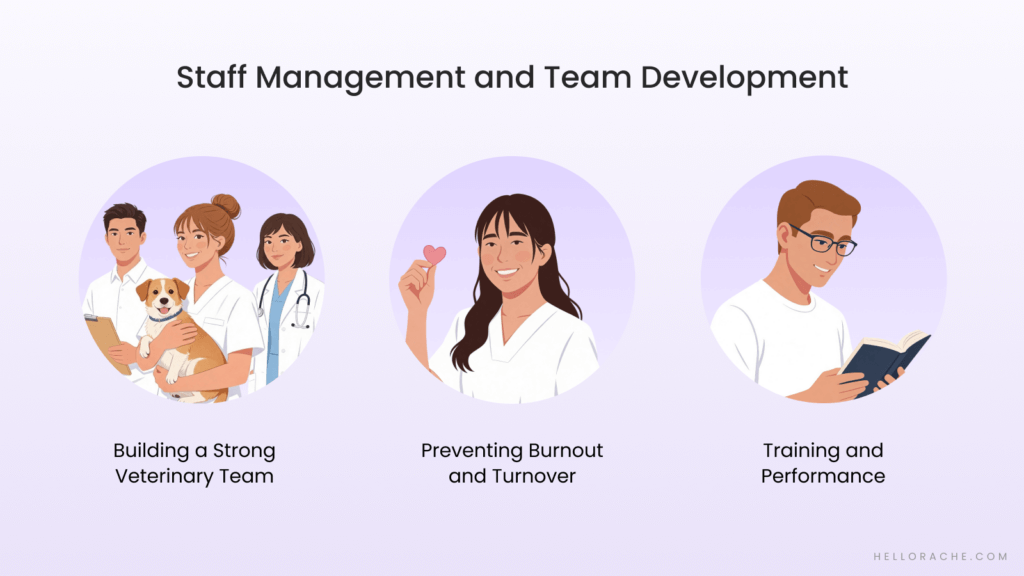
Managing your staff is about creating stability in a demanding environment. Clear expectations and strong support systems help reduce day-to-day stress.
Building a Strong Veterinary Team
Building a strong veterinary team requires more than hiring good people. It depends on how the practice:
- Shows long-term commitment to the people keeping operations moving
- Adapts during busy periods
- Supports daily work
Make sure to have these in place:
- Competitive compensation and benefits help attract and retain top talent in the veterinary job market
- Clearly defined roles and responsibilities reduce confusion and prevent overlap
- Cross-training allows coverage during vacations, illness, or busy periods
Bonus Tip:
- Utilize an outsourcing partner like Hello Rache that focuses on top-tier talent and long-term relationships for time-consuming administrative tasks that otherwise contribute to burnout.
Preventing Burnout and Turnover
Burnout doesn’t happen overnight. It builds when stress goes unchecked, and there is no recovery time. Consider implementing:
- Simple team-building efforts that strengthen trust and workplace culture
- Early recognition of compassion fatigue and emotional overload
- Access to mental health resources and supportive leadership
- Reasonable scheduling and protected time off
Training and Performance
Training sets expectations and keeps standards consistent as the practice grows. Ongoing feedback helps people improve without pressure. Make sure to have these set up in place:
- Regular feedback and recognition systems that reinforce strong performance
- Continuing education opportunities that support growth
- Structured onboarding programs for new hires
Common Challenges and Solutions
Every veterinary practice runs into pressure points. What matters most is how quickly you recognize them and put systems in place to respond. When handled well, common challenges become opportunities to strengthen operations.
Challenge 1: Missed Calls and Lost Revenue
Unanswered calls cost more than most practices realize. When clients can’t reach you, they move on. Over time, those missed opportunities quietly drain revenue and trust.
- 24/7 answering services like Hello Rache ensure every call is handled professionally
- Multi-channel options such as text and email make your practice easier to reach
- Unanswered calls lead to lost appointments
Challenge 2: Staffing Shortages
Staffing shortages create a cycle of stress and turnover. Breaking that cycle requires flexibility, support, and smarter resource allocation.
- Outsourcing non-clinical tasks, such as answering services or bookkeeping to reduce workload
- Flexible scheduling options like shorter shifts or four-day weeks
- Competitive compensation strategies based on local market data
Challenge 3: Client Price Sensitivity
Rising costs make many pet owners hesitant to approve care. Clear communication helps prevent misunderstandings and builds trust.
- Value-based service packages that make routine care feel more manageable
- Transparent pricing conversations from the start
- Payment plan options like Care Credit
Challenge 4: Work-Life Balance
A lot of veterinary practice owners feel like they can never fully step away. When every decision depends on you, it’s easy to feel exhausted. Sustainable balance comes from systems that keep the practice running. Even when you’re not there. Make sure to:
- Delegate daily operations and trust office managers and team leads
- Use technology for remote visibility without constant check-ins
- Set clear boundaries around availability and off-hours
Building a Sustainable Veterinary Practice in 2026
Successful veterinary practice management comes down to balance. Great care depends on strong business systems, clear communication, and technology that supports your team instead of slowing them down. With reliable operations in place, vets can focus on animal health. Meanwhile, clients can feel confident in the care they receive.
Practices that improve continuously and use the right tools are better positioned to grow without burning out their people. Support systems matter, especially as demands increase.
Learn how Hello Rache can transform your practice communication.