The healthcare industry moves fast. Behind every patient visit and treatment is a busy administrative engine that keeps things running. Without this support, clinics would struggle to stay open, and doctors couldn’t focus on patient care.
At the center of this system is medical billing and coding. These are two distinct yet interconnected roles that ensure healthcare providers are compensated for their hard work.
Understanding how these steps work is vital for any administrator or practice owner seeking to improve their revenue cycle. It isn’t just about filing paperwork or typing numbers into a screen. It’s about turning a patient’s medical story into a language that insurance companies can understand.
When done right, this keeps the practice financially healthy and provides patients with clear billing and insurance information.
In this guide, we break down today’s coding systems, the step-by-step path of a claim, and the tech changing the field. Whether you run a small office or a large medical group, these tips can help you simplify your work and lower the stress of paperwork.
Highlights
- Correct medical coding uses universal systems like ICD-10-CM, CPT, and HCPCS to list every diagnosis and treatment.
- New technology and virtual medical billing assistants help practices save money while maintaining accurate work.
- Medical billing and coding help healthcare practices get paid by turning patient visits into insurance claims.
What is Medical Billing?
Medical billing is the process of submitting and tracking claims to health insurance companies to get paid for health care services.
You can think of the medical biller as the link between the clinic and the insurance payer. Their job is to make sure the provider receives the correct amount for the care provided. This is more than just sending a bill. It takes ongoing communication with patients and insurers to correct errors.
The work starts when a patient makes an appointment and ends when the bill is zero.
A major part of a medical biller’s job is revenue cycle management. This means tracking the patient’s money journey from start to finish. They must check insurance claims details, handle timely payments, and resolve any blocked or denied claims.
Without effective medical billing, a practice may not have enough cash to pay staff or purchase new tools.
This role affects both the provider and the patient. For the doctor, good billing means a steady income and less stress. For the patient, it means getting clear bills that show what they truly owe.
This field is growing fast. A Polaris Market Research report found that the global medical billing market was valued at ~$17.25 billion in 2024 and should reach ~$53.75 billion by 2034.
Many modern offices are moving away from legacy in-house setups to save on costs. Using a medical billing virtual assistant lets an administrator delegate these tasks to professionals without the cost of a local staff member. If your team has too much to do, medical billing companies can offer a way to handle more patients as your practice grows.
What is Medical Coding?
Medical coding is the process of converting healthcare documentation into short codes made of letters and numbers.
When a doctor sees a patient, they document the diagnosis, procedures performed, and supplies used.
A medical coder takes these medical histories and puts them into a standard format. This way, every healthcare office worldwide uses the same terminology to describe illnesses and treatments.
There are three main classification systems in the United States that every pro must know. Being accurate with these systems is the only way to get the right insurance reimbursement and maintain robust health information data.
- CPT (Current Procedural Terminology): These five-digit codes show the services a provider gives, including surgeries and CPT Category II codes for performance.
- HCPCS (Healthcare Common Procedure Coding System): Based on CPT, this system assigns codes for medical treatments, including medical equipment, braces, and ambulance services.
- ICD (International Classification of Diseases): These codes are primarily for a medical diagnosis and include the ICD-10-CM and ICD-10-PCS sets.
Coding accuracy is a must for any modern office. Even a minor mistake can lead to a denied claim or a coding regulatory issues audit.
People in this field often work behind the scenes to make sure the electronic health record is ready for the billing team. Many offices find that virtual assistants are key to efficient medical billing and coding because they can focus on the details without office noise. This focus keeps health data secure and helps the practice comply with Medical Law and Ethics.
The Medical Billing and Coding Process
The path from the doctor’s room to a paid bill is a step-by-step journey. Every part needs care to avoid errors that can slow down the revenue cycle.
The cycle usually has seven main steps that every administrator should know:
- Patient registration and insurance verification: Staff collect patient information and verify insurance to ensure coverage for the visit.
- Medical service delivery and documentation: The doctor treats the patient and records every detail in the medical records to create the healthcare documentation.
- Medical coding assignment: A medical coder reads the notes and assigns the appropriate ICD-10, CPT, and HCPCS codes to document the visit.
- Claim creation and submission: The medical biller uses codes to create and submit insurance claims via specialized coding software.
- Insurance adjudication: The insurance company reviews the claim for errors and HIPAA compliance to determine the final payout.
- Payment posting and follow-up: After the insurer pays, the biller posts the funds to the patient account and handles any Medicare changes or denied claims.
- Patient billing for remaining balance: If the patient still owes money, the biller sends an email or paper bill for the remaining balance.
These steps rely on each other. A coder cannot do their job without good notes from the doctor. Similarly, a biller needs the correct codes to send a clean claim.
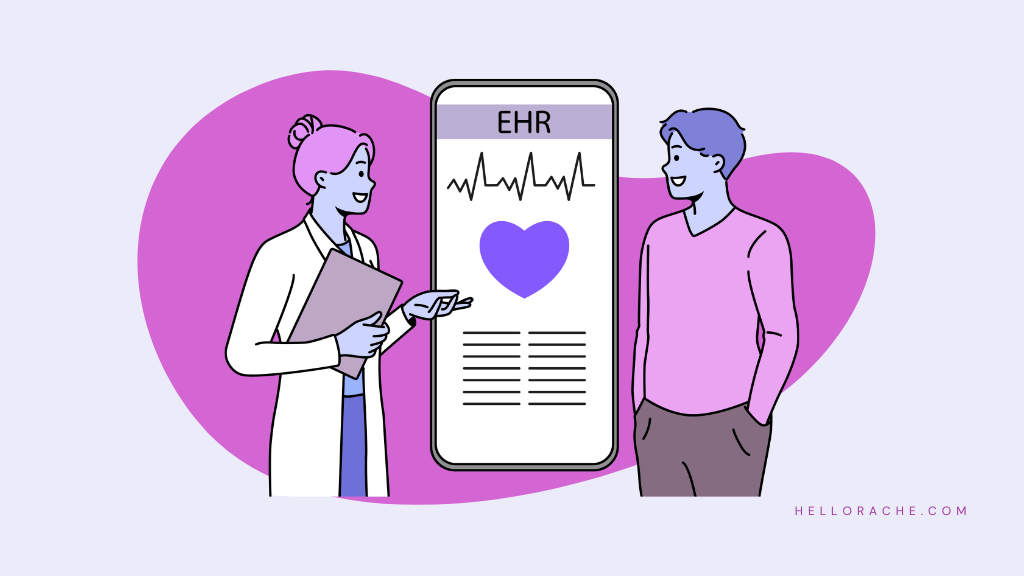
Most of this work happens inside an electronic health record system. EHR software solutions for modern healthcare providers connect clinical and financial data. When your tools and your team work together, you reduce the risk of “lost” claims and ensure more timely payments.
Skills and Qualifications for Medical Billing and Coding Professionals

Working in this field requires a specific blend of technical knowledge and analytical training. Because these professionals handle sensitive patient information and complex financial data, their educational requirements are serious.
Qualifications for these roles include:
- Advanced credentials from the American Health Information Management Association
- Industry certification, such as the Certified Professional Coder (CPC) from the AAPC
- Short-term certificate from schools like Maricopa Community College or LSU Eunice
- Associate degree in health informatics or medical records management
- High school diploma and a completed medical coding program
Essential skills for success include:
- Deep understanding of medical terminology and basic human anatomy
- Strong attention to detail when managing records at medical facilities
- High proficiency in tech for handling electronic billing and records
- Mastery of complex classification systems and HIPAA guidelines
The job market for these roles is strong. According to the Bureau of Labor Statistics Handbook, employment for medical records specialists is projected to grow by 7% from 2024 to 2034.
Technology in Medical Billing and Coding
The days of paper files and hand-written medical histories are over.
Today, medical billing and coding are powered by software that handles most of the work. These tools help prevent human errors that lead to denied claims and revenue-cycle delays. From electronic health record systems to AI coding software, tech is making the office side of medicine much faster.
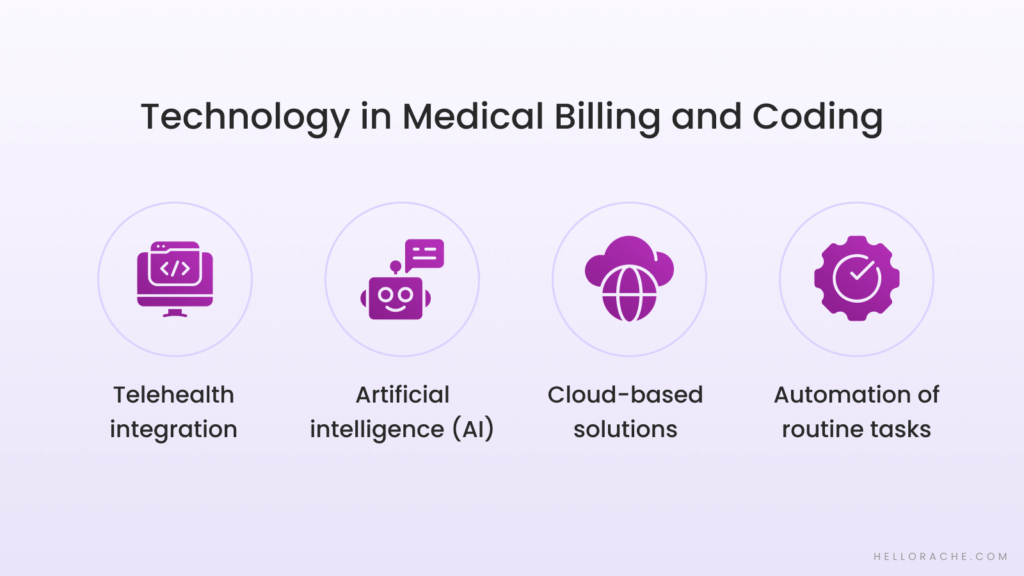
Some of the new trends include:
- Telehealth integration: Billing tools are adapting to the codes needed for remote patient treatments and virtual care visits.
- Artificial intelligence (AI): AI can suggest ICD-10 codes based on physician notes, accelerating coding and improving accuracy.
- Cloud-based solutions: These enable remote work, allowing offices to find top talent from anywhere in the world.
- Automation of routine tasks: Software can verify insurance and identify errors before a claim is submitted.
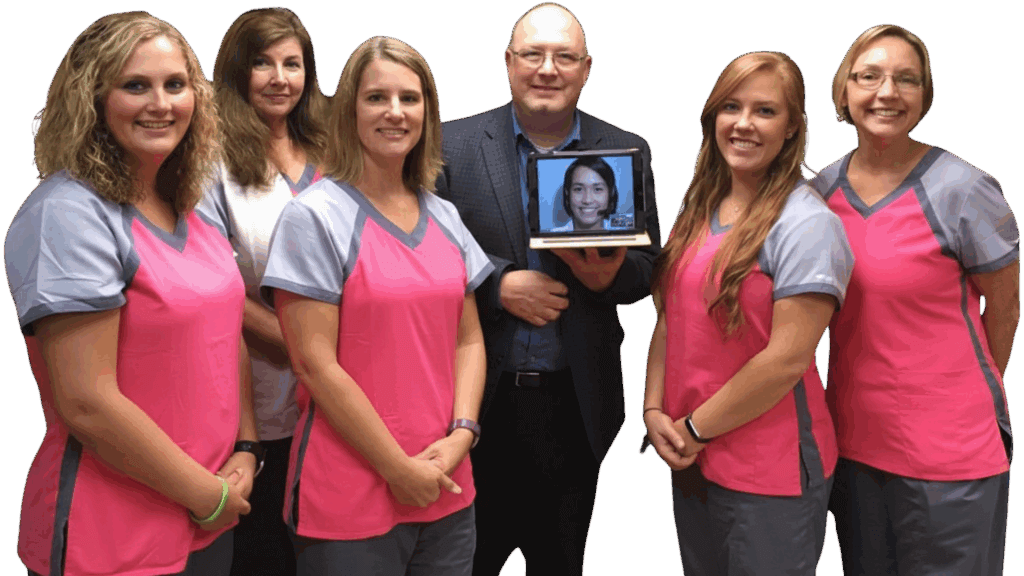
One major shift is the use of a Hello Rache Healthcare Virtual Assistant®. These pros use secure tech to do the work of a local medical records technician while ensuring HIPAA compliance within your practice management program.
Working with virtual medical billing assistants gives your clinic a significant advantage, leading to fewer errors and faster payments from insurance carriers.
Career Opportunities in Medical Billing and Coding
The need for medical billers and coders is higher than ever. As the population grows and healthcare becomes more digital, the need for people to manage health information data grows too. This field offers a steady career path with many opportunities for advancement. It’s also a great role if you’re looking for remote work opportunities.
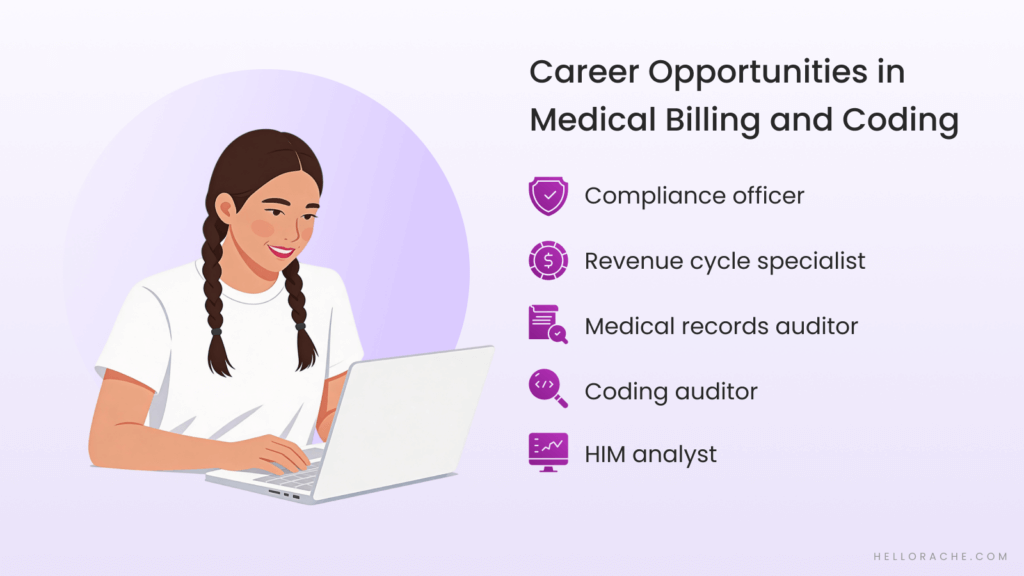
Most people start in entry-level roles, such as medical billers or coding clerks. From there, they can move into specialized roles:
- Compliance officer: Focusing on HIPAA guidelines and medical, legal, and ethical issues.
- Revenue cycle specialist: Managing the overall financial health of a medical facility.
- Medical records auditor: Ensuring all files meet legal, ethical, and insurance rules.
- Coding auditor: Reviewing work for accuracy and compliance with billing rules.
- HIM analyst: Using health informatics to improve patient care and workflows.
Hello Rache helps by linking trained pros with busy provider offices. Our Healthcare Virtual Assistant® team members often have a background in nursing, so they are well-versed in medical terminology. They work flexibly while giving great service to a clinic.
Offices that can’t find local staff often try outsourcing healthcare services. This lets them find the best virtual assistants who are already trained and ready for the job.
Challenges and Opportunities
Even with new technology, medical billing and coding continue to evolve. Every year, new ICD-10-CM and CPT updates force pros to engage in continuous learning. Managing claim denials is another hurdle, as even a small error in patient information can cause a rejection and stall the cycle.
These hurdles offer vital chances for growth and improvement. Solving issues with timely payments and claims submission often leads to more efficient office systems.
Many clinics now use healthcare outsourcing companies to handle complex cases and manage regulatory compliance. These partnerships free your local team to focus on providing better care.
Optimizing Your Healthcare Practice With Medical Billing and Coding
Medical billing and coding are the threads that hold the money side of healthcare together. By standardizing medical data, these pros make sure healthcare providers can keep their offices open and help their patients. While the rules are strict, getting these steps right is the key to a strong revenue cycle.
The right mix of trained people and new tech can turn paperwork into a strength for your office. Whether you want to start a career or improve your practice, knowing the basics is the first step. Hello Rache is here to help you find the expert talent you need to grow and succeed.
FAQ
What Is the Difference Between Medical Billing and Medical Coding?
Medical coding turns patient notes into standard codes for diagnoses and treatments. Medical billing uses those codes to submit claims to insurance companies and to collect payment for the doctor.
How Long Does It Take to Become a Medical Biller and Coder?
Most certificate programs take nine to 12 months to finish. Those pursuing an associate degree typically spend two years in school before starting work in the field.
Can Medical Billers and Coders Work Remotely?
Yes, this is one of the most common remote healthcare jobs today. Many people work from home for insurance firms, billing services, or as virtual assistants.