Imagine walking into your dental office on a Monday morning only to find three last-minute cancellations. Your front desk team is already stressed with insurance calls while patients wait past their scheduled times.
These daily hurdles are exactly why modern dental practice management is about much more than just filling chairs. It is about building a stable business that lets you focus on your patients.
In 2026, running a dental practice requires a careful mix of human skill and smart technology. Whether you lead a solo office or a large network of DSOs, your systems determine your practice growth. This is where effective practice management comes in.
This guide covers everything from clinical workflows to financial management, helping you run a better office.
Highlights
- Cloud-based dental practice management software is now the standard for supported offices.
- Good dental office management cuts staff burnout and boosts the patient experience.
- Using AI and Healthcare Virtual Assistant® services can save administrative time.
What Is Dental Practice Management?
Every successful dental practice runs on a set of administrative and operational systems. Dental practice management is essentially the work of leading the business side of a dental office.
This work ensures the company remains profitable and follows all laws. While the dentist handles clinical care, management oversees staff and revenue cycle management.
Still, it differs from general medical management because it addresses specific dental procedures and unique insurance rules.
The scope of this field includes four main areas:
- Financial work involving the oversight of practice finances and billing
- Administrative tasks like scheduling and patient communication
- Operational duties focused on the dental team and facility
- Clinical support to store treatment notes and imaging
Key Components of Dental Practice Management
Running a dental office involves many moving parts that must work together.
Patient scheduling is perhaps the most important piece. Good schedules stop no-shows and give hygienists and doctors balanced workloads. Without a solid system, the office can quickly become chaotic and stressful.
Other main components include:
- Patient data security to meet HIPAA and OSHA regulations
- Billing and making sure billing statements go out on time
- Managing a dental team of diverse dental professionals
- Marketing and outreach through social media and texts
- Insurance management and accurate claims coding
- Inventory and supply management
- Patient records to track history
The Evolution of Dental Practice Management
In the past, dental office management relied on paper files and manual checklists.
Today, however, the industry has moved toward digital systems. This change to integrated systems lets practice owners see business analytics and metrics from any device. It makes the dental practice faster and more helpful to customers.
Modern technology also offers new ways to handle desk work without hiring more local staff. Many offices now use a dental Healthcare Virtual Assistant® to handle patient reminders. This move toward virtual support lets the clinical team focus on patients while assistants handle phone calls.
Why Dental Practice Management Matters
Good dental practice management builds a workspace where patients feel valued. Yet messy systems cause errors that harm your practice’s growth and long-term reputation.
Impact on Patient Experience
A well-run office reduces wait times in the waiting area. Precise scheduling builds trust and boosts acceptance of the treatment plan.
Furthermore, clear communication through text or social media keeps customers happy throughout their entire practice lifecycle. From appointment scheduling to follow-ups and overall better health.
Financial Performance
Good management is key to building a financially sound practice. It lets you track practice finances and cash flow to fix your revenue cycle management. This ensures claims coding is right and payments are fast. Tracking metrics like EBITDA also helps you make smart growth decisions.
Plus, efficient billing means higher revenue, fewer claims denials, and faster reimbursements.
Operational Efficiency
According to the Oral Health Workforce Research Center, ~79.3% of oral health providers reported feeling burnout during the pandemic. Better practice workflows save time, reduce your team’s workload, and lower stress.
Using checklists and systems keeps the dental office moving while minimizing duplicate work and errors. Solutions like Hello Rache help practices achieve these goals by taking over the paperwork.
Compliance and Risk Management
Protecting patient data is a must for any dental practice. Correct dental practice management keeps you in line with HIPAA regulations and OSHA safety rules. This involves doing risk assessments and keeping good treatment notes.
Still, knowing the key to success for HIPAA compliance is the first step toward staying audit-ready.
Essential Elements of Effective Dental Practice Management
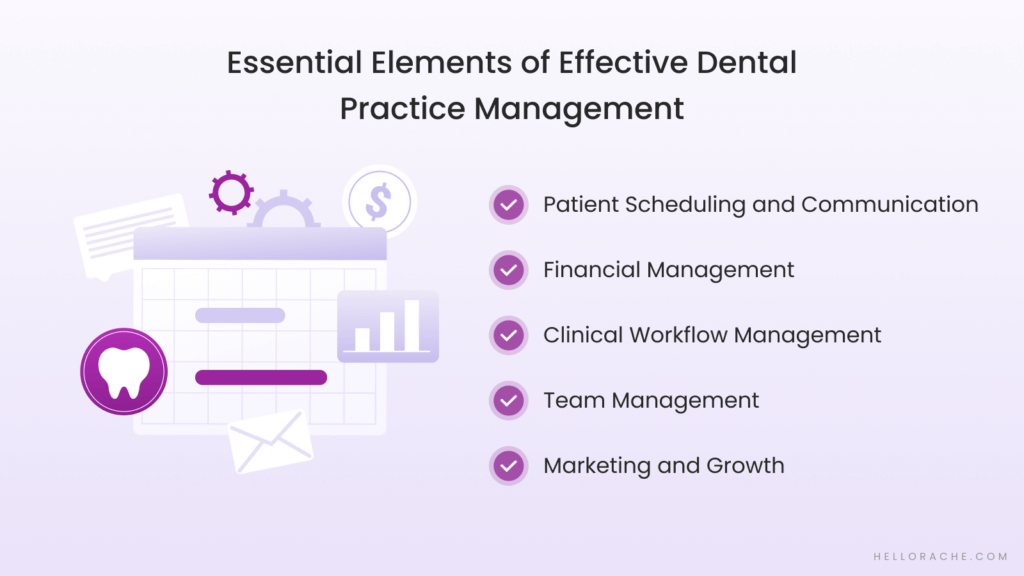
You must master these core pillars to run a high-performing office. This focus ensures both administrative and clinical tasks move in harmony.
1. Patient Scheduling and Communication
Your calendar is the heart of the office. Using a skilled appointment setter keeps your schedule full, and automated reminders help reduce no-shows. This keeps your revenue steady all week long.
AI-powered scheduling via Hello Rache further optimizes bookings and reduces no-shows, keeping chairs full.
Customer portals allow patients to access their bookings, history, and medical reports, reducing calls and unnecessary visits.
Effective scheduling also means managing the waitlist for last-minute cancellations to prevent gaps. According to the Cureus study on missed dental appointments, about 31% of dental visits were missed.
2. Financial Management
Managing money starts with treatment planning to get a high case acceptance rate. Your team must also master insurance verification and authorization to avoid denied claims. Clear payment processing and collection systems keep your cash flow healthy.
Other elements include:
- Financial reporting and analytics
- Claims submission and tracking
3. Clinical Workflow Management
The clinical side needs strong management to run smoothly. This involves using Electronic Health Records (EHR) and detailed treatment notes. Digital imaging and efficient prescription management are needed for both patient care and insurance management.
4. Team Management
Your dental team is your top asset. Burnout is a significant risk that leads people to quit. According to an MDPI study on burnout, burnout rates among dental workers reached 44.49%. Still, managing a heavy workload is easier when you have the right roles filled.
Effective dental practice management needs:
- Roles, assignments, and permissions
- Training and development tracking
- Staff scheduling and time tracking
- Internal communication tools
Plus, hiring a skilled dental office administrator can help balance the load between staff, keeping your team productive.
5. Marketing and Growth
To stay ahead, you need a smart marketing strategy. This includes managing online reviews and getting new patients. Tracking referral sources and recall systems helps you determine which marketing channels are working best.
Other elements include:
- Online reputation management
- Patient acquisition strategies
- Retention systems
Dental Practice Management Software: The Modern Solution
In 2026, you cannot run a modern office without dental practice management software. These tools are the brain of your practice. They put billing, clinical files, and patient communication in one place.
Dental practice management software handles the daily tasks of a dental office. It has parts for scheduling, financial management, and imaging. There are two types of this software:
- On-premise: These need a server at your location. They don’t usually integrate that well with other tools, especially newer ones.
- Cloud-based: These are hosted on the cloud. They let you update files across many supported offices in real-time.
The market has shifted toward these web platforms lately. According to Grand View Research, the web-based segment accounted for 55.57% of the market in 2024. These systems enable automatic ledger updates and improved insurance management. They are key to building a financially sound practice and make it easy for virtual assistants to log in securely.
Key Features to Look For
When you pick dental practice management software, look for an easy interface. Your dental team should be able to learn it fast.
You need strong billing and insurance tools to handle claims coding. Automated patient communication, like texts and appointment reminders, is also a must.
Good software should offer:
- Easy reporting and business analytics dashboards
- Mobile access for practice owners on the move
- Clear monthly management reports for metrics
- Integration with digital dentistry and imaging
Benefits of Implementing Practice Management Software
Implementing the right software offers a massive return on investment. The most immediate gain is the time you save by automating routine tasks, such as calling for appointment reminders. This improves efficiency and allows your dental professionals to focus on clinical care and patient experience.
Furthermore, these systems provide the metrics needed for data-driven growth and better financial outcomes.
Hello Rache’s AI-powered phone answering and scheduling integrates seamlessly with your existing dental practice management software. This way, you can handle overflow calls and after-hours bookings without changing your internal workflow.
This ensures that your office captures every opportunity while your in-house staff remains focused on the patients in the waiting area. You can explore dental virtual assistant responsibilities and benefits to find even more ways to save time.
Common Implementation Challenges
Moving to a new dental practice management system has some hurdles. The biggest is often training staff on the new workflow. Moving patient data from old systems is also a complex job. You must ensure no information is lost during the move.
Price is another factor, as good management solutions cost money. But the long-term productivity gains are worth it. It is also vital to see how the software fits with your digital dentistry tools.
Best Practices for Dental Practice Management
To truly succeed, you need more than just software. You need a culture of efficiency and patient-centered care. These best practices will help you fix your practice workflows.
Establish Clear Systems and Protocols
Standardizing your work is the first step to good practice. Every person on the dental team should know their job. Using quality-control checklists and documented workflows so that everything from HIPAA to cleanup is done properly.
Leverage Technology Effectively
Start by choosing the right software for your practice size. Update your dental practice management software and give your team regular training. Look at how AI and communication technologies can help you find more patients.
Consider adding a virtual assistant to earn a significant edge. These pros handle the desk work so your in-office team can focus on clinical care. Hello Rache integrates AI tools to handle routine phone calls and scheduling.
Focus on Patient-Centered Care
Your practice exists to help your patients. Every choice should consider the patient experience, from how your front-desk dental receptionist greets patients to check-in.
Your choices should respect the patients’ time and loyalty. Using texts or social media to say happy birthday or send health tips builds trust. When patients feel you care, they are more likely to say yes to a treatment plan.
Streamline your check-in and check-out processes, and set up patient feedback systems to continuously improve.
Monitor Key Performance Indicators (KPIs)
Here are the metrics you need to track:
- New patient acquisition and retention rates
- Schedule efficiency and chair time
- No-show and cancellation rates
- Production and collection
- Case acceptance rates
Invest in Your Team
A healthy, efficient, and happy team is better for any dental practice. That’s why investing in your staff with mentorship pays off. Consider:
- Recognition and incentive programs
- Ongoing training and development
- Clear communication channels
How Hello Rache Enhances Dental Practice Management
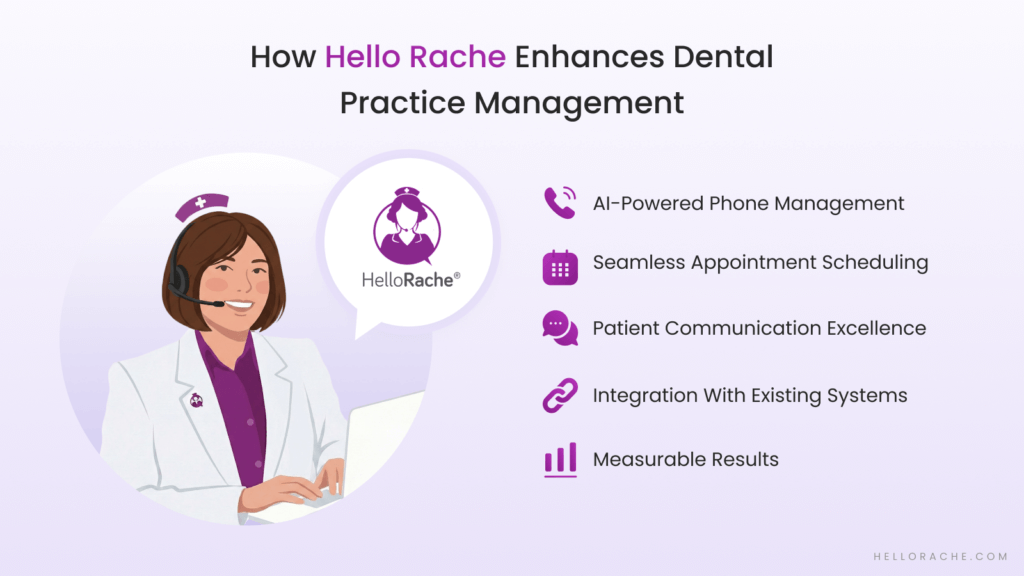
Modern dental practice management needs the right people. Hello Rache gives you virtual help that fits into your office systems. This lets you grow and improve patient communication without needing more office space.
AI-Powered Phone Management
A missed call is a lost chance for your dental practice. Hello Rache provides 24/7 phone answering to make sure every customer talks to a person. Our systems handle questions and route calls. This makes your office easy to reach at all times, reducing lost opportunities.
Smart call handling also cuts stress for your front desk team. They can focus on patients in the waiting area rather than a ringing phone. This improves the waiting room feel and the patient experience.
Taking more calls while keeping the front desk focused on the waiting areas can help strengthen your market leadership, especially in competitive locations.
Seamless Appointment Scheduling
Keeping schedules full is a top challenge in dental office management. Hello Rache has expert receptionist scheduling professionals to manage your calendar, coupled with automated scheduling too. They handle appointment reminders, fill last-minute cancellations, and book new visits. Patients can also self-schedule their appointments.
This service works with your current dental practice management software. You do not have to change your workflow to start. Having a pro manage your scheduling ensures your chair time is full. This leads to more productivity and better financial results.
Patient Communication Excellence
Staying in touch is key to retention. Hello Rache handles your patient reminders and follow-up calls. We can run recall campaigns to bring back patients who have been away. This clear communication builds strong bonds and helps with patient care.
Our virtual pros represent your practice with great care. They answer FAQs about dental procedures and help patients with insurance. This high level of service makes every patient feel supported by your office.
Integration With Existing Systems
Hello Rache fits right into your current setup. Our pros know the major dental practice management software and EHR systems. In fact, they train with the top cloud-based dental software, Curve Dental Practice Management. This means there will be no break in your daily workload when we join. We become a part of your dental team.
Our goal is to make your life easier by doing desk work. This lets you and your staff focus on providing great clinical care.
Measurable Results
Delegating administrative tasks to a specialized team does more than just clear your desk. It provides measurable results that you can see in your monthly management reports.
By using advanced systems, your practice can achieve a new level of clinical excellence and business growth.
With Hello Rache, you can expect:
- Reduced administrative workload
- Increased appointment bookings
- Improved patient satisfaction
- Enhanced staff productivity
Common Challenges in Dental Practice Management (and Solutions)
Even top practices face hurdles. The key is to have a plan before they hurt your growth. Here are common issues in dental office management and how to solve them.
Challenge 1: High No-Show Rates
When patients skip visits, it costs you time and money. The best solution is an automated system like Hello Rache for appointment reminders. You should also use a clear cancellation rule. An offsite receptionist can stay on top of these calls for you.
Challenge 2: Inefficient Scheduling
Gaps or double-bookings create stress. Use AI-powered scheduling to fix your calendar. These systems know when to perform different dental procedures.
Challenge 3: Communication Breakdowns
Missed calls and slow replies upset patients. Solve this with a 24/7 phone service or virtual help for high call volumes. Giving fast replies builds trust and helps your reputation.
Challenge 4: Insurance and Billing Complexity
Dealing with insurance management can be a pain, especially with claim denials and payment delays. Use strong practice management software with good billing tools. This reduces denied claims and keeps your cash flow steady.
Challenge 5: Staff Burnout
Too much desk work causes burnout. Fix this by automating tasks and using virtual help. This lets your in-office staff do more rewarding work. Learning about the benefits of outsourcing healthcare services can offer a better path for your team.
The Future of Dental Practice Management
The landscape of dental practice management is shifting toward automated, data-driven operations. To remain competitive, practice owners must embrace these advancements:
- Emerging trends: Leverage AI, machine learning, teledentistry, and mobile apps to drive patient engagement and practice growth. Set up enhanced data analytics and predictive modeling.
- AI integration: Use intelligent scheduling, automated communication, and predictive analytics to optimize clinical and business systems.
- Strategic preparation: Stay informed on technology, invest in scalable solutions, and prioritize patient experience innovations.
Streamlining Your Dental Practice For Long-Term Success
Effective dental practice management is the core of a stable business in 2026. By using the right systems and software, you can give better patient care and grow.
Still, success requires staying proactive and keeping your workflow efficient. The future of dentistry is bright for those who change and innovate.
Evaluate your current practice today to identify areas for improvement. Focus on efficiency and your patients to build a practice that lasts. Modern solutions streamline your operations and help you succeed.
Discover how Hello Rache’s AI-powered phone answering and scheduling solution can revolutionize your dental practice management.
Frequently Asked Questions About Dental Practice Management
What does a dental practice manager do?
A dental practice manager leads the non-clinical side of an office. They handle staff and financial management while overseeing scheduling and billing. Their goal is to keep the office running smoothly and in compliance with all regulations.
How much does dental practice management software cost?
Most cloud-based management solutions cost between $300 and $800 per month. The price often depends on the size of your dental team and the tools you need. While there is an upfront cost, the gain in productivity usually pays for it fast.
Solutions like Hello Rache offer flexible pricing to complement your existing systems.
What’s the difference between dental practice management software and EHR?
Practice management software handles the business side, like scheduling and billing. EHR focuses on clinical files, like treatment notes and imaging. Modern dental answering services and software often put both in one system.
How can I improve my dental practice management?
Start by using modern software and automating appointment reminders. Track your KPIs to see where you can grow. Investing in staff training and virtual help like Hello Rache can also boost your efficiency.
What are the biggest challenges in dental practice management?
Common hurdles include high no-show rates and complex insurance management. Many practice owners also struggle with staff burnout and keeping schedules full. Using AI tools and specialized help can solve these problems and support your growth.
Is dental practice management software worth it for small practices?
Yes. Even small offices benefit from better scheduling, automated communication, and cleaner billing. These systems are scalable and affordable for any size. The time your staff saves on busy work usually pays for the software quickly through higher production.
How long does it take to implement dental practice management software?
It typically takes 2–8 weeks, depending on your office size and data needs. Cloud-based tools are often faster to set up. You should plan for another 2–4 weeks of training to ensure your team is comfortable with the new system.
Can dental practice management software integrate with my existing tools?
Most modern systems use digital imaging, payment tools, and AI solutions such as Hello Rache. You should always check for compatibility before you buy. Seamless integration is key to making sure your daily workflows remain efficient and fast.
What should I look for when choosing dental practice management software?
Look for an easy interface, strong billing tools, and automated patient communication. It should also have solid reporting and HIPAA-compliant data security. Request a trial to see if the reporting and scheduling features fit your specific needs before committing.
How does AI improve dental practice management?
AI handles routine tasks like answering phone calls and sending appointment reminders. This reduces the burden on your team and stops missed calls. It also supports data analytics for growth, allowing your staff to focus on clinical care rather than manual desk work.