Running a medical practice today feels like a race that never ends. You want to deliver high-quality care. But the traditional model often limits you to what happens in exam rooms. Once a patient leaves your office, you lose sight of their health until their next visit. That gap is where issues quietly build.
Remote patient monitoring companies (RPM) help close that gap. With healthcare technology, you can monitor a patient’s vital signs remotely. This means you do not have to rely on paper logs or memory. This shift supports longitudinal care and gives clearer insight into treatment response. It also helps providers make timely decisions that keep patients healthier and out of the hospital.
This article explores the top companies that help your healthcare system thrive in a digital world.
Highlights
- Remote patient monitoring (RPM) closes the care gap between visits by continuously tracking patient vitals at home, enabling earlier interventions, better treatment response, and fewer hospitalizations—key to hospital-at-home and longitudinal care models.
- The best RPM companies combine ease of use, data security, and billing compliance, offering HIPAA-compliant platforms, EHR integrations, and automated tracking for CPT codes like 99091 to support both patient engagement and practice profitability.
- AI, wearables, and medical-grade devices are driving RPM growth, with smart sensors and analytics helping care teams detect concerning trends early and reduce manual data review.
- Staffing and alert management are the biggest RPM challenges, which is why many practices turn to virtual healthcare assistants or in-house clinical teams to triage alerts, manage workflows, and prevent clinician burnout.
- Choosing the right RPM vendor depends on practice goals and scale, whether that means staffing-based support (like Hello Rache), enterprise platforms (Philips, Teladoc), specialty monitoring (Medtronic), or all-in-one automated solutions (Athelas, Tellihealth, HealthSnap, HealthArc).
Criteria for Selecting Remote Patient Monitoring Companies

Choosing a partner is a major decision for any healthcare organization. Here are some features you should consider when comparing providers.
Essential Features and Technology
The best platforms offer cellular-enabled RPM devices. These are way better than Bluetooth gadgets. They don’t need a smartphone or a complex setup to work. A patient uses their blood pressure monitor or glucose meter. Then, the data goes straight to the digital health cloud.
You also want clinical decision support. The software should flag things when a patient hits specific biometric thresholds. This keeps your clinical interactions focused on the people who actually need you right now.
Ease of Use and Data Security
If the tech is hard to use, your patients won’t use it. High patient engagement depends on simplicity. Look for a platform that integrates with your patient chart.
Security is non-negotiable. Make sure the company is HIPAA-compliant and uses encrypted virtual health technology.
Billing and Compliance
You need billing automation to make sense of the numbers. Look for companies that automatically track minutes for CPT code 99091. A partner who understands reimbursement models keeps your practice profitable while you provide equitable care. You want a system that handles paperwork so you can focus on your patients’ needs.
Overview of the RPM Industry Landscape
Remote patient monitoring is becoming part of everyday care. The healthcare system is moving toward a hospital-at-home model, with less reliance on manual tracking and in-person visits. For internal medicine and specialty groups, RPM enables you to stay connected to patients without requiring them to return to your clinic.
Growth Trends and Emerging Tech
Wearable medical-grade devices are becoming more common. A 2023 study revealed that 92% of individuals use a smartwatch to monitor their health.
These tools stream vital data throughout the day. This gives clinical teams better visibility into what’s happening at home. AI also has a key role here. It helps systems flag concerning patterns early, before a patient reaches a critical point.
Key Challenges
The biggest challenge isn’t the technology. It’s managing the flow of information. Alerts still need a human response, and many practices struggle to decide who owns that responsibility. This is why more teams are turning to virtual healthcare assistants. This ensures that nothing is missed.
Top 8 Remote Patient Monitoring Companies
Finding the right vendor depends on your specific goals. Some providers focus on the hardware, while others focus on software or the staff needed to run the program. The following companies represent the best options available in the market today.
1. Hello Rache
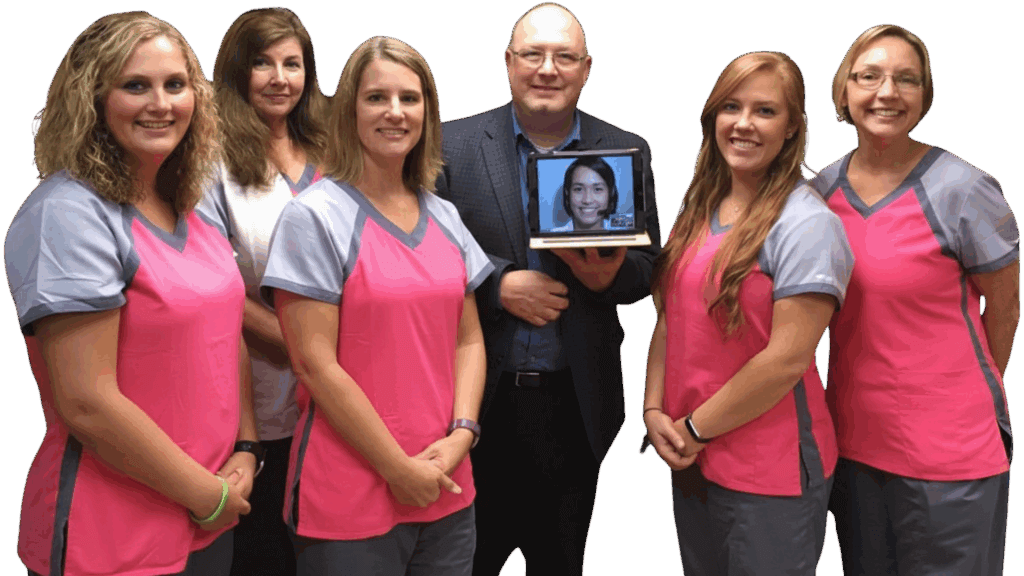
At Hello Rache, we provide Healthcare Virtual Assistants® who act as a bridge between your patient’s data and your clinical actions. Most practices have the technology. But they often lack the manpower to watch screens all day without burning out. We provide the skilled support needed to make your RPM program actually function.
Our virtual assistants are often registered nurses who integrate into your care team. They manage daily patient interactions and track alerts in real time. If a patient’s vital signs reach a red flag, they reach out immediately. This lets your in-office staff stay focused on the patients in front of them. Without being interrupted by constant data notifications.
Unique Features
- Deep experience with care coordination and updating the patient chart in real time
- Support for care transitions and billing automation to keep your revenue steady
- A way to restore work-life balance by taking over the “busy work” of monitoring
- HIPAA-certified assistants who understand professional assessment criteria
Pricing
Hello Rache offers a flat rate of $9.50 per hour. There are no long-term contracts or setup fees.
2. Philips Healthcare
Philips is a big name in health. Their virtual care management platform works for clinics of any size. Their hospital-at-home model helps keep your patients safe the second they leave your office.
Their “HealthSuite” is a digital health cloud that pulls in data from 4G medical devices. They put a lot of work into post-acute care specifically. It makes transitions of care a lot less stressful for the team. By tracking data early, they help patients transition from the hospital back to home care without the usual risks.
Unique Features
- Massive scalability for large healthcare organizations
- A wide range of wearable medical-grade devices
- Clinical decision support that filters out the noise
- Strong focus on population health management
Pricing
Philips uses custom pricing. Contact them for a quote.
3. Medtronic
Medtronic is well-known for its pacemakers and insulin pumps. Their RPM division applies that specialized knowledge to chronic disease management programs.
As a medical professional, you can use Medtronic’s HealthCast platform. This allows you to monitor your patients at any time. It relies on smart sensors, so you get a much clearer picture of what’s happening at home.
Unique Features
- Experience in cardiology and diabetes monitoring backed by clinical trials
- Designed for specialty groups managing high-risk patient populations
- Strong focus on treatment response and long-term clinical outcomes
- Medical-grade devices trusted across the healthcare community
Pricing
HealthCast’s pricing is not publicly available. But Medtronic states that continuous monitoring can help hospitals save nearly $20,000 per bed.
4. Athelas
Athelas automates the logistics of remote care. It focuses on making your program feel like it’s running on autopilot. Its remote patient monitoring program offers a “white-glove” onboarding experience by shipping devices directly to your patients.
The remote system includes a SIM-connected blood pressure monitor and weight scale. These are easy to use and are monitored by a nurse who checks in with you regularly.
Unique Features
- Emphasis on operational efficiency while maintaining clear visibility into treatment response
- Strong focus on automated workflows that support consistent patient monitoring at scale
- AI-driven tools designed to reduce manual review and surface meaningful patient data
- Integrated hardware and software built for fast deployment across physician practices
Pricing
Athelas typically uses a revenue-sharing model or a per-patient fee that aligns with the budgets of growing practices. They pre-screen patient insurance information to ensure the program is covered before enrollment begins.
5. Tellihealth
Tellihealth (formerly Accuhealth) focuses on removing the “tech headache” from medical practices. Their solution helps reduce costs, improve outcomes, and enhance the experience for both patients and providers.
They use a specialized system called AccuRPM. This platform integrates with many EHR software and can be implemented efficiently to meet your clinic’s specific needs. They have their own clinical teams that perform initial reviews of every incoming alert, so you only see the important ones.
Unique Features
- In-house clinical teams that provide 24/7 alert triage and clinical support
- The AccuRPM app is designed for high efficiency and ease of use
- Integration with your patient chart and EHR system
- Suitable for both small practices and large groups
Pricing
Tellihealth typically charges a monthly fee per patient for its services. Costs are based on volume and your specific implementation needs, so it is best to contact them for a custom proposal.
6. HealthSnap
HealthSnap positions itself as a bridge between you and your patient. They focus on patient engagement and real lifestyle changes to ensure patients know how to use the tools you provide.
Their platform is a strong fit for chronic care management. They even include a telehealth platform right in the app. This makes it easy to have clinical interactions the moment you notice a problem in the vitals.
Unique Features
- Patient reports that are simple to read and actually help change behavior
- Strong focus on lifestyle management alongside data tracking
- Tools that replace manual ways of gathering patient data
- Integrated telehealth platform for fast clinical follow-ups
Pricing
HealthSnap offers tiered pricing based on which features you choose to use. Contact them for a breakdown of their current costs.
7. Teladoc Health
Teladoc Health is a telehealth company. However, by collaborating with Livongo, you can, as a medical professional, monitor your patients’ chronic conditions 24/7 via smart devices and offer customized treatment options based on alerts you receive.
Your team can also benefit from Teladoc Health’s virtual setting system. It allows your team to handle both virtual safety checks and consultations simultaneously. It is designed to prevent patient falls, which cost the industry billions of dollars every year. In fact, it uses AI to identify movement risks before an injury happens.
Unique Feaures
- Virtual sitting technology to reduce patient falls and improve overall safety
- Real-time overviews of your virtual program in a customized environment
- AI features that identify injury risks from patient movement patterns
- Safety monitoring and virtual consultations in one workflow
Pricing
The Virtual Sitter’s pricing plans are not listed publicly. Contact Teladoc Health’s representatives for a quote based on your group size.
8. HealthArc
HealthArc offers an all-in-one platform for clinics that want a single place to virtually monitor patients, whether they have a chronic condition like diabetes or behavioral health concerns.
The company offers a wide range of health monitoring devices, such as pulse oximeters and glucometers. The software is very flexible, allowing you to set custom biometric thresholds.
Unique Features
- Automated clinical workflows that handle everything from device logistics to patient enrollment
- Data analytics that provide health insights into your entire patient population
- Customization for biometric thresholds and automated alert notifications
- Unified platform that streamlines your entire virtual care strategy
Pricing
HealthArc uses a flexible pricing model based on the specific modules you select and the number of patients you manage. Contact them for a demo and pricing structure.
Comparative Analysis
When selecting a remote patient monitoring provider, you must consider your practice size and goals. This table compares the top picks based on the things that matter most to your clinic.
Note: Hello Rache is the only company whose pricing is available on its website ($9.50 per hour). For the other companies, you will need to request a demo or contact the sales representatives to discuss a customized pricing plan.
| Company | Scalability | Technology and Integration | Clinical Support | Billing and Compliance | Logistics | Proven Results |
|---|---|---|---|---|---|---|
| Hello Rache | High (adds staff as needed) | Works with any EHR system | Virtual RNs for triage | Keeps billing revenue steady | Staffing-based | High ROI for practices |
| Philips | Enterprise (Health systems) | Cloud-based HealthSuite | Automated decision support | Comprehensive reporting | Hospital-at-home experts | Large-scale clinical trials |
| Medtronic | High (Specialty clinics) | Smart sensors / HealthCast | Specialty clinical support | Built-in audit tracking | Global shipping network | Decades of trial data |
| Athelas | High (Physician groups) | AI-integrated software | Automated alert flagging | Captures max CPT codes | White-glove direct shipping | High reimbursement rates |
| Tellihealth | High (Internal medicine) | Proprietary accuRPM app | 24/7 in-house clinical team | Automated clinical workflows and EHR-synced billing | Simple setup | Better patient outcomes |
| HealthSnap | High (Chronic care) | In-app Telehealth | Patient engagement tools | Automated billing | Full logistics service | Proven lifestyle impact |
| Teladoc | Enterprise (Employer groups) | Virtual sitting with AI capabilities | AI movement monitoring | Real-time person reporting | Fully integrated systems | Reduced patient falls |
| HealthArc | High (custom workflows) | All-in-one unified portal | Customizable thresholds | Automated timestamping | Direct-to-home shipping | Analytics-driven insights |
Future Trends and the Impact on Healthcare

Remote health is moving fast. Care is shifting away from waiting for something to go wrong. The focus now is on spotting changes early and acting before a patient reaches crisis.
Artificial intelligence is driving much of that change. Small wearable sensors can pick up subtle shifts in vital signs that are easy to miss in day-to-day care. Over time, this data starts to tell a story. It gives clinicians a clearer signal rather than a stream of numbers that are hard to interpret.
The long-term impact is significant. More patients can recover or be managed safely at home rather than being kept in a hospital bed for observation. That eases pressure on clinical teams and helps reduce burnout. It also brings consistent care to rural communities, making access to quality healthcare more equitable and reliable.
Building a Sustainable Future for Your Practice
Remote patient monitoring companies are changing how care is delivered. They help practices move away from manual tracking and toward continuous, connected care. This approach improves clinical outcomes and gives patients with the consistency they need between visits.
The future of RPM depends on more than technology. It depends on people. Practices that pair strong tools with the right support can manage patient data without overwhelming their teams. That balance makes long-term, sustainable care possible.
Ready to see how a virtual assistant can help manage your RPM program?