
Every year, dental practices lose thousands of dollars to billing errors, delayed insurance payments, and missed follow-ups. DrBicuspid reports that even small mistakes in the dental billing process can cost a dental practice up to 10% of its annual revenue.
For many dental offices, in-house insurance billing has become harder to manage. Staffing shortages, complex insurance policies, and constant CDT code updates create pressure that pulls attention away from patient care.
This guide explains how outsourcing dental billing works, why more dental practices are choosing it in 2026, and what results you can realistically expect. You’ll learn how outsourcing:
- Strengthens the revenue cycle management
- Supports long-term practice growth
- Improves cash flow
You’ll also see how Hello Rache supports dental offices with experienced, HIPAA-trained billing professionals who work as an extension of your team.
Highlights
- Outsourcing dental billing helps practices recover lost revenue by reducing billing errors, accelerating insurance payments, and improving follow-up on denied claims.
- Practices that outsource billing often lower administrative costs by 30–40% while gaining more predictable cash flow and stronger revenue-cycle control.
- Dedicated billing specialists improve first-pass claim acceptance and reduce accounts receivable aging, freeing staff from constant insurance follow-ups.
- Modern outsourcing partners integrate directly with practice management systems, providing real-time visibility without sacrificing control or data security.
- Hello Rache supports dental offices with HIPAA-trained billing professionals who work as an extension of the team, helping practices focus on patient care instead of paperwork.
What Is Outsourcing Dental Billing?
Outsourcing dental billing means handing your billing work to a dedicated third-party team that manages your revenue cycle.
Instead of juggling claims in-house, specialists handle everything behind the scenes. This includes appointment-related billing tasks and final payment posting. This allows your office team to focus more on patient care.
The process starts with verifying dental insurance. Your partner confirms coverage, benefit maximums, and payer rules. After treatment, they:
- Submit claims
- Apply accurate CDT and procedural codes
- Track payments
- Follow up until the balance is resolved
Nothing gets sent out unchecked.
Practices usually choose between two models. Full-service outsourcing covers the entire billing workflow. Partial outsourcing focuses on problem areas like denial management or claims tracing.
Compared to in-house billing, outsourced teams work only on billing. They are not pulled into front-desk duties or daily interruptions.
One common misconception is that you lose control of your finances. In reality, you gain more transparency. You can see every transaction in your practice management software in real-time.
Why Dental Practices Are Outsourcing Dental Billing
The dental industry is under real pressure. Practices are being asked to do more with:
- Stricter insurance rules
- Tighter margins
- Fewer people
Many providers are realizing that keeping billing in-house is slowing them down. And this is exactly what’s driving outsourcing decisions across the country.
Industry Trends and Statistics
Outsourcing dental billing services is gaining more popularity. Coherent Market Insights reports that healthcare organizations using outsourced billing models often reduce administrative costs by roughly 30-40% compared to in-house operations.
A mid-sized clinic may spend approximately $60,000 annually on a single biller’s salary and benefits. With outsourcing, that cost is often cut nearly in half. This frees up the budget for clinical technology, staffing support, and patient-facing improvements.
Primary Pain Points Driving the Decision
Staff turnover is a constant strain for dental offices. When an experienced biller leaves, the billing workflow often slows or stops altogether. Replacing that knowledge isn’t quick. Training someone to understand medical insurance rules, dental coding, and payer requirements can take months. And revenue often suffers in the meantime.
At the same time, insurance claims have become harder to manage. And payer rules shift without much notice. When follow-ups fall to the front desk, denied claims are easily delayed. Payments slow down, cash flow tightens, and accounts receivable quietly pile up.
The Evolution of Dental Billing Technology
Dental billing no longer runs on spreadsheets and manual checks. Today’s outsourcing partners rely on advanced software that connects directly to electronic health records and practice management systems. This:
- Reduces gaps between clinical documentation and billing
- Supports electronic funds transfer reconciliation
- Keeps data accurate
Some systems, such as Dentrix, provide billing teams with real-time insight into every claim. They can spot delays immediately and act before payments stall. This kind of visibility simply didn’t exist years ago. It’s a key reason more practices are outsourcing billing today.
Top 7 Benefits of Outsourcing Dental Billing
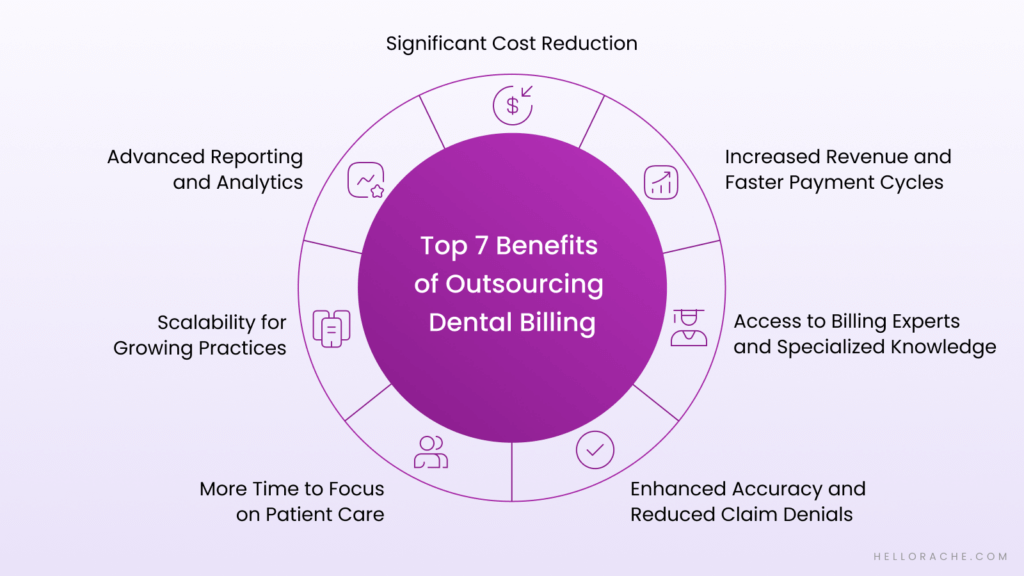
Outsourcing dental billing is not just about lightening the workload. It changes how a practice operates day to day. This is what happens when billing is handled by specialists:
- Leadership gains clearer insight into financial performance
- Revenue becomes more predictable
- Teams feel less pressure
1. Significant Cost Reduction
Outsourcing eliminates the costs of salaries, benefits, and ongoing training associated with in-house billing staff. Practices also avoid paying for billing software licenses, updates, and extra workstations. Those expenses quietly add up over time.
For example, a mid-sized dental practice that pays $60,000 a year for a biller often cuts that cost nearly in half by outsourcing. Instead of funding training on new CDT codes, they pay a predictable service fee and keep overhead under control.
2. Increased Revenue and Faster Payment Cycles
A billing specialist focuses on accuracy and follow-through. Claims are reviewed carefully before submission, which improves first-pass acceptance rates and reduces delays.
Fewer errors mean insurance payments arrive sooner.
Many practices also see a sharp drop in aging accounts receivable. When specialists follow up consistently, outstanding balances are resolved sooner. This also improves collections and leads to a steadier cash flow. As for revenue, this no longer depends on a rushed end-of-month catch-up.
3. Access to Billing Experts and Specialized Knowledge
Most front-office teams are generalists. Outsourced billing teams are not. They include certified dental billing specialists who stay current on insurance rules, coding changes, and payer requirements.
Hello Rache provides credentialed medical billing virtual assistants who handle complex cases. These include medical insurance claims for dental procedures related to sleep apnea. Their specialized knowledge helps practices capture revenue that might otherwise be missed.
4. Enhanced Accuracy and Reduced Claim Denials
In-house billing errors often happen under pressure. Dental receptionists have a lot to handle, including paperwork and client calls. However, outsourced teams work within controlled workflows with multiple quality checks before submitting claims.
Clean claims move through insurance systems faster. Fewer denials mean fewer payment delays. This improves cash flow and reduces the constant back-and-forth that drains your front office’s time.
5. More Time to Focus on Patient Care
When billing work moves off-site, the front desk breathes again. Staff spend less time on insurance calls and more time supporting patients.
This shift has a ripple effect. Teams can focus on patient experience, follow-up care, and retention rather than on paperwork. Patients notice the difference. Even if they never see the billing process itself.
6. Scalability for Growing Practices
Growth quickly adds pressure to billing. More patients bring more claims, follow-ups, and opportunities for delays. Outsourcing lets billing capacity expand or contract as volume changes, without the cost or disruption of hiring, training, or restructuring your internal team.
Whether you’re adding providers or opening another location, outsourced teams adjust fast. They support expansion and multi-location management without adding internal complexity, giving practices room to grow while keeping billing steady and predictable.
7. Advanced Reporting and Analytics
Outsourced medical billing gives dental practices real-time access to billing metrics and key performance indicators. They can track:
- Accounts receivable aging
- Collection performance
- Claim status
All without sorting through spreadsheets or waiting for month-end reports.
Hello Rache provides transparent reporting dashboards that turn billing data into usable insight. These reports make it easier to spot trends, address weak points, and make informed decisions that improve profitability and support the practice’s long-term health.
Potential Challenges of Outsourcing Dental Billing (and How to Overcome Them)
Any operational change creates questions. And outsourcing dental billing is no different. The key is to understand the risks up front and choose a partner with clear systems in place. When expectations are set early, most challenges are manageable and short-lived.
Loss of Control Concerns
Many doctors worry they’ll lose visibility into their finances. That usually happens only when there’s no clear communication.
The right partner offers transparent workflows and real-time access to your practice management software. This ensures you can view claim activity, payments, and updates at any time.
Data Security and HIPAA Compliance
Treat patient data protection as a priority. Before outsourcing, practices should verify HIPAA certifications and security protocols.
Hello Rache operates through HIPAA-compliant processes, including secure VPN access and strict internal controls. Your data stays protected at every step of the billing process.
Integration With Existing Systems
Not every billing partner works smoothly with every system. Integration issues often come from inexperience, not technology. Choosing a vendor with proven expertise in your electronic health records and practice management tools helps prevent disruption and keep workflows stable.
Communication Gaps
Outsourcing might not work if communication is inconsistent. Clear protocols matter. Dedicated account managers, regular check-ins, and defined response times keep everyone aligned.
Partners who value team coachability adapt quickly and stay in sync with how your office operates day-to-day.
Initial Transition Period
Change can feel uncomfortable, especially for staff who fear added pressure or job loss. A smooth onboarding process makes all the difference.
Choose a partner that provides:
- Structured onboarding
- Hands-on support
- Clear timelines
All these reduce stress and help teams adjust with confidence.
How to Choose the Right Dental Billing Outsourcing Partner
Choosing a billing partner is like investing in a long-term working relationship. Here are the criteria to consider when looking for an outsourcing company.
Essential Credentials and Certifications to Look For
Start with HIPAA compliance. Any partner handling patient data must meet strict security standards and be willing to explain their safeguards. From there, look for direct experience in dental billing, not general healthcare billing alone.
Strong partners also stay current on CDT and procedural codes. They invest in ongoing staff training and understand specialty needs, whether that includes multisite operations or more complex payer environments.
For example, at Hello Rache, we train our virtual assistants on Curve Dental Practice Management Software. Using this cloud-based system allows our team to work inside a real dental platform during training. They learn how scheduling, insurance checks, charting, and billing connect in day-to-day operations so they can better support your office.
Questions to Ask Potential Vendors
Ask about claim acceptance rates first. A reliable partner should confidently share performance metrics and explain how they handle denied claims and appeals. Persistence matters when revenue is on the line.
You should also ask about reporting and pricing. Can you view accounts receivable aging at any time? Is the fee structure simple and predictable? Clear answers signal a transparent, well-run operation.
Red Flags to Avoid
Vague pricing is a warning sign. If costs are hard to explain, unexpected fees often follow. The same applies to vendors who cannot provide references or real examples from dental practices they support. (Hello Rache’s pricing is transparent and straightforward. We charge a flat-rate fee of $9.50 per hour. You get specialized Healthcare Virtual Assistants®, and there are no hidden setup fees.)
Pay close attention to communication. In one survey, Forbes Advisor found that poor communication affects productivity for 49% of workers. Nearly 50% of respondents say it reduces job satisfaction, and 42% report higher stress levels. Slow responses or unclear answers during the sales process often reflect how the relationship will feel once work begins.
Evaluation Criteria Checklist
Technology fit matters. Your billing partner should integrate smoothly with your practice management software and support existing workflows without requiring workarounds. Just as important is responsiveness. Billing questions should be addressed promptly, not left waiting for days while payments stall.
Consistency also matters. Long-term partnerships signal trust and stability. Hello Rache supports practices with dental-trained virtual assistants who communicate clearly and integrate into daily operations. This provides reliable support without the overhead of maintaining a full in-house billing team.
The Outsourcing Dental Billing Process: What to Expect
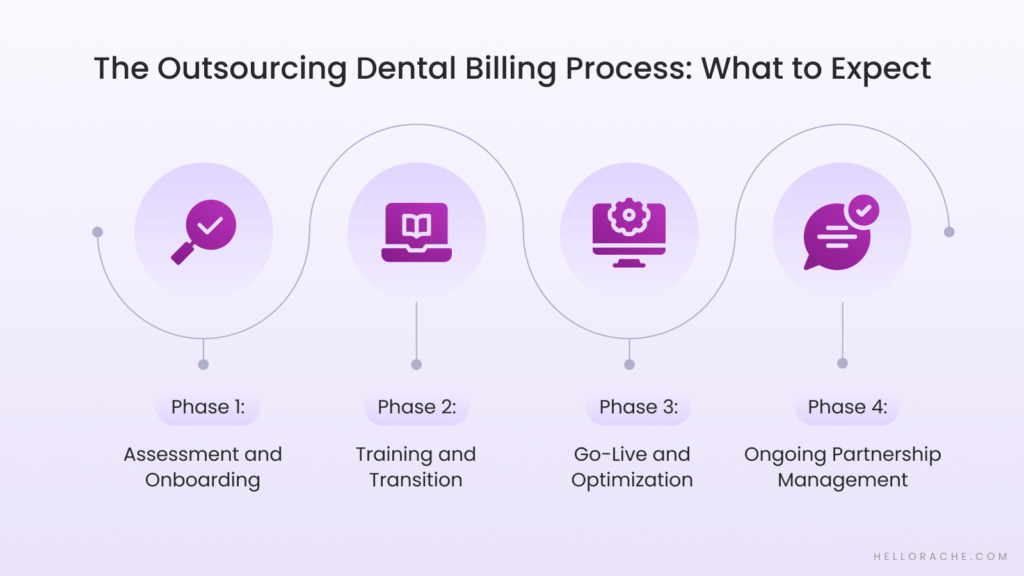
Moving to an outsourced model happens in phases. Understanding these steps will help you prepare your team for success.
Phase 1: Assessment and Onboarding
The process begins with a close look at your current revenue cycle. Your partner reviews accounts receivable, claim trends, and workflow gaps to identify where revenue is being lost. This stage also includes data migration and system setup.
Secure access is established through HIPAA-compliant systems. Billing teams gain the right level of access to clinical documentation and notes. The goal here is simple. Build a clean, stable foundation before any work moves forward.
Phase 2: Training and Transition
Once systems are connected, staff are guided through updated workflows. This includes:
- Where to upload insurance verification
- How documents are shared
- What changes day to day
Clear communication during this phase prevents confusion.
Most practices use a short parallel processing period. Your team stays involved while the billing partner gradually takes over. This overlap keeps the billing process steady and allows issues to be corrected early.
Phase 3: Go-Live and Optimization
Once the transition period ends, billing shifts fully to the outsourced team. Claims are submitted, followed up on, and posted from start to finish. Many practices notice faster payments and clearer reports within the first few billing cycles.
Optimization follows quickly. Denial trends are reviewed, workflows are adjusted, and revenue cycle performance improves over time. Ongoing monitoring ensures consistent results and prevents progress from stalling after go-live.
Ongoing Partnership Management
Outsourcing works best as an ongoing partnership. Regular performance reviews help
- Align billing goals with practice priorities
- Address changes in dental plans
- Track progress
Clear communication cadence keeps both teams aligned.
Hello Rache supports practices through every phase with virtual billing assistants and consistent check-ins. That ongoing attention helps practices adapt to industry changes. It also helps them maintain steady financial performance over the long term.
Outsourcing Dental Billing Costs: What You Need to Know
Before choosing a billing partner, it’s important to understand how pricing works and what you’re actually paying for. Costs can vary based on volume, services, and support level. Knowing the common models and potential extras helps you compare options with confidence.
Common Pricing Models
Most providers charge a percentage of collections. Rates typically fall between 3% and 10%, depending on claim volume and the scope of work. This model keeps incentives aligned, since your partner only earns more when your practice collects more.
Some offices prefer per-claim pricing, especially for lower-volume claims. Others use hybrid structures that pair a small base fee with a reduced percentage. The right choice depends on your size, workflow, and cash flow goals.
Hidden Costs to Watch for
Not all costs are included in the first quote. Ask about setup fees, data migration charges, or added costs for services like insurance verification and claim resubmissions. These extras can add up if you don’t discuss them early.
Also, review contract terms carefully. Long commitments or high cancellation fees limit flexibility. Confirm whether software access, technology tools, or IT support are included in the core service.
ROI Calculations
To measure real savings, look beyond the service fee. Factor in the salary, benefits, and training costs you no longer carry. Then account for higher collections driven by fewer denials and faster payment cycles.
Most practices see results quickly. Payback often happens within three to six months as cash flow improves. For many offices, outsourcing dental billing becomes a revenue-positive decision rather than just an operational expense.
Ready to Simplify Dental Billing?
Dental billing is only getting more complex. Outsourcing is no longer just about lowering costs. It’s about protecting cash flow, reducing errors, and creating stability as the industry evolves. Practices that make this shift gain:
- Teams that can focus on patient care instead of paperwork
- Faster payments
- Lower overhead
The right billing partner provides more than just support. You gain visibility, consistency, and the freedom to run your practice with less stress. For many offices, outsourcing becomes a turning point, not a last resort.
Hello Rache can transform your dental billing process and help you focus on what matters most: Exceptional patient care.
Frequently Asked Questions About Outsourcing Dental Billing
How Long Does It Take To Transition To Outsourced Dental Billing?
Most practices complete the transition in about 30 to 60 days. That timeframe covers assessment, system setup, and staff onboarding. The process is paced to fit your office, so billing continues without interrupting daily operations.
Will My Patients Notice Any Changes?
Most patients notice better service, not billing changes. Front desk teams are less rushed and more available. Statements and payment processes usually stay the same, but questions about insurance are answered faster and with fewer delays.
Can I Outsource Billing for a Multi-Location Practice?
Yes. Outsourcing works especially well for multi-location practices. It centralizes billing workflows and ensures consistent processes. It also makes it easier to monitor performance across all offices.
This approach also reduces variation between locations. Leadership gains clearer visibility without adding layers of internal management or separate billing teams.
What Happens if There’s a Problem With a Claim?
Your billing partner takes the lead. They manage claim tracing, corrections, and appeals directly with insurance companies. They keep you informed. But the time-consuming follow-up work stays off your plate.
This follow-through is critical. Prompt action prevents small issues from turning into long payment delays or lost revenue.
How Do I Maintain Oversight of My Practice’s Finances?
You keep full visibility. Practices have ongoing access to their practice management software and regular performance reports. Collections, aging accounts, and claim status are always available.
Outsourcing doesn’t remove oversight. It removes the manual work while keeping financial insight clear and accessible.
Is Outsourcing Dental Billing Suitable for Small Practices?
Yes. Smaller practices often see the biggest benefit. Outsourcing provides access to experienced billing specialists without the cost of hiring a full-time expert.
This makes it easier to maintain accuracy and follow-up, even with limited staff or lower claim volume.
What Reporting Will I Receive?
You’ll receive clear reports on collections, accounts receivable aging, and claim outcomes. These insights help you understand billing performance at a glance.
Regular reporting also supports smarter decisions. Practices can spot trends early and address issues before they affect cash flow.