An open role can cost more than time. It can put more than $21,000 in revenue at risk, according to data from the Dental Assisting National Board (DANB). That’s what happens when you wait too long to hire a dental assistant.
It’s also getting harder to fill that role. The American Dental Association (ADA) reports that, in late 2024, over 70% of hiring dentists said it was very or extremely challenging to find the right person.
The problem isn’t that practices don’t want to hire. It’s that most don’t follow a structured process. And that leads to rushed decisions, poor fits, and costly re-hires.
The pressure isn’t easing either. Based on ADA’s findings, in Q3 2025, 37.5% of private practices were still recruiting dental assistants. Yet Becker says that the number of graduates from dental assisting programs has declined since 2014.
Treating hiring as a reactive event rather than a repeatable system can drain time, money, and team energy.
This guide gives you a clear path to hire a dental assistant the right way. From role definition to onboarding, every step is covered. You’ll also see when a virtual dental assistant can support your team.
Here’s what you’ll gain:
- A clear understanding of the credential requirements based on your state
- A sourcing and screening system that speeds up hiring
- A practical way to use virtual support when local hiring slows down
Highlights
- To hire a dental assistant effectively, you need a structured process, from role definition to onboarding; otherwise, you risk turnover, lost revenue, and repeat hiring cycles
- Retention depends on onboarding, culture, pay, and growth opportunities, so small investments like continuing education or raises can cost less than turnover
- Virtual dental assistants can support front-office work during hiring gaps or long term, helping practices stay productive without adding in-office overhead
- The talent pool is tight, so using multiple sourcing channels (job boards, externships, referrals) helps you find stronger, job-ready candidates faster
- Clear job descriptions, salary transparency, and a two-stage interview process reduce screening time and improve candidate quality
What a Dental Assistant Actually Does
Before you write a job post, get clear on the role. This step gets skipped more often than you’d think. When expectations don’t align with the reality of the job, new hires often leave early, leading to avoidable turnover.
Dental assistants cover a wide range of work.
This includes state-dependent chairside clinical duties, like:
- Preparing tray setups for procedures, including fillings, extractions, and crowns
- Four-handed dentistry
- Taking radiographs
- Instrument transfer
- Suctioning
They also handle administrative and patient-facing tasks. That includes:
- Explaining post-procedure care
- Greeting and seating patients
- Recording medical histories
- Scheduling follow-ups
Behind the scenes, they sterilize instruments and maintain equipment in accordance with OSHA and CDC protocols.
The scope is larger than many expect. DANB’s 2024 Job Analysis Report found that dental assistants perform more than 200 distinct duties. That’s why matching skills to your practice needs is so important.
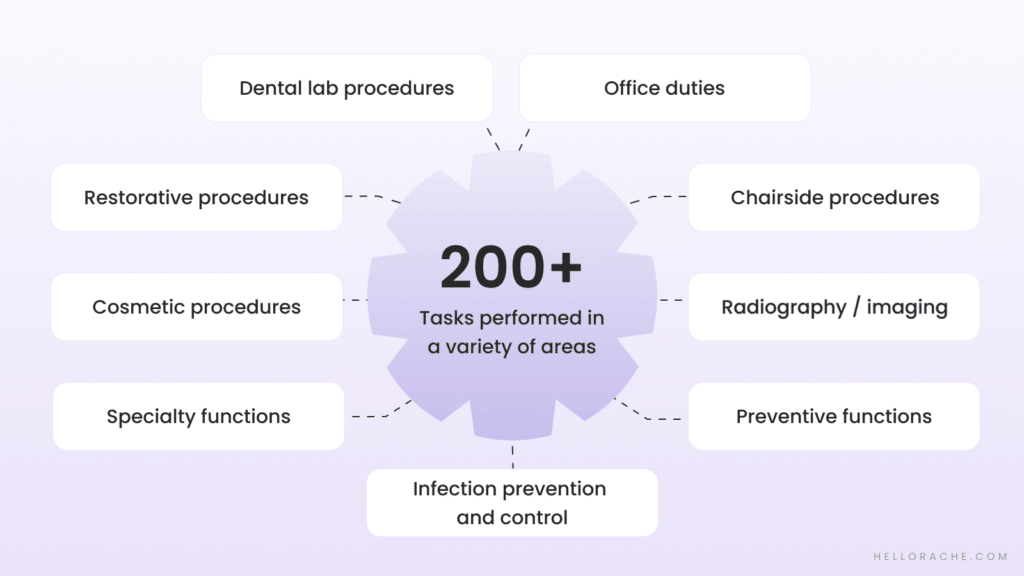
Not all assistants have the same scope. A general dental assistant, an expanded-function dental assistant (EFDA), and a registered dental assistant (RDA) can perform different duties depending on their state rules.
There are also clear limits. Dental assistants don’t diagnose, prescribe, or perform licensed procedures on their own.
Clinical Duties vs. Administrative Duties
Before we discuss the qualification part, it helps to split the role into two tracks:
Clinical Duties
A dental assistant’s clinical duties include:
- Instrument sterilization
- Chairside assistance
- Tray preparation
- Infection control
- Radiographs
Administrative Duties
When working on the administrative side, dental assistants can be responsible for:
- Treatment plan documentation
- Recall system management
- Supply ordering
- Patient intake
- Scheduling
State law determines which clinical tasks can be delegated and at what certification level.
Dental Assistant Qualifications and Required Credentials
Before you post the role, decide what credentials you actually need. Most practices post generic requirements that either over-qualify or under-qualify their candidate pool.
The CDA (Certified Dental Assistant) is the most recognized credential. It comes from DANB. To earn it, candidates must pass three exams:
- General Chairside Assisting (GC)
- Radiation Health and Safety (RHS)
- Infection Control (ICE).
Most qualify through a CODA-accredited program that takes 9 months to 2 years to complete. Others qualify through 3,500 hours of supervised work.
DANB certification is required or recognized by law in 39 states. As for the other states, you need to check your state dental practice act before setting requirements.
For entry-level candidates, the NELDA (National Entry Level Dental Assistant) certification offers another path. It works well if you plan to train and develop someone over time.
CPR or BLS certification is almost always required. Confirm that it’s current and completed in a hands-on setting through a DANB-accepted provider.
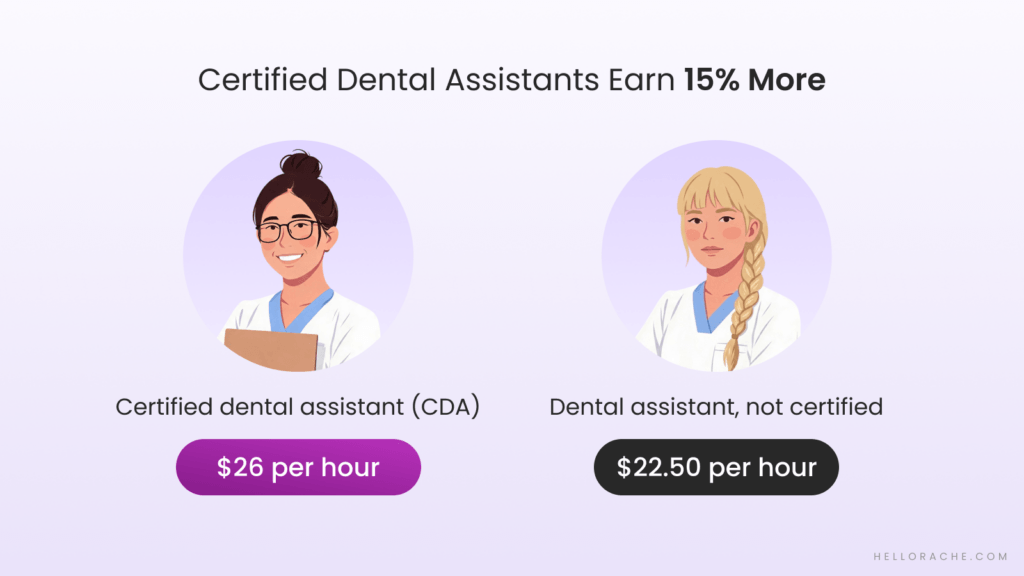
Pay also varies by credential. CDAs earn about $26 per hour on average, compared to $22.50 for non-certified assistants. This should be weighed against the cost of training an uncertified hire.
Soft skills have a key role too. And as a dental practice, it’s important to highlight them in your job advert when hiring:
- Ability to work under pressure
- Strong communication
- Manual dexterity
- Patient empathy
State-by-State Licensing: What to Check Before You Post
Before you finalize your job post, review your state requirements:
- Verification sources: Use DANB’s state requirements map as a starting point. Confirm details with your state dental board before finalizing the job description.
- Regulation updates: For example, California Senate Bill 1453 changed RDA requirements starting July 1, 2025. Rules change, so don’t rely on old information.
- Certification requirements: 39 states require DANB certification or specific exams. The other 11 states still have limits on what assistants can do.
- Scope of duties: Check your state dental practice act to confirm which tasks can be delegated at each level and what education is required.
Where to Find Qualified Dental Assistant Candidates
Finding the right candidate takes more than one job post. But relying on general job boards alone can slow your search.
Using different channels gives you better reach and stronger candidates.
- Community college externship pipelines: Partner with CODA-accredited programs to bring in externs. This gives you a low-risk way to evaluate candidates and first access to hire strong graduates. Many practices prefer this path to train assistants to their own standards while reducing hiring costs.
- Dental-specific job boards: DentalPost and MyDentalJobs.com attract active dental professionals. DANB’s career center reaches over 35,000 CDA-certified assistants through its mailing list and sponsored emails.
- Staff referrals: Offer a structured bonus, often $250 to $500, after 90-day retention. Team members tend to recommend candidates who fit the culture.
- General job boards: Indeed helps with volume. LinkedIn also lets you reach out to candidates with dental experience, even if they’re not applying.
- Staffing agencies: Use for temp-to-perm support during urgent gaps, not as your main hiring source.
How to Write a Dental Assistant Job Description That Attracts the Right Candidates
Most job descriptions get copied and reused. That brings in the wrong applicants and pushes strong candidates away. A clear, specific post helps filter early and shows your practice is organized.
Start with your identity. Share your specialty, team size, office culture, and your schedule. Candidates use this to decide if they fit before applying.
Then tighten the details:
- Credentials: Be specific. “CDA preferred; RHS required” isn’t the same as ‘certification preferred’.
- Core duties: List five to seven key tasks across clinical and administrative work. And skip long, generic lists.
- Salary range: Pay is a key filter. In fact, 84% of dental assistants considering a move cite higher pay as the main reason. Posting a range reduces screening time because candidates can self-select based on pay (Source: Becker’s).
- Growth path: Mention continuing education (CE) support or advancement options. Nearly all dentists agree CE is critical to assistant retention and profitability (Source: DALE Foundation).
- Why join: Highlight what makes your practice stand out, such as team culture, flexible scheduling, modern tools, and a patient approach.
How to Screen and Interview Dental Assistant Candidates
A strong hiring process consists of two stages. Keep it simple, but consistent. This helps you filter faster and avoid costly hiring mistakes.
Stage 1 (Phone screen): Keep it to 15 to 20 minutes. Confirm credentials, including CDA or RHS where required, and review employment history. Assess communication clarity and patient-facing demeanor. Three to four targeted questions can quickly cut the field.
Stage 2 (In-person or working interview): This is standard in dental hiring. Candidates complete a short hands-on task with your team. You can see how they handle instruments and follow directions. Before using this step, check your state rules on unpaid working interviews.
Key interview questions
- Professional engagement/retention indicator: ‘What kind of continuing education have you completed in the last two years, and what do you want to learn next?’
- Patient empathy/soft skills: ‘Describe a situation where a patient was anxious before a procedure. How did you handle it?’
- Technical adaptability: ‘What dental software have you worked in, and how quickly do you adapt to a new system?’
- Attention to detail: ‘Tell me about a time you caught an error before it became a problem.’
- Clinical knowledge: ‘Walk me through how you prepare a tray for a composite restoration.’
Cultural fit is just as important. DentalPost’s 2026 Dental Salary Survey Report shows that nearly half of dental assistants (47%) say they’re considering changing jobs within the next two years for new opportunities. A poor fit leads to quick turnover.
Red Flags to Watch for During Screening
Some warning signs show up early if you know what to look for. These don’t always mean an automatic no, but they should prompt a closer look:
- Missed interviews: No-shows have increased. It may seem minor, but failing to show up without notice signals poor communication and should not be treated as a one-time issue
- No curiosity: No questions about your patient philosophy, team dynamic, or growth path. This indicates that the candidate sees their job as a transactional activity.
- Avoiding clinical tasks: Reluctance to discuss or demonstrate hands-on skills during a working interview.
- Inconsistent answers: Unclear or conflicting details about certification or employment history.
- No recent learning: Unable to name a recent CE course or professional development activity.
When a Virtual Dental Assistant Is the Smarter Hire
Hiring is getting harder for many practices. This is because of:
- Administrative overload
- Hybrid workflow needs
- Local labor shortages
In late 2024, 40% of practices were still recruiting dental assistants, according to the ADA. At the same time, McKinsey estimates that the U.S. dental industry will be short more than 36,000 professionals by 2031. In some markets, qualified local candidates are simply not available on the timeline a practice needs.
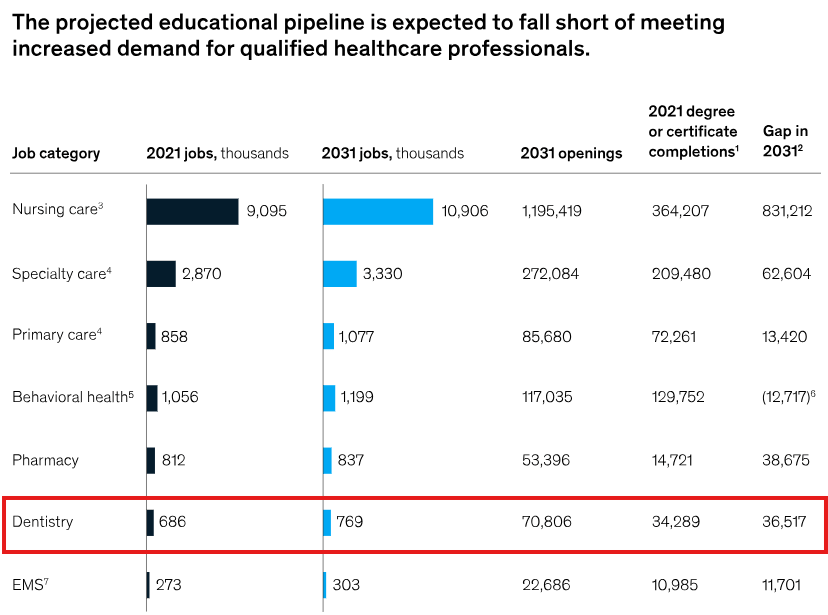
In these cases, a virtual dental assistant becomes a practical hiring option. It doesn’t replace your clinical team. But it helps you keep work moving when in-office hiring slows down.
There are many reasons you may want to hire a virtual dental assistant.
They can handle administrative and front-office tasks such as:
- Treatment plan documentation
- Patient follow-up calls
- Insurance verification
- Billing coordination
- Charting support
- Recall systems
- Scheduling
They don’t assist chairside. They don’t take radiographs or perform clinical procedures. They support your team, but they don’t replace an in-office assistant.
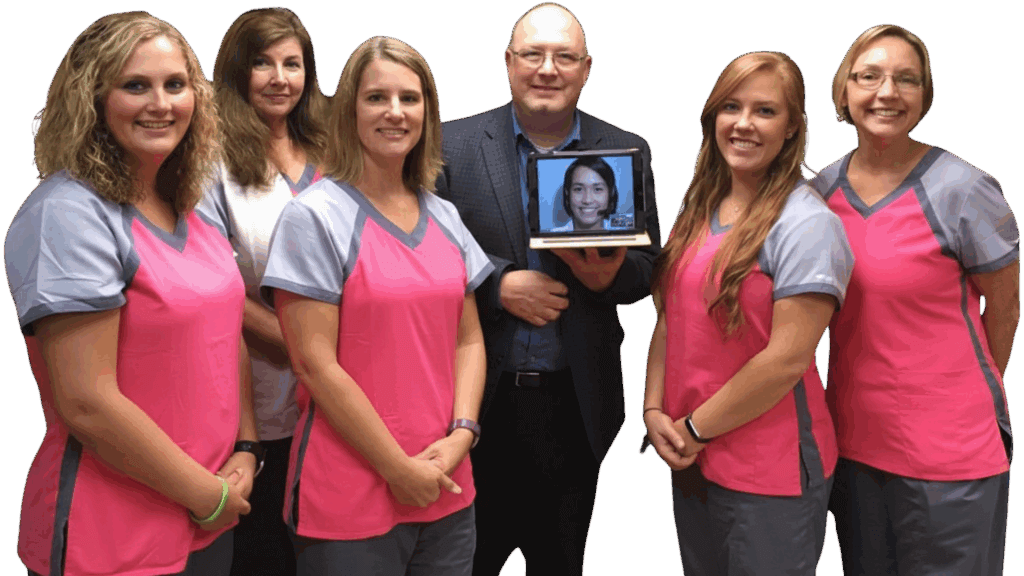
Hello Rache’s Healthcare Virtual Assistants® are trained in dental terminology, charting, and systems like healthcare practice management software Dentrix, Eaglesoft, Open Dental, and Curve Dental. They work inside HIPAA-compliant systems with full-time tracking transparency.
There’s also a cost advantage. No need for office space, equipment, or benefits. Dental payroll already accounts for about 24-28% of expenses (Source: Percentology). A flat hourly rate with no long-term contracts gives you more flexibility.
Hello Rache’s services cost $9.50 per hour, and there are no long-term contracts. This gives you a flexible way to reduce overhead while keeping operations running.
This approach works well if you’re:
- Handling high administrative volume as a single-provider practice
- Short-staffed while recruiting
- Managing multiple locations
Onboarding and Retaining Your Dental Assistant
Hiring doesn’t end with the offer letter. The first 90 days set the tone. This is when most early turnover happens. Many practices get this wrong, as few take a structured approach at this level.
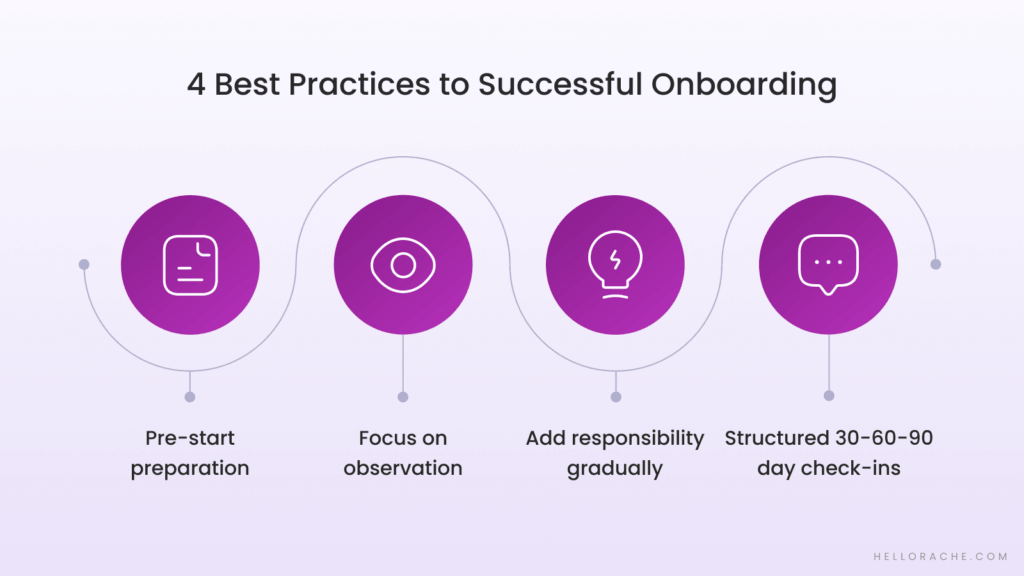
- Pre-start preparation: Share your office manual. introduce team members via a welcome email or video, confirm equipment, systems access, and HIPAA compliance protocols before day one.
- Focus on observation: During the first week, let the new hire shadow your team and walk through patient flow, daily schedules, and sterilization steps. Make sure all required documentation is complete.
- Add responsibility gradually: From weeks two to four, assign a lead assistant and start hands-on work with supervision. Introduce software and patient interaction.
- Structured 30-60-90 day check-ins: Ask about workload comfort, communication, and any process gaps. Address issues before they turn into reasons to leave.
Retention comes down to a few core areas:
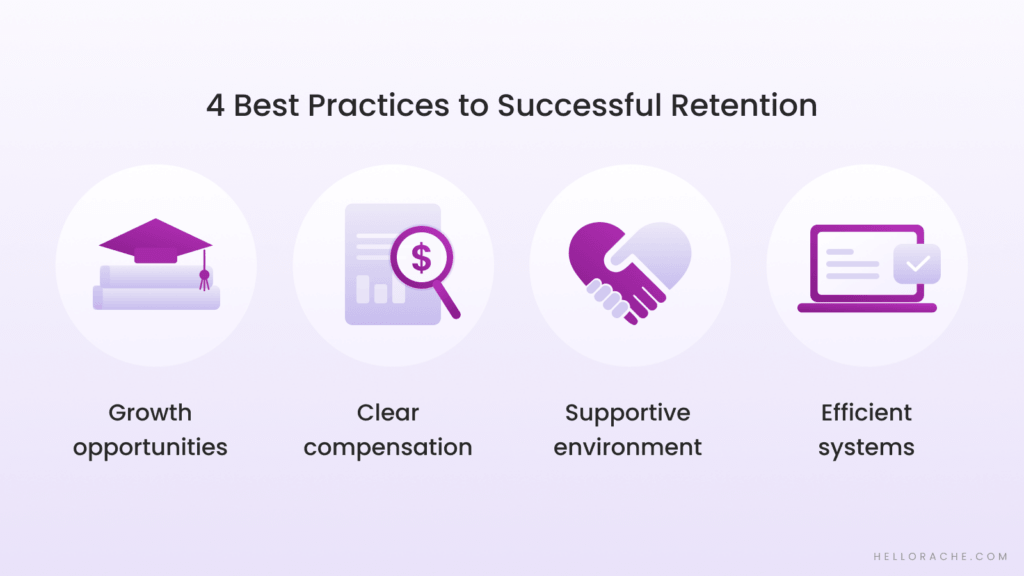
- Growth opportunities: Continuing education supports long-term development. Dentists and office managers say that it contributes to practice profitability (Source: The DALE Foundation).
- Clear compensation: Pay and defined raise paths reduce turnover. In some cases, a 15% raise costs less than replacing an employee (Source: DANB).
- Supportive environment: A strong team culture and feeling valued influence whether dental assistants stay or leave.
- Efficient systems: Teams are more satisfied when they’re not slowed down by outdated tools or manual processes.
Continuing education is valued, but not always funded. Practices that invest in it stand out and signal long-term growth.
Building a Hiring Process That Prevents Costly Mistakes
Many practices hire reactively. This means they start hiring as soon as someone leaves, which puts the search under pressure.
Strong dental practices take a different approach. They:
- Maintain an active referral pipeline
- Stay connected with local dental programs
- Maintain a short list of qualified candidates even when no role is open
It also helps to document your process. A written hiring checklist, from the job posting through onboarding, ensures consistency across each step. It also protects your practice if a hiring decision is ever questioned.
High-performing practices follow a clear system:
- Credential checks first: Verify certifications before extending an offer, not after. This avoids last-minute surprises and ensures the candidate can perform required duties from day one.
- Salary range upfront: Including pay in the job description helps candidates self-select. It reduces back-and-forth and speeds up screening by filtering out misaligned expectations early.
- 90-day performance review set early: Setting this at hire signals that development is part of the role. It also gives both sides a clear checkpoint for assessing progress and addressing gaps.
- Structured onboarding: Treat onboarding as a program, not paperwork. A clear plan helps new hires settle in faster and lowers the risk of early turnover.
The hiring environment will remain competitive. Practices that build a repeatable system and consider all available staffing options, including remote administrative support, fill roles faster and retain staff longer.
Your Next Hire Does Not Have to Take Months
Hiring doesn’t have to take months. The difference comes down to having a clear process. When you define the role early and follow a structured onboarding plan, you avoid repeat hires and keep your team stable.
The local talent market is still tight. In late 2024, 40% of practices were actively recruiting dental assistants. The shortage will continue through the decade. So, diversifying your staffing model should be seen as a strategy, not a fallback.
Virtual dental assistants are a proven administrative supplement. They provide immediate support, help when you’re short-staffed during a search, and can support your practice long term. They handle scheduling, insurance verification, and patient follow-up without adding in-office overhead. You can also outsource dental billing if you need extra support.
Need to reduce administrative work while hiring or on an ongoing basis? Hello Rache’s Dental Healthcare Virtual Assistants® provide trained, HIPAA-compliant remote support.
Frequently Asked Questions About Hiring a Dental Assistant
What Qualifications Should a Dental Assistant Have?
The right qualifications depend on your state and the duties you plan to assign. Many practices look for a CDA credential, which requires passing exams in chairside assisting, radiation safety, and infection control. In some states, this is required by law.
Entry-level candidates may hold a NELDA certification. CPR or BLS certification is also expected. Beyond credentials, look for manual dexterity, clear communication, and the ability to work under pressure.
How Much Does It Cost to Hire a Dental Assistant?
Costs vary based on certification and location. On average, dental assistants earn about $23.28 per hour. Certified assistants often earn more, around $26 per hour.
There are also indirect costs. Training, onboarding time, and turnover can add up. In some cases, offering a 15% raise to retain a strong employee costs less than replacing them.
How Long Does It Take to Hire a Dental Assistant?
Hiring timelines vary. Many practices face delays due to a limited candidate pool. In late 2024, 40% of practices were still recruiting dental assistants.
A structured process can shorten this timeline. Clear job descriptions, targeted sourcing, and a two-step interview process help you move faster and avoid having to restart the search.
What Interview Questions Should I Ask a Dental Assistant?
Focus on both clinical skills and communication. Ask candidates to explain how they prepare a tray for a procedure. This shows technical knowledge.
You can also ask how they handle anxious patients or how they adapt to new software. Questions about continuing education and past mistakes can reveal attention to detail and willingness to learn.
Can a Virtual Dental Assistant Replace an In-Office Dental Assistant?
No. A virtual dental assistant doesn’t replace an in-office assistant. They don’t assist chairside, take radiographs, or perform clinical tasks.
They support your team by handling administrative and front-office tasks, including scheduling, billing, insurance verification, and patient follow-up. This helps your in-office team stay focused on patient care.