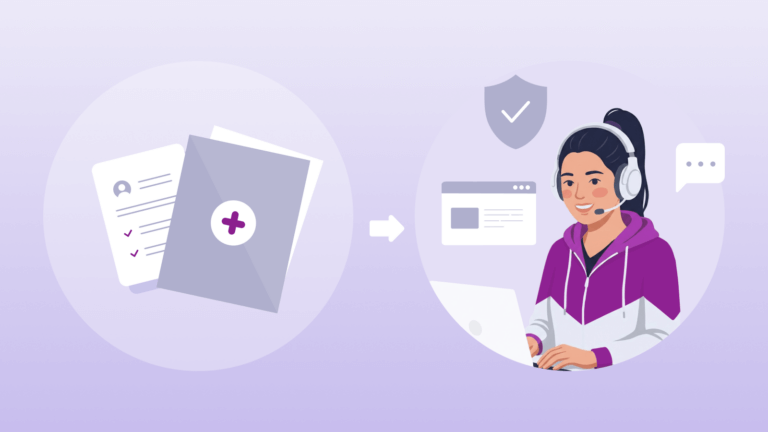
The pressure to “do more with less” in healthcare has never been higher. At the same time, many healthcare professionals are now realizing that they don’t have to do it all alone to deliver excellence. They can outsource.
The trend is undeniable. The global healthcare business process outsourcing (BPO) market is experiencing a rapid growth of almost 11%.¹
In the midst of this wave, outsourcing healthcare services evolved from a simple cost-cutting tactic into a vital strategy for survival and growth.
This post explores the benefits and challenges of outsourcing healthcare services. It outlines how to select the right partner and implement outsourcing strategies effectively, enabling your in-house team to focus on core patient care.
Highlights
- Partnering with reputable firms ensures compliance with HIPAA regulations and strengthens data security through enterprise-grade protocols, reducing the risk of data breaches and hefty fines.
- Strategic healthcare outsourcing converts fixed overhead costs into variable costs. It reduces payroll costs by $25,800 to $61,200 annually.
- Outsourcing administrative burdens allows doctors and nurses to dedicate more time to direct patient care and clinical decision-making.
- By outsourcing healthcare services, practices gain immediate access to specialized professionals who are difficult to recruit locally.
Benefits of Outsourcing Healthcare Services
Healthcare outsourcing is evolving.
Today, the global healthcare BPO market is valued at $417.68 million. It’s projected to reach nearly $700 million by 2030 (source: MarketsandMarkets).
Gone are the days when outsourcing healthcare services was limited to generic call centers reading scripts. Current outsourcing partners provide sophisticated clinical and administrative support. Here are seven specific benefits of outsourcing healthcare services.
Cost Efficiency
Running a medical practice involves massive overhead, and that overhead is rising. The MGMA reported that 90% of medical practices in 2025 spent more on operating costs than in 2024. It reached up to $600,000+ per full-time physician in some cases.
In that scenario, cost savings are often the primary driver for outsourcing.
By leveraging labor arbitrage (the price difference between labor markets), practices can secure high-level talent at a fraction of the domestic cost.
This strategy enables significant cost control by:
- Removing the burden of employee benefits, human resources management, and payroll taxes
- Reducing the need for larger physical offices
- Lowering utility costs
This shift improves your practice’s financial health, freeing up capital to invest in new medical equipment or facility upgrades.
Case Study: How Outsourcing To Virtual Medical Assistants Reduces Costs
Consider the difference between hiring a Virtual Medical Assistant (VMA) instead of an in-house, full-time employee:
- The annual salary of a medical assistant (MA) in the US ranges from $35,020 to $57,830 (source: BLS)
- Employee benefits are typically around 30–40% of the salary
- Total pay is therefore $45,526–$80,962 per MA
With Hello Rache, you pay a flat rate of $9.50 per hour, which works out to $19,760 annually for a full-time schedule. Healthcare practices can therefore save roughly $25,800–$61,200 annually in payroll alone per MA position they outsource, for an ROI of 130%–310%.
Access To Specialized Expertise at Lower Costs
Recruiting for niche roles, such as medical billing and coding, is increasingly challenging in the US labor market. Yet these skills are in high demand.
For example, coding in healthcare is becoming increasingly complex:
- The US will adopt ICD-11 in the next two years, which includes 17,000 unique codes and over 130,000 clinical terms, allowing for millions of code combinations (source: WHO)
- Combined with the ICD-10’s 72,000 procedure codes, this will greatly increase coding complexity in the US
Managing this complexity requires trained professionals, who are in short supply. Outsourcing provides an immediate pipeline to a global workforce that is already:
- Experienced in specific EHR processes and software
- Certified in HIPAA and other areas
- Trained in ICD-10 and 11 coding
- And more
All at a fraction of the cost of hiring domestic employees.
Enhanced Patient Care and Experience
There is a direct link between administrative support and patient satisfaction.
When a provider is buried in paperwork, the patient experience suffers.
By outsourcing tasks such as documentation management and insurance eligibility checks, the provider can maintain a genuine presence with the patient.
Third-party providers can enhance services such as:
- Empathetic follow-up calls
- Rapid patient scheduling
- 24/7 customer support
These touchpoints improve patient outcomes. They ensure adherence to care protocols and reduce the likelihood of patients falling through the cracks.
Focus on Core Competencies
The core business of any healthcare provider is diagnosing and treating patients, not activities like:
- Supply chain management
- Claims processing
- IT maintenance
These are supportive, not central.
Outsourcing enables healthcare organizations to eliminate non-clinical distractions. This creates a strategic advantage:
- Advanced practice clinician teams can focus entirely on clinical insights and delivery
- Other experts in the background handle operational efficiency
Medical professionals no longer waste valuable energy on tasks that don’t directly improve health.
Improved Operational Efficiency and Productivity
In line with the above, having a dedicated team of experts focused solely on operational efficiency enhances it. They can process work faster than a distracted in-house staffer juggling multiple roles.
For example, BPO in healthcare can:
- Foster more efficient claims processing, translating into faster reimbursements and better cash flow
- Improve medical transcription and delivery, ensuring it’s ready for the doctor the next morning
- Revolutionize supply chain efficiency for medical equipment suppliers
By handing off these tasks, the in-house team becomes more productive in their patient-facing roles.
Risk Management and Compliance
A common myth is that offshore outsourcing always introduces risk. In reality, reputable agencies specialize in risk mitigation. They invest heavily in things that small health centers often can’t afford, such as:
- Data security infrastructure
- Ongoing staff training
- HIPAA compliance
- Cybersecurity
For example, at Hello Rache, we ensure all virtual staff are rigorously trained in HIPAA regulations and compliance. We only work with HIPAA-compliant medical assistants, reducing your practice’s liability profile.
Technology Advancement and Integration
Outsourcing partners often bring their own technology stacks or healthcare technology expertise. This implies immediate access to:
- Patient Relationship Management (PRM) systems
- AI-powered diagnostic tools
- Cloud computing resources
- Telemedicine platforms
- And more
This knowledge bridges the gap for practices that lag in digital transformation.
Case Study: AI Integration at Atrium Health
Atrium Health is a popular case of outsourced IT integration. It became the first health system in the US to widely deploy Nuance’s Dragon Ambient eXperience (DAX) Copilot. DAX is an AI solution integrated into the workflow to automate clinical documentation.
The results were transformative:
- Eighty-five percent of clinicians reported saving up to 40 minutes per day on documentation tasks
- They also cited improved patient experience and reduced cognitive load
This example demonstrates how outsourcing technology management and implementation can directly enhance the quality of care and improve provider well-being.
Challenges and Considerations in Outsourcing Healthcare Services
While the benefits are substantial, outsourcing is a significant operational shift that requires careful planning. It’s important to consider the risks and challenges before making a decision.
Data Security and Quality Control
The two primary concerns for any medical practice considering outsourcing are:
- Patient data privacy
- The quality of work
Though the fear is justified, there are ways to mitigate it.
The key is choosing the right outsourcing partner and establishing clear Service Level Agreements (SLAs) and Business Associate Agreements (BAAs). These contracts define expectations for quality assurance and clinical data management.
Selecting the Right Partner for Outsourcing Healthcare Services
When vetting an outsourcing agency, look beyond price. Evaluate their recruitment process and outsourcing standards.
Key factors to consider include:
- A strong candidate pipeline and rigorous, transparent screening process
- HIPAA-compliant certifications and data security infrastructure
- Transparent pricing models without hidden fees
- A policy of only hiring industry professionals
- Cultural fit and language proficiency
Best-Fit Roles for Outsourcing Healthcare Services
With the above said, not every process should leave the clinic walls. For example, hands-on patient care should stay local. However, outsourcing the following roles offers the highest return on investment operationally and financially.
Healthcare IT
Managing EHR servers, cybersecurity, and general IT needs is expensive and complex. Outsourcing IT services lets you leverage proven expertise in system maintenance and technical support without paying for a full-time CIO or IT director.
Healthcare Virtual Assistant®
This is the most versatile role in the modern practice.
A VMA can handle:
- Insurance eligibility verification
- Clinical documentation
- Medical transcription
- Chart management
- And more
Because they often have clinical backgrounds, they understand medical terminology and care protocols, making them far more effective than generalist admins.
Healthcare Virtual Receptionist
The front desk is your practice’s face, but it’s also a bottleneck. A virtual receptionist can remotely:
- Ensure every call is answered
- Handle patient intake forms
- Manage patient scheduling
This improves customer support and ensures the in-house receptionist can focus on patients who are physically in the lobby.
Hello Rache Outsourcing Solutions

At Hello Rache, we don’t just fill seats; we integrate healthcare professionals into your team. Our model is developed by doctors, for doctors, ensuring that clinical quality is never compromised.
Virtual Services
Our virtual services are designed to cover the complete spectrum of administrative and clinical support needs:
- Administrative Support: Comprehensive back-office management, including referral management
- Virtual Medical Scribe: Real-time documentation directly into your EHR
- Virtual Receptionist: Seamless call handling and appointment setting
Virtual Assistants
We provide specialized talent pools to ensure your assistant understands your specific field:
- Veterinary Healthcare Virtual Assistant: Support for veterinary clinics and animal hospitals
- Healthcare Virtual Assistant®: Registered nurses and medical pros for medical practices
- Dental Healthcare Virtual Assistant: Staff trained in dental terminology and software
- Optometry Healthcare Virtual Assistant: Dedicated support for eye care professionals
Conclusion
The healthcare sector is evolving, and the successful practices of the future will be those that embrace agility. Outsourcing healthcare services offers a clear path to:
- A renewed focus on patient care
- Improved operational efficiency
- And cost savings
By leveraging global talent, you can reduce burnout and build a practice that is sustainable, profitable, and patient-centered.
Hello Rache is your perfect partner for this new age in healthcare.
FAQs
How Does Outsourcing Improve Patient Satisfaction?
Outsourcing administrative tasks frees up your in-house staff to focus entirely on the patient in front of them. Additionally, virtual assistants can handle follow-ups, appointment scheduling, and answer calls more quickly, leading to a smoother, more attentive patient experience.
Is Healthcare Outsourcing HIPAA Compliant?
Yes, the key to successful HIPAA compliance in healthcare outsourcing is choosing the right partner. At Hello Rache, for example, we ensure all our Healthcare Virtual Assistants® are HIPAA-certified and trained.
What Are the Primary Cost Savings Associated With Healthcare BPO?
The savings come from reduced overhead. You save on:
- Employee benefits
- Payroll taxes
- Office space
- Equipment
- Insurance
- Utilities
With Hello Rache’s flat rate of $9.50/hour, practices typically see a cost reduction of 57%–76% in wages alone, compared to hiring in-house staff.
Resources
¹The Healthcare Business Process Outsourcing (BPO) Global Market Report 2025